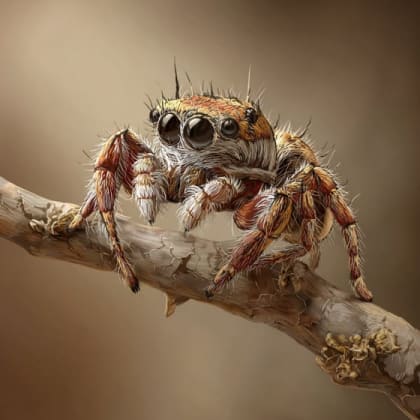
Thread-waisted Sand Wasps
Ammophila
Thread-waisted sand wasps are fascinating insects that dig tunnels in the sand. They are great at catching other bugs to feed their babies and have long, thin bodies that help them move quickly.
生息地: Sandy areas
The Thread-waisted Sand Wasps has a distinct, extremely slender 'thread-waist' connecting its black head and thorax to its often reddish-orange and black abdomen. They feature clear or slightly smoky wings with dark veins, making them appear delicate. Their long legs are typically black.
カテゴリ
昆虫レア度
Common
危険度
2/5 · 低い
スナップ
最初にスナップしよう!
Female wasps are master architects, building a new burrow for each egg laid!
Some species actually 'wallpaper' their nests with debris to hide them!
Their super-thin waist lets them bend and maneuver with incredible agility!
They don't feed their babies directly; instead, they stock the nursery with paralyzed snacks!
Thread-waisted Sand Wasps can dig intricate underground nests because of their strong forelegs and specialized mouthparts.
Thread-waisted Sand Wasps can sting prey to paralyze it, which helps keep food fresh for their developing larvae.
Some Thread-waisted Sand Wasps can use small pebbles to tamp down sand, helping them seal their nests securely.
Adults sip flower nectar; their young feast on paralyzed insects, keeping them fresh.
年齢による違い: Adults consume nectar for energy, while larvae feed exclusively on insects paralyzed by the mother.
Spodoptera frugiperda
Prey for larvae.
Gryllus pennsylvanicus
Common prey for larvae.
Solidago canadensis
Adults feed on its nectar.
Myiarchus crinitus
An occasional predator of adult wasps.
まだ別名はありません。
危険度
2/5 · 低い
If you see a wasp, it's best to watch it from a distance and not touch it.
20-50 mm
10-25 mm
20-40 日
Adults sip flower nectar; their young feast on paralyzed insects, keeping them fresh.
Sandy areas
Pursuit
6
ズームインしてクラスターを分割し、このオブジェクトが撮影された場所を探索しましょう。
新しい観察が追加されると、ここに最近のスナップが表示されます。







.jpg)