

Tricolor Hibiscus
hibiscus × rosa-sinensis
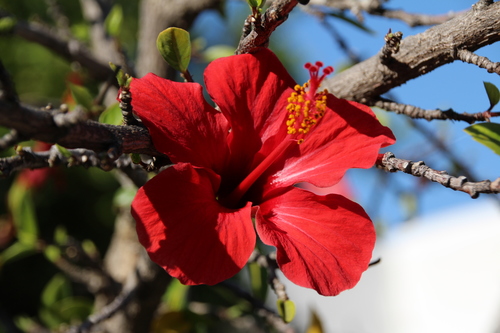
The Tricolor Hibiscus (Hibiscus x rosa-sinensis) is a stunning, eye-catching tropical shrub celebrated worldwide for its spectacular tri-colored floral displays. This horticultural masterpiece is often created by grafting three different varieties of tropical hibiscus—typically showcasing vibrant shades of red, pink, and yellow—onto a single rootstock, or by planting three distinct varieties closely together in a single pot. As the branches grow and intertwine, they produce an incredible, multi-colored canopy of large, trumpet-shaped flowers that appear to bloom from a single plant. Beyond its sheer visual magic, this evergreen shrub is beloved by gardeners in warm climates and indoor plant enthusiasts alike for its lush, glossy green foliage and its ability to attract vital pollinators. It serves as a striking focal point in gardens, patios, and tropical landscapes, bringing an instant touch of paradise wherever it is grown.
生息地: Typically cultivated in tropical and subtropical gardens, sunny patios, and warm greenhouses, thriving in fertile, well-draining soil with abundant sunlight.
This shrub typically grows to a height of 150 to 300 centimeters, featuring a dense, bushy growth habit with glossy, dark green ovate leaves that have slightly serrated margins. The defining feature of the Tricolor Hibiscus is its simultaneous production of three distinct blossom colors—commonly deep scarlet red, bright sunny yellow, and soft pastel pink—on the same plant. Each individual flower is large, trumpet-shaped, and can reach up to 15 centimeters in diameter, characterized by five broad, delicate petals and a prominent, central, protruding staminal column tipped with bright yellow anthers.
カテゴリ
植物レア度
Common
危険度
1/5 · 非常に低い
スナップ
最初にスナップしよう!
In many cultures, the hibiscus flower is edible and is used to make tangy herbal teas, salads, or traditional medicine.
Individual flowers of the Tricolor Hibiscus typically bloom for only a single day, opening in the morning and wilting by evening.
The tricolor effect is achieved by grafting three different colored hibiscus varieties onto a single rootstock or braiding three young stems together.
Its massive, brightly colored petals and sweet nectar act as a visual beacon that draws in hummingbirds, butterflies, and bees from great distances.
The species possesses highly adaptable vascular tissue that allows different color cultivars to be seamlessly grafted onto a single hardier rootstock.
In warm, frost-free climates, it can produce new blossoms year-round, constantly replacing faded flowers with fresh, vibrant blooms.
As a photoautotrophic plant, it produces its own food using sunlight, water, and carbon dioxide through the process of photosynthesis.
Danaus plexippus
Pollinated by long-tongued insects seeking nectar in its deep blossoms.
Myzus persicae
Often fed upon by tiny pests that extract sap from the leaves and stems.
Archilochus colubris
Frequently visited by hummingbirds for nectar pollination in subtropical zones.
このオブジェクトにはまだ特徴バッジが割り当てられていません。
まだ別名はありません。
テーマが追加されると、このオブジェクトのコレクションがここに表示されます。
危険度
1/5 · 非常に低い
まだ特別な安全上の注意はありません。
Tricolor Hibiscusを識別する最も簡単な方法は、Snappit自然識別アプリを使用することです。
150-300 cm
5-20 年
As a photoautotrophic plant, it produces its own food using sunlight, water, and carbon dioxide through the process of photosynthesis.
Typically cultivated in tropical and subtropical gardens, sunny patios, and warm greenhouses, thriving in fertile, well-draining soil with abundant sunlight.
ズームインしてクラスターを分割し、このオブジェクトが撮影された場所を探索しましょう。
新しい観察が追加されると、ここに最近のスナップが表示されます。