

Turtleback
psathyrotes ramosissima
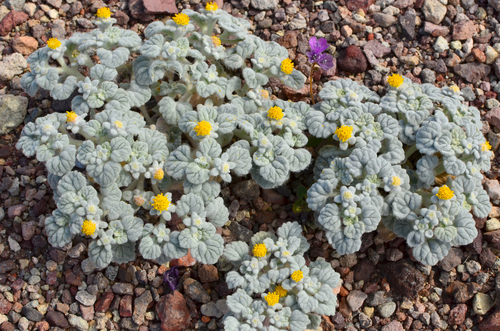
Velvet turtleback (Psathyrotes ramosissima) is a fascinating, low-growing annual desert herb native to the arid expanses of the Mojave and Sonoran deserts. Named for its compact, rounded growth form that strikingly resembles the domed shell of a turtle, this resilient plant thrives in harsh, rocky desert washes and gravelly slopes where few other species can survive. Despite the brutal heat and dryness of its habitat, the turtleback flourishes by hugging the warm ground, utilizing its unique morphology to conserve precious moisture. Beyond its eye-catching shape, the plant is known for its strong, sweet, and medicinal scent—often described as a mix of honey, licorice, and turpentine—which wafts through the desert air to draw in scarce native pollinators. It serves as an excellent example of desert specialization, turning a hostile environment into a sanctuary.
生息地: Found on gravelly desert flats, rocky slopes, and sandy washes within extremely arid environments.
This species forms a highly distinctive, compact, hemispherical mound of foliage measuring between 5 to 15 centimeters in height and up to 30 centimeters in diameter. The leaves are thick, heavily wrinkled, and fan-shaped with coarse teeth, covered in a dense layer of soft, velvety, grayish-green hairs that give the plant a dusty or frosted appearance. During its blooming season from late winter to summer, the turtleback produces small, cup-like, yellow-to-amber flower heads composed entirely of disc florets, which nestle closely against the woolly cushion of leaves, lacking the outer radiating petals typical of many other asters.
カテゴリ
植物レア度
Common
危険度
1/5 · 非常に低い
スナップ
最初にスナップしよう!
Despite living in some of the hottest, driest places in North America, the turtleback's velvety leaves feel remarkably cool to the touch due to their light-reflecting hairs.
Its scientific name 'ramosissima' means 'extremely branched', referring to the complex, dense network of stems that support its turtle-shell shape.
The strong, sweet scent of the turtleback is often described as a mix of turpentine, licorice, and honey, which can fill entire desert washes on warm spring days.
The leaves are covered in a dense layer of interlocking, woolly hairs that reflect intense desert sunlight, reducing leaf temperature and minimizing water loss through transpiration.
Its compact, low-profile hemispherical shape reduces exposure to dry, dehydrating desert winds and traps a micro-climate of cooler, humid air close to the plant's core.
Produces a highly concentrated, sweet-smelling turpentine and honey scent to attract desert bees and other pollinators from great distances across barren landscapes.
As a photosynthetic plant, the turtleback produces its own energy using sunlight, carbon dioxide, and water, supplemented by minerals absorbed from desert soils.
Megachile gentilis
Pollinated by native desert bees seeking nectar.
Gopherus agassizii
Foraged upon by desert tortoises during spring when vegetation is green.
Chaetodipus penicillatus
Seeds are collected and consumed by desert pocket mice.
このオブジェクトにはまだ特徴バッジが割り当てられていません。
まだ別名はありません。
テーマが追加されると、このオブジェクトのコレクションがここに表示されます。
危険度
1/5 · 非常に低い
まだ特別な安全上の注意はありません。
Turtlebackを識別する最も簡単な方法は、Snappit自然識別アプリを使用することです。
5-15 cm
0.05-0.2 kg
1 年
As a photosynthetic plant, the turtleback produces its own energy using sunlight, carbon dioxide, and water, supplemented by minerals absorbed from desert soils.
Found on gravelly desert flats, rocky slopes, and sandy washes within extremely arid environments.
ズームインしてクラスターを分割し、このオブジェクトが撮影された場所を探索しましょう。
新しい観察が追加されると、ここに最近のスナップが表示されます。