

Western Buttercup
ranunculus occidentalis
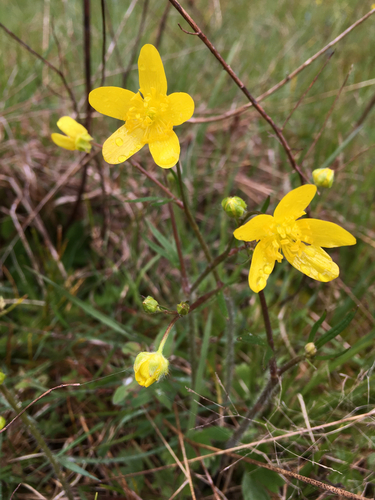
The Western Buttercup (Ranunculus occidentalis) is a charming perennial wildflower native to the western regions of North America, ranging from Alaska down to California. Easily recognized by its bright, glossy yellow petals, this hardy plant is one of the earliest signs of spring in open meadows, grassy slopes, and moist woodlands. It plays an essential role in early-season ecosystems by providing vital nectar and pollen to emerging native bees, butterflies, and other pollinators when few other floral resources are available. While beautiful to look at, the Western Buttercup possesses a clever chemical defense. The plant tissue contains ranunculin, which breaks down into a blistering, bitter toxin called protoanemonin when crushed or chewed. This effective deterrent protects the wildflower from grazing mammals like deer, rabbits, and livestock, allowing it to safely colonize open pastures and meadows where other plants are heavily grazed.
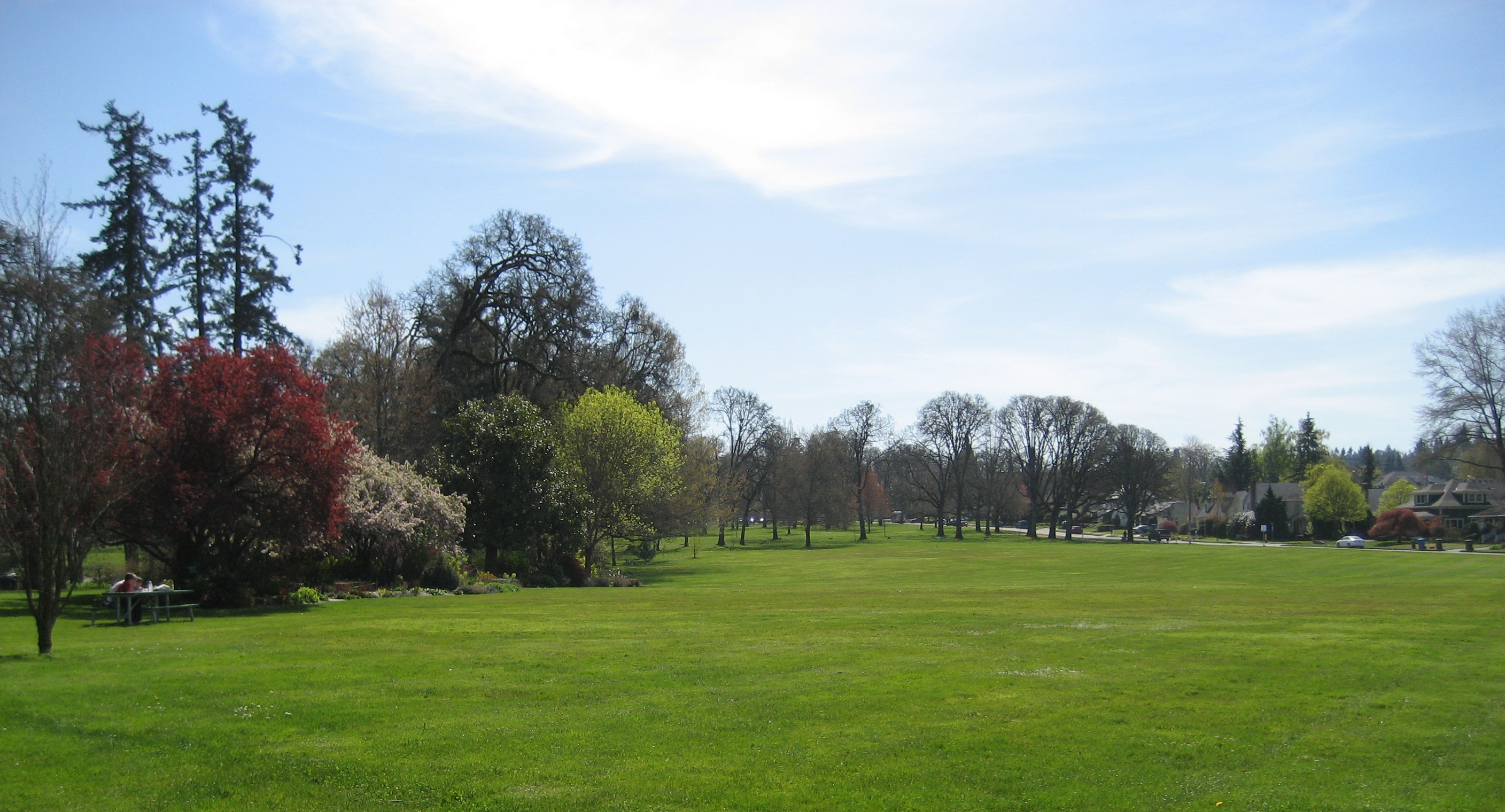
生息地: Typically found in open meadows, grassy hillsides, moist forests, oak savannas, and coastal bluffs of western North America.
This herbaceous perennial typically grows between 15 and 60 cm tall, displaying erect, branching stems covered in fine, spreading hairs. It features brilliant, highly reflective, lemon-yellow flowers measuring 1.5 to 2.5 cm across, typically with 5 to 8 shiny, teardrop-shaped petals that look almost varnished. Its leaves are deeply divided into three main lobed segments, with the basal leaves being larger and on longer stalks, while the upper stem leaves are smaller and much simpler.
カテゴリ
植物レア度
Common
危険度
1/5 · 非常に低い
スナップ
最初にスナップしよう!
Native American tribes historically used the toxic, blistering sap of the plant in highly diluted forms to treat muscle aches and skin conditions, though it requires great caution.
The generic name 'Ranunculus' means 'little frog' in Latin, referencing the damp, marshy environments where many members of the buttercup family tend to grow.
The stunning glossiness of buttercup petals actually helps focus sunlight onto the flower's center, warming up the reproductive structures to encourage insect activity.
Features a unique layer of flat, starch-filled cells on the upper surface of its petals that reflect yellow light and UV rays like a mirror, acting as a highly visible beacon for pollinators.
Produces the compound ranunculin, which converts to the toxic and intensely irritating protoanemonin upon mechanical damage, protecting the plant from herbivores.
The flowers possess heliotropic properties, turning their faces to track the sun across the sky to keep their reproductive organs warm and attractive to cold-blooded insects.
As a photoautotrophic plant, the Western Buttercup synthesizes its own organic nutrients using sunlight, water, carbon dioxide, and essential minerals absorbed from the soil.
Bombus vosnesenskii
The yellow-faced bumblebee visits the flowers to harvest pollen and nectar, acting as a primary pollinator.
Euphydryas chalcedona
Adult butterflies visit the flowers to drink nectar, assisting in the plant's pollination process.
Spizella passerina
Chipping Sparrows and other small birds feed on the dried seeds (achenes) in the late summer months.
このオブジェクトにはまだ特徴バッジが割り当てられていません。
まだ別名はありません。
テーマが追加されると、このオブジェクトのコレクションがここに表示されます。
危険度
1/5 · 非常に低い
まだ特別な安全上の注意はありません。
Western Buttercupを識別する最も簡単な方法は、Snappit自然識別アプリを使用することです。
15-60 cm
3-10 年
As a photoautotrophic plant, the Western Buttercup synthesizes its own organic nutrients using sunlight, water, carbon dioxide, and essential minerals absorbed from the soil.
Typically found in open meadows, grassy hillsides, moist forests, oak savannas, and coastal bluffs of western North America.
ズームインしてクラスターを分割し、このオブジェクトが撮影された場所を探索しましょう。
新しい観察が追加されると、ここに最近のスナップが表示されます。











.JPG&width=800)

