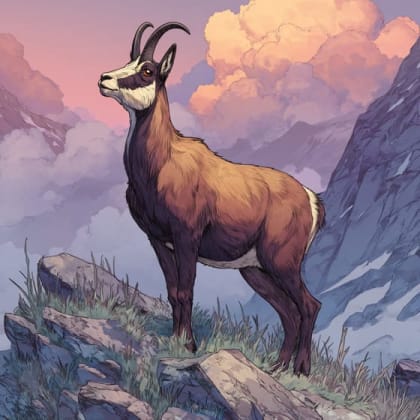
White-nosed Coati
Nasua narica
The White-nosed Coati is a playful animal with a long nose and a bushy tail. They love to explore and can often be seen climbing trees or searching for food in groups.
生息地: Forests
The White-nosed Coati has a long, flexible, upturned snout that is lighter in color than its dark brown or reddish-brown fur. Its slender body is accented by a long, often ringed tail, and lighter markings usually frame its eyes and face.
カテゴリ
哺乳類レア度
Common
危険度
2/5 · 低い
スナップ
最初にスナップしよう!
Females live in social groups called 'bands,' while adult males prefer to live alone!
Their name 'coati' might come from an indigenous word meaning 'nose ring'!
They can communicate using a variety of squeaks, grunts, and chirps!
White-nosed Coatis belong to the same animal family as raccoons!
White-nosed Coati can swivel and poke its flexible snout into crevices, helping them find hidden insects and fruits underground.
White-nosed Coati has flexible ankle joints that help them rotate their feet and descend trees headfirst with ease.
White-nosed Coati has a long, ringed tail that helps them balance perfectly while navigating narrow branches or rocky terrain.
Omnivores, they munch on tasty fruits, insects, and small creatures found on the ground and in trees.
Panthera onca
A top predator in its rainforest habitat.
Leopardus pardalis
A stealthy cat that hunts smaller mammals.
Ficus insipida
Coatis regularly consume the ripe fruits of this tree.
Boa constrictor
Large snakes can ambush coatis on the ground or in trees.
柔らかい体毛や毛皮が密集して体を覆っている動物の特徴を表します。
つる植物は、巻きひげや付着根を使ったり、茎をほかのものに巻きつけたりして上へ伸びる性質が特徴です。
社会性動物は組織的な群れで生活し、採餌、防衛、子育てなど、生存に有利になるよう協力し合います。
この特性は、植物と動物の両方を食べる生物を示します。

樹上性の動物は主に木の上で生活し、木を住処や餌場、天敵から身を守る場所として利用します。

森林の生息地は木々が密集して生い茂る陸上環境であり、多種多様な動植物の命を支えています。

昼行性の動物は主に日中に活動し、通常は夜間に休息や睡眠をとります。
危険度
2/5 · 低い
Watch from a distance and do not try to touch or feed wild animals.
41-67 cm
2-6 kg
7-15 年
30 km/h
Omnivores, they munch on tasty fruits, insects, and small creatures found on the ground and in trees.
Forests
Foraging
2-7
ズームインしてクラスターを分割し、このオブジェクトが撮影された場所を探索しましょう。
新しい観察が追加されると、ここに最近のスナップが表示されます。