

Wild Dilly
manilkara jaimiqui
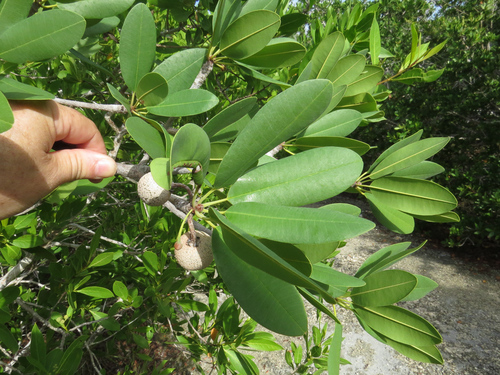
The Wild Dilly (Manilkara jaimiqui) is an enchanting, slow-growing evergreen tree native to the tropical hammocks and coastal regions of southern Florida and the Caribbean. A member of the Sapotaceae family, it is closely related to the Sapodilla tree, which historically supplied the natural latex used to make chewing gum. This resilient plant is incredibly well-adapted to harsh coastal conditions, featuring a rugged, gnarled growth habit and deep-reaching roots that anchor it against tropical storms. Beyond its tough exterior, the Wild Dilly plays a vital role in its native ecosystem. It produces small, inconspicuous yellowish flowers that give way to round, scurfy brown fruits. These sweet, gummy fruits are a crucial food source for local wildlife, including birds, land crabs, and mammals.
生息地: Found in coastal hammocks, pine rocklands, and coastal strand environments, typically growing in sandy or alkaline limestone soils.
Wild Dilly is characterized by its gnarled trunk with dark, deeply fissured gray bark and thick, leathery, dark green leaves. The leaves are typically clustered tightly at the tips of branches and feature a distinctive notch at the apex. Small, light yellow or brownish-yellow flowers emerge in clusters, followed by round, scruffy-textured brown fruits about 3 to 5 centimeters in diameter that resemble small, dusty potatoes.
カテゴリ
植物レア度
Common
危険度
1/5 · 非常に低い
スナップ
最初にスナップしよう!
Its edible fruit has a sweet, brown sugar-like flavor, but it contains a high amount of sticky latex when unripe, which can glue your lips together.
The Wild Dilly is a close relative of the Sapodilla tree, which was the original source of chicle used to make chewing gum.
The wood of the Wild Dilly is exceptionally heavy, hard, and strong, historically making it highly sought after for durable construction posts and tool handles.
When injured, the tree secretes a thick, sticky white latex that deters herbivorous insects and seals wounds against fungal infections.
Its thick, leathery leaves and flexible branches allow it to withstand heavy salt spray and high-velocity coastal winds without dehydrating.
The tree's roots can penetrate deep crevices in solid oolitic limestone, securing the plant and absorbing scarce fresh water.
As an autotrophic plant, the Wild Dilly produces its own organic compounds through photosynthesis, utilizing sunlight, carbon dioxide, and soil nutrients.
Patagioenas leucocephala
Feeds on the sweet, fleshy fruits and serves as a major seed disperser across coastal islands.
Gopherus polyphemus
Consumes fallen fruits on the forest floor in coastal sandy and rocky environments.
Odocoileus virginianus clavium
Browses on the low-hanging evergreen leaves and fallen fruits in the pine rocklands of the Florida Keys.
このオブジェクトにはまだ特徴バッジが割り当てられていません。
まだ別名はありません。
テーマが追加されると、このオブジェクトのコレクションがここに表示されます。
危険度
1/5 · 非常に低い
まだ特別な安全上の注意はありません。
Wild Dillyを識別する最も簡単な方法は、Snappit自然識別アプリを使用することです。
300-900 cm
50-150 年
As an autotrophic plant, the Wild Dilly produces its own organic compounds through photosynthesis, utilizing sunlight, carbon dioxide, and soil nutrients.
Found in coastal hammocks, pine rocklands, and coastal strand environments, typically growing in sandy or alkaline limestone soils.
ズームインしてクラスターを分割し、このオブジェクトが撮影された場所を探索しましょう。
新しい観察が追加されると、ここに最近のスナップが表示されます。












_Lotus_corniculatus_-_Plant_habit.jpg&width=800)