




Dimorphodon
Dimorphodon macronyx
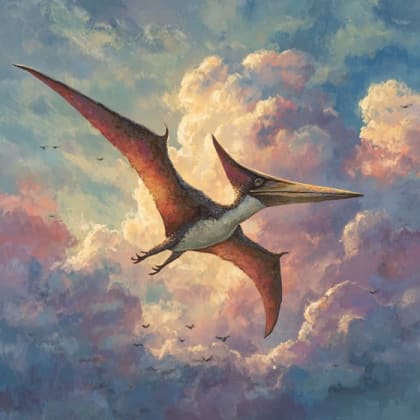
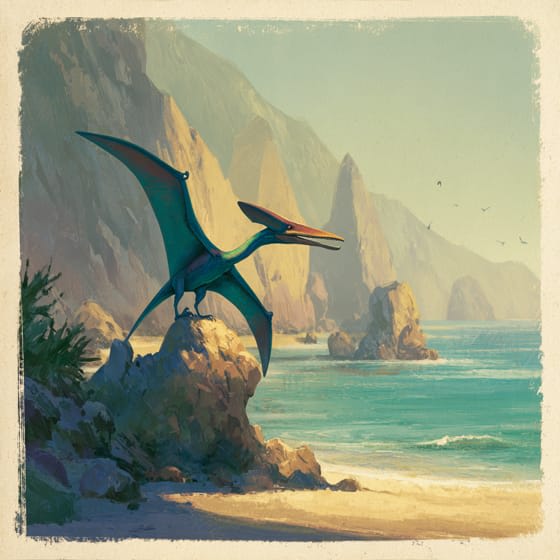
Dimorphodon was a pterosaur— a flying reptile— that soared over coastlines and lakes using long wings.
Habitat: Mesozoic coastlines and lakes
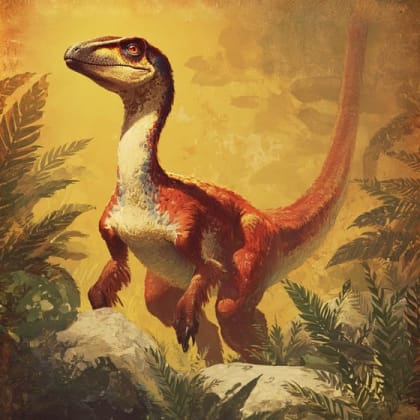
The Dimorphodon has an unusually large head with two distinct types of teeth, giving it a unique profile. It sports a robust body, short neck, and a very long tail ending in a diamond-shaped 'rudder'. Its leathery wings stretched between its long fourth finger and hind limb.
Category
AncientRarity
Common
Danger
1/5 · Very low
Snaps
Be the first to snap!
Dimorphodon was one of the earliest known pterosaurs, soaring the skies millions of years before most dinosaurs.
Fossils of Dimorphodon were first discovered in the cliffs of Lyme Regis, England.
Its name means 'two-form tooth', because of its uniquely different sized teeth.
Unlike later pterosaurs, its long stiff tail probably helped it balance in the air.
Dimorphodon can snap up prey with its strong, deep jaw because of its unusually large head and two types of teeth that help it grip.
Dimorphodon has a very long tail with a special diamond-shaped flap that helps them steer and balance while flying through ancient skies.
Dimorphodon can likely climb trees and cliffs using its strong claws on both its hands and feet, helping them find safe roosts.
This ancient flyer mainly ate fish and small land creatures.
Leptolepis coryphaenoides
Ate this common Early Jurassic fish.
Marmoretta oxoniensis
Hunted small, agile reptiles in coastal areas.
Dilophosaurus wetherilli
Potentially hunted by larger theropod dinosaurs if grounded.
Feathered describes animals, primarily birds, possessing a covering of feathers.
Crested describes animals possessing a prominent tuft of feathers, hair, or skin on their head.
Pertaining to plants with leaves or petals exhibiting different colors in patches or stripes.
Colorful describes organisms or objects displaying a wide range of bright and distinct colors.

Ancient refers to organisms, objects, or geological formations that have existed for an extremely long period.

An artifact is an object made or modified by human culture, typically of historical or archaeological interest.

A fossil is the preserved remains or traces of an ancient organism embedded in rock or other geological deposits.
Danger
1/5 · Very low
While extremely dangerous in their time, this creature is now extinct.
0.8-1 m
2-5 kg
This ancient flyer mainly ate fish and small land creatures.
Mesozoic coastlines and lakes
Pursuit
Early Jurassic
180
Zoom in to split clusters and explore where this object has been snapped.
Recent snaps will appear here as new observations are added.