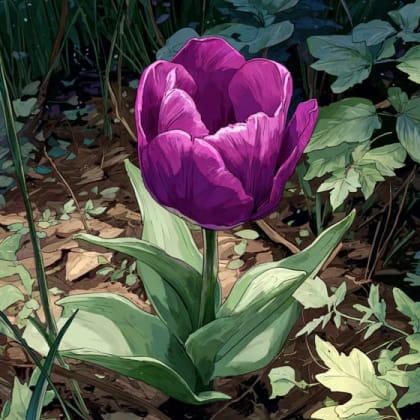
roses
Rosa
Roses are beautiful flowers that come in many colors like red, pink, and yellow. They have a lovely smell and are often given as gifts to show love and friendship.
Habitat: Gardens, parks, and meadows
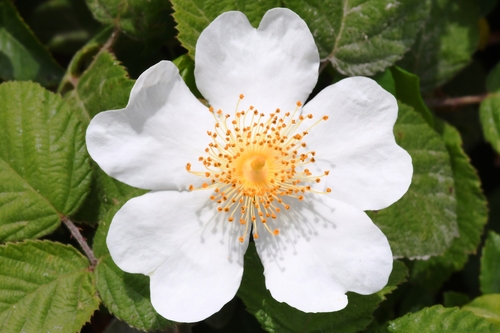
The roses has intricate layered petals in a kaleidoscope of colors from pure white to deep red, often with a fragrant center. Its stems are typically woody and armed with sharp thorns, setting them apart from many soft-stemmed flowers. Leaves are usually dark green and serrated.
Category
PlantsRarity
Common
Danger
2/5 · Low
Snaps
Be the first to snap!
Fossil roses show they've been on Earth for millions of years!
Rose petals are sometimes used to make delicious jams and teas!
Some rose bushes can live for hundreds of years, like ancient trees!
The oldest living rose bush is over 1,000 years old in Germany!
Roses have sharp thorns that help them defend against hungry herbivores trying to munch on their tasty leaves and flowers.
Roses emit sweet, alluring scents to attract pollinators like bees and butterflies, ensuring their seeds are spread.
Some roses produce rose hips, packed with vitamin C, helping the plant store nutrients and attract seed dispersers.
Apis mellifera
collects nectar and pollen
Macrosiphum rosae
sucks sap from tender shoots
Harmonia axyridis
preys on aphids infesting roses
Deciduous plants periodically shed all their leaves, typically during autumn or dry seasons.
Flowering plants are any plants that produce flowers as part of their reproductive cycle.
Ornamental plants are cultivated primarily for their aesthetic appeal, enhancing landscapes and gardens with their attractive foliage, flowers, or form.
A shrub is a woody plant smaller than a tree, typically with multiple stems branching from or near the ground.

Everblooming plants produce flowers continuously or in repeated flushes over a long period.

Fragrant flowers emit a pleasant aroma, often to attract pollinators or for defense.

Describes plants that are particularly attractive and beneficial to a wide range of pollinating organisms.

This habitat trait indicates species that can coexist with humans in urban and suburban environments, utilizing man-made structures and green spaces.
Danger
2/5 · Low
Be careful of the thorns on rose stems; they can prick your skin.
30-700 cm
30-300 cm
2-15 cm
Spring to fall
Yes
Mild
Perennial
Insect
Zoom in to split clusters and explore where this object has been snapped.
Recent snaps will appear here as new observations are added.

Massachusetts, US
You might spot Grey Cross Spider, Common Milkweed, and Roses.
View guide →

California, US
You might spot Roxburgh Fig, Roses, and Swan-Neck Agave.
View guide →

Washington, US
You might spot Western Sword Fern and Bigleaf Maple.
View guide →
Virginia, US
You might spot Roses, Onions, and Broadleaf Arrowhead.
View guide →