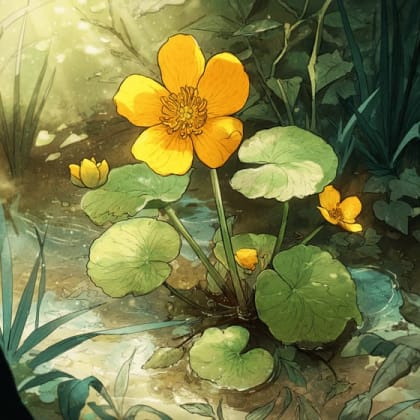
marsh marigold
Caltha palustris
Marsh marigolds are bright yellow flowers that bloom in wet areas. They look like little suns shining in the marshes and are loved by many insects.
Habitat: Wetlands
The marsh marigold has bright, waxy, cup-shaped yellow flowers, often with 5-9 petals. Its glossy, kidney-shaped leaves are vibrant green, forming dense clumps close to the ground.
Category
PlantsRarity
Common
Danger
2/5 · Low
Snaps
14
Its bright yellow petals reflect light, warming its flowers like tiny sun-collectors!
Its scientific name, Caltha, means 'goblet' or 'cup' in Greek!
Pickled marsh marigold flower buds were once eaten like capers!
These sunny flowers are not true marigolds; they're buttercup family!
Marsh marigold has special roots that can handle standing water, helping it thrive in soggy soil where other plants would drown.
It can flower very early in spring, giving it a head start attracting pollinators before many other plants wake up.
Its seeds can float on water, allowing them to travel to and colonize new wet areas for reproduction.
Apis mellifera
Visits flowers for nectar and pollen.
Bombus terrestris
A key pollinator for early spring blooms.
Syrphus ribesii
Larvae eat aphids, adults pollinate flowers.
Flowering plants are any plants that produce flowers as part of their reproductive cycle.
Spring blooming plants produce their flowers during the spring season, often signifying the end of winter and the start of new growth.
Broadleaf trees are angiosperms characterized by flat, wide leaves that are typically shed annually in temperate climates.
Medicinal plants possess chemical compounds that can be used for therapeutic purposes to treat illnesses or maintain health.

Edible plants are those parts of a plant that are considered safe for human consumption.

Describes plants that are particularly attractive and beneficial to a wide range of pollinating organisms.

This habitat trait identifies species found in wetlands, which are areas of land saturated with water, either permanently or seasonally, including marshes, swamps, and bogs.
No aliases listed yet.
Danger
2/5 · Low
Don't touch or eat any plants without asking an adult first.
15-60 cm
20-40 cm
2-5 cm
Early spring to summer
No
Mild
Perennial
Insect
Zoom in to split clusters and explore where this object has been snapped.
.JPG)
Massachusetts, US
You might spot Virginia Bluebells and Great Golden Digger Wasp.
View guide →

Minnesota, US
You might spot Rue Anemone, Eastern Skunk Cabbage, and Bloodroot.
View guide →

Bern, CH
You might spot House Sparrow, Wall-Rue, and Duck.
View guide →
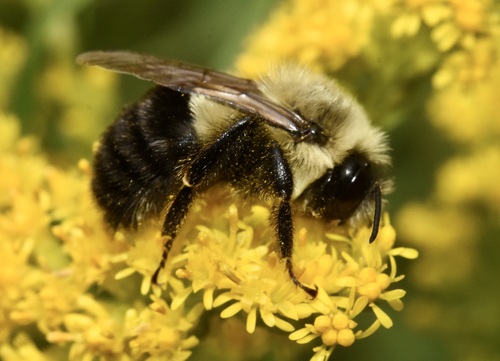
Minnesota, US
You might spot Common Eastern Bumble Bee and Wood Nettle.
View guide →

England, UK
You might spot Leopard, Capybara, and White Rhinoceros.
View guide →

Pennsylvania, US
You might spot Hemlock Varnish Shelf, Mountain Laurel, and Cinnamon Fern.
View guide →