




Allium
Allium
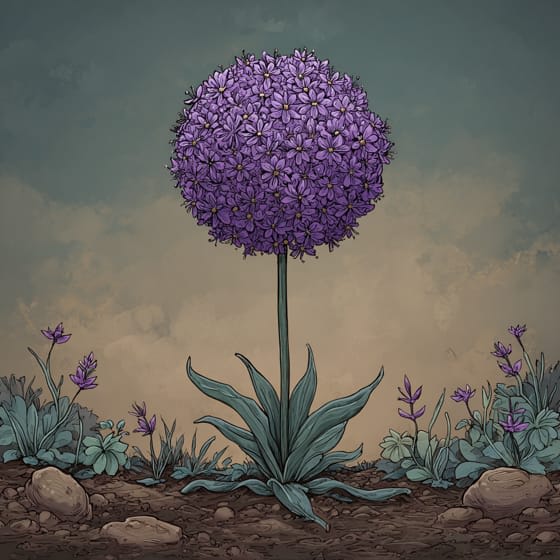
Allium flowers look like big purple pom-poms! They are fun to see in gardens and attract bees and butterflies.
Habitat: Alliums can be found in gardens, adding a pop of color.
The Allium has distinctive spherical or star-shaped flower heads, often purple, pink, or white, perched atop tall, slender, leafless stalks. Its leaves are typically long and strap-like or hollow, emerging from a bulb underground.
Category
PlantsRarity
Common
Danger
1/5 · Very low
Snaps
Be the first to snap!
Ancient Egyptians thought garlic Alliums were sacred, even putting them in tombs!
Cutting some Alliums can make your eyes water and cry!
The biggest Allium flower heads can be as wide as a dinner plate!
There are over 800 types of Allium, from tiny chives to giant onions!
Allium has powerful sulfur compounds that give it a pungent odor, helping to deter hungry animals and pests.
Allium stores energy and nutrients in its bulb underground, allowing it to survive harsh conditions and regrow each year.
Many Allium species can produce small bulbils or offsets, allowing them to create new plants without needing seeds.
Apis mellifera
Visits flowers for nectar and pollen.
Bombus impatiens
Feeds on nectar, aiding reproduction.
Delia antiqua
Larvae tunnel into bulbs and roots.
Homo sapiens
Cultivates many species for food and flavor.
Ornamental plants are cultivated primarily for their aesthetic appeal, enhancing landscapes and gardens with their attractive foliage, flowers, or form.
Spring blooming plants produce their flowers during the spring season, often signifying the end of winter and the start of new growth.
Fragrant flowers emit a pleasant aroma, often to attract pollinators or for defense.
Edible plants are those parts of a plant that are considered safe for human consumption.

This habitat trait indicates species that can coexist with humans in urban and suburban environments, utilizing man-made structures and green spaces.
Danger
1/5 · Very low
Explore with care and ask an adult if you’re unsure what to do.
30-150 cm
15-60 cm
0.5-2 cm
Late Spring to Summer
Yes
None
Perennial
Insect
Zoom in to split clusters and explore where this object has been snapped.
Recent snaps will appear here as new observations are added.