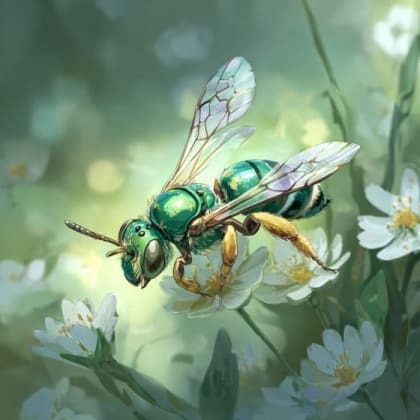
Blister Beetle
Mylabris pustulata
Blister Beetles are interesting insects that can sometimes make you feel a little itchy! They have bright colors to warn others to stay away.
Habitat: Gardens and fields
The Blister Beetle has an elongated, somewhat soft body, often adorned with striking yellow, orange, or red patterns against a black background. Its vibrant colors serve as a warning, making it visually distinct from many other beetles.
Category
InsectsRarity
Common
Danger
2/5 · Low
Snaps
Be the first to snap!
Baby Blister Beetles start life as tiny hunters, seeking out grasshopper eggs!
Dried Blister Beetles were once used in medicines, though it was very dangerous!
If threatened, they can 'bleed' a special toxic fluid from their leg joints!
Some species were even collected to make a powerful aphrodisiac called 'Spanish Fly'!
Blister Beetles can release a potent blistering chemical called cantharidin for defense against predators.
Blister Beetles have a unique 'hypermetamorphosis' life cycle, changing forms up to eight times as they grow.
Their larvae can sneak into other insect nests to feed on eggs and stored food, acting as tiny predators.
Adult Blister Beetles munch on plants, pollen, and nectar, while their larvae are fierce hunters!
Age differences: Larvae are predatory, eating other insect eggs and larvae, but adults switch to a plant-based diet.
Melanoplus differentialis
Larvae devour their eggs.
Osmia bicornis
Larvae feed in their nests.
Helianthus annuus
Adults feed on its pollen.
Wildlife encompasses all undomesticated animal and plant life existing in their natural habitats.
Colorful describes organisms or objects displaying a wide range of bright and distinct colors.
This trait characterizes organisms whose diet consists entirely or primarily of plant material.
Nocturnal animals are primarily active during the nighttime hours, typically resting or sleeping during the day.

Describes organisms that transfer pollen, enabling the fertilization and reproduction of plants.
No aliases listed yet.
Danger
2/5 · Low
Do not touch or pick up. Some insects sting or bite. Ask an adult for help.
20-50 mm
10-25 mm
30-90 days
Adult Blister Beetles munch on plants, pollen, and nectar, while their larvae are fierce hunters!
Gardens and fields
6
Zoom in to split clusters and explore where this object has been snapped.
Recent snaps will appear here as new observations are added.