




Sandstone
Sandstone is a soft rock made from tiny grains of sand. It can be found in many colors!
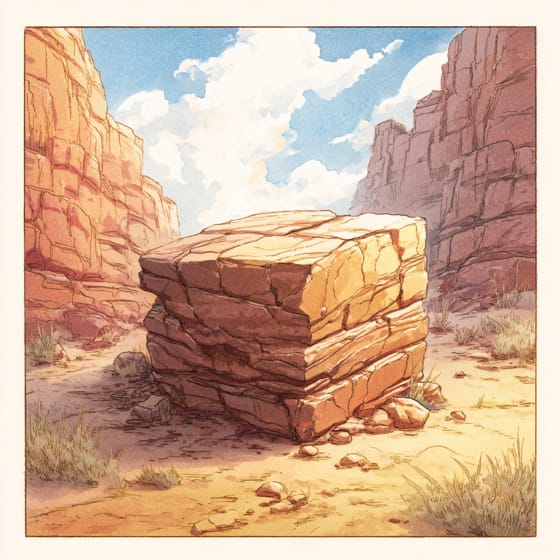
The Sandstone has a rough, grainy texture and often appears in shades of red, yellow, brown, or white. It's easily recognizable by its visible sand grains cemented together, which can sometimes reveal ancient ripple marks or cross-bedding.
Category
MineralRarity
Common
Danger
1/5 · Very low
Snaps
Be the first to snap!
Many famous ancient pyramids and temples were built using massive, carved sandstone blocks!
Sandstone forms from ancient desert dunes or ocean beaches squished together for eons!
Some sandstone layers are giant underground sponges, holding Earth's oil and natural gas!
You might find tiny fossil footprints or ripple marks preserved inside sandstone from long ago.
Sandstone has interconnected pore spaces between its grains, allowing it to store vital groundwater for communities and ecosystems.
Sandstone's sturdy nature and relative ease of quarrying make it a fantastic natural material for constructing buildings and monuments.
Sandstone's rough, gritty surface provides excellent friction, making it a great material for non-slip paving and grinding tools.
Sedimentary rocks are formed from the accumulation and compaction of sediments, organic matter, or chemical precipitates.
Colorful describes organisms or objects displaying a wide range of bright and distinct colors.
A fossil is the preserved remains or traces of an ancient organism embedded in rock or other geological deposits.
No aliases listed yet.
Danger
1/5 · Very low
Handle gently and avoid sharp edges. Ask an adult before picking anything up.
red, yellow, brown, grey, white
6.5
dull to earthy
2.3
Zoom in to split clusters and explore where this object has been snapped.
Recent snaps will appear here as new observations are added.