



Blackbuck
Antilope cervicapra
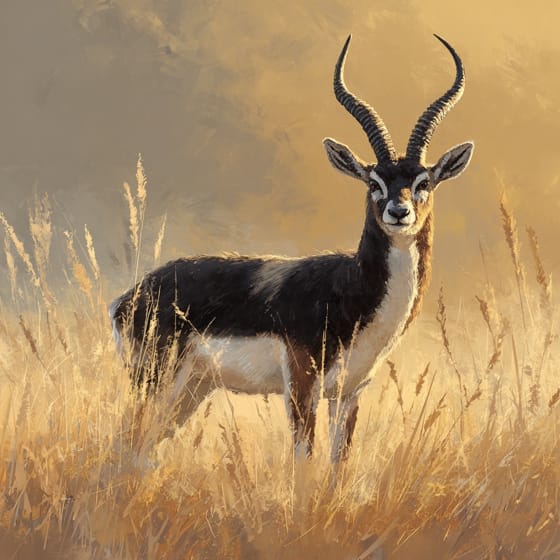
The Blackbuck is a graceful antelope with striking black and white markings. It can run very fast and jump high, making it a wonderful sight in the grasslands.
Habitat: Grasslands
The Blackbuck is a strikingly beautiful antelope with marked sexual dimorphism. Males are dark brown to black on their upper body with a crisp white belly and eye rings, sporting magnificent spiraling horns up to 70 cm long. Females are hornless and a lighter fawn-brown with similar white markings.
Category
MammalsRarity
Rare
Danger
2/5 · Low
Snaps
Be the first to snap!
Blackbucks can go for long periods without drinking, getting most of their water from the plants they eat!
Male blackbucks can change their coat color from light brown to deep black as they get older!
They use scent glands near their eyes to mark their territories, leaving messages for other antelopes!
Young blackbuck calves stay hidden in tall grasses for weeks after birth to stay safe from predators!
Blackbucks can pronk, leaping high into the air with all four legs tucked, because of strong leg muscles that help them evade predators.
Blackbucks can run incredibly fast, reaching speeds up to 80 km/h, because of their slender, muscular legs that help them outrun threats.
Blackbucks have excellent eyesight and a wide field of vision that helps them spot predators from far away in open grasslands.
Blackbucks are herbivores that mainly eat grasses, but they also enjoy leaves and some fruits.
Cuon alpinus
Wild dogs that hunt in packs.
Marked with parallel bands or lines of color.
Social animals live in organized groups, cooperating for survival benefits such as foraging, defense, and raising offspring.
Antlered describes animals possessing antlers, which are bony, branching growths found predominantly on male deer and related species.
Characterized by having one or more hard, permanent, pointed projections on the head.

Grassland habitats are terrestrial biomes dominated by grasses and herbaceous plants, supporting a variety of grazing animals.

This trait characterizes organisms whose diet consists entirely or primarily of plant material.

Diurnal animals are primarily active during daylight hours, typically resting or sleeping at night.

This trait identifies organisms that exhibit exceptional swiftness in movement for hunting, escape, or travel.
Danger
2/5 · Low
Admire Blackbucks from a safe distance and avoid approaching them to ensure their safety and yours.
100-150 cm
20-57 kg
10-18 years
80 km/h
Blackbucks are herbivores that mainly eat grasses, but they also enjoy leaves and some fruits.
Grasslands
Grazing
1-2
Zoom in to split clusters and explore where this object has been snapped.
Recent snaps will appear here as new observations are added.