




Deep-Sea Crab
Geryon
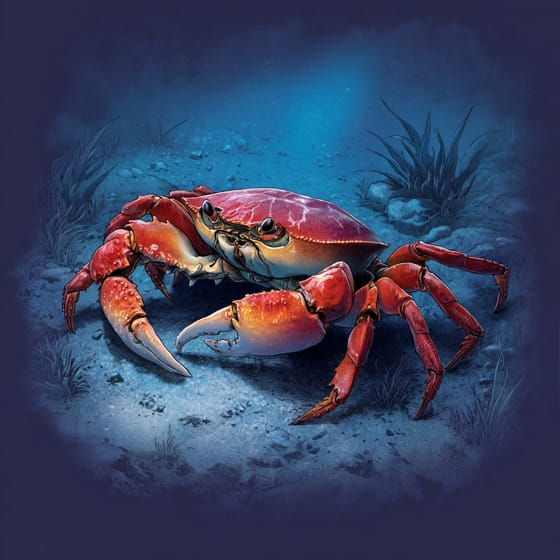
Meet the Deep-Sea Crab, a fascinating creature that lives in the mysterious depths of the ocean. With its long, spindly legs and unique adaptations, this crab is perfectly suited for life in the dark, cold waters of the deep sea.
Habitat: Deep Sea
The Deep-Sea Crab has a robust, oval-shaped carapace, often colored pale orange, red, or cream. Its long, slender legs and prominent pincers are adapted for navigating the dark, rocky ocean floor, making it distinct from shallow-water species.
Category
InvertebrateRarity
Common
Danger
1/5 · Very low
Snaps
Be the first to snap!
Deep-sea crabs can go for a very long time without eating, thanks to slow metabolism.
Some deep-sea crabs have fluffy 'fur' made of bacteria that they 'farm' for food!
When they molt, deep-sea crabs leave behind a perfect ghost-like shell of themselves.
Wow! Their eyes are often tiny or missing because there's no sunlight to see by.
Deep-Sea Crabs have a unique body structure that helps them survive immense pressure, allowing them to live thousands of meters deep.
Deep-Sea Crabs have a very slow metabolism that helps them thrive in the freezing cold waters of the deep ocean.
Deep-Sea Crabs have highly sensitive chemoreceptors to find food and avoid danger in complete darkness.
Deep-sea crabs are hungry scavengers and hunters, feasting on anything they can find on the dark seafloor!
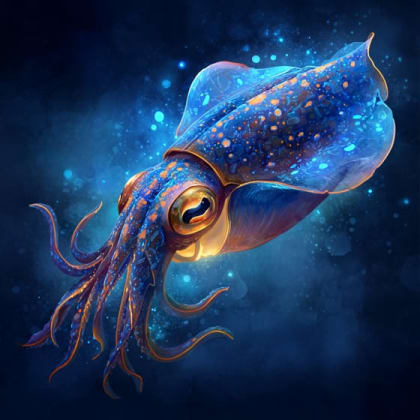
Graneledone boreopacifica
Preys on crabs on the seafloor.
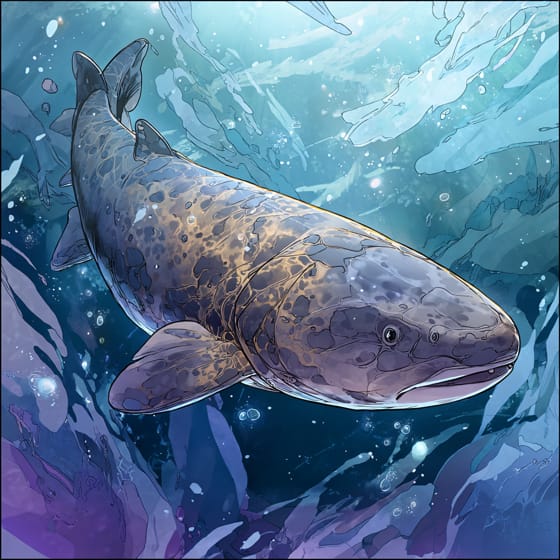
Somniosus microcephalus
One of the largest deep-sea predators.
Ophiacantha bidentata
Opportunistically preys on smaller invertebrates.
Wildlife encompasses all undomesticated animal and plant life existing in their natural habitats.
Scavengers consume dead organic matter, helping to decompose carcasses and other waste in the ecosystem.
This trait signifies organisms belonging to a very old evolutionary group with ancestors dating back millions of years.
Deep sea habitats are characterized by extreme pressure, darkness, and cold temperatures, supporting unique life forms below the sunlit zone.

Armored describes animals protected by a hard, external covering or shell for defense.

This trait identifies organisms whose diet consists entirely or primarily of animal tissue.

Regenerative organisms possess the ability to regrow lost or damaged body parts, tissues, or organs.

Nocturnal animals are primarily active during the nighttime hours, typically resting or sleeping during the day.
No aliases listed yet.
Danger
1/5 · Very low
Deep-Sea Crabs are not encountered by people and pose no danger to children.
10-25 cm
0.5-2.5 kg
20-50 years
Deep-sea crabs are hungry scavengers and hunters, feasting on anything they can find on the dark seafloor!
Deep Sea
Scavenging
5000 m
Saltwater
Zoom in to split clusters and explore where this object has been snapped.
Recent snaps will appear here as new observations are added.