Ateles Fusciceps
ateles fusciceps
The Ateles Fusciceps, also known as the black-headed spider monkey, is a playful and acrobatic primate that loves to swing through the trees! With its long limbs and prehensile tail, it can easily navigate the rainforest canopy.
Lebensraum: Tropical rainforests of Central and South America
The Ateles Fusciceps has a dark brown to black body with a distinctive dark cap on its head. Its long, slender limbs and incredibly long, powerful prehensile tail make it stand out visually from other monkeys.
Kategorie
SäugetiereSeltenheit
Common
Gefahr
0/5 · Keine bekannte Gefahr
Snaps
Mach den ersten Snap!
Their long limbs and tail make them look like a giant spider when stretched out!
These clever monkeys live in groups that split into smaller feeding parties each day.
They are important 'gardeners of the forest,' spreading seeds far and wide!
They prefer ripe fruit so much they will smell, squeeze, and even lick it to check!
Ateles Fusciceps has a powerful prehensile tail that helps them grasp branches like a crucial fifth limb for balance and support.
Ateles Fusciceps can swing swiftly through the canopy using their long, hook-like hands and strong arms, enabling agile movement.
Ateles Fusciceps can leap great distances between trees thanks to their flexible joints and powerful legs, avoiding ground predators.
Mostly eats delicious ripe fruits, with some leaves, flowers, and tiny insects.
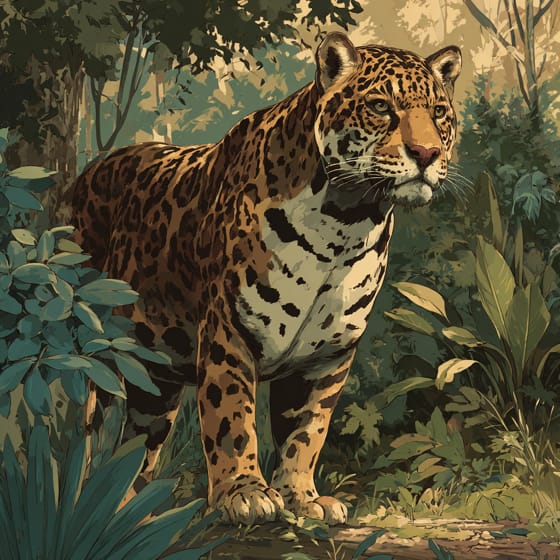
Panthera onca
A primary predator in their jungle habitat.
Harpia harpyja
A powerful bird of prey in the canopy.
Ficus insipida
Feeds heavily on the fruits of this common tree.
Brosimum alicastrum
Consumes the leaves and fruits from this tree.
Ceiba pentandra
Relies on large canopy trees for shelter and food.
Pelzig beschreibt Tiere, die eine dichte Schicht aus weichen Haaren oder Fell besitzen.
Soziale Tiere leben in organisierten Gruppen und kooperieren, um ihr Überleben zu sichern, beispielsweise bei der Nahrungssuche, Verteidigung und Aufzucht der Jungen.
Baumbewohnende Tiere leben hauptsächlich in Bäumen und nutzen diese als Unterschlupf, Nahrungsquelle und zum Schutz vor Raubtieren.
Tagaktive Tiere sind hauptsächlich bei Tageslicht aktiv und ruhen oder schlafen in der Regel nachts.

Der Status 'Stark gefährdet' bedeutet, dass eine Art in naher Zukunft einem sehr hohen Risiko ausgesetzt ist, in freier Wildbahn auszusterben.
Gefahr
0/5 · Keine bekannte Gefahr
Noch keine besonderen Sicherheitshinweise.
40-55 cm
5-9 kg
20-25 Jahre
35 km/h
Mostly eats delicious ripe fruits, with some leaves, flowers, and tiny insects.
Tropical rainforests of Central and South America
Foraging
1
Zoome hinein, um Cluster aufzulösen und zu sehen, wo dieses Objekt fotografiert wurde.
Neueste Snaps erscheinen hier, wenn neue Beobachtungen hinzukommen.






.JPG&width=800)