Black-capped Squirrel Monkey
Saimiri boliviensis
The Black-capped Squirrel Monkey is a playful and curious little monkey with a black cap on its head. They love to swing through trees and are very social, often seen in groups with their friends.
Lebensraum: Forests
The Black-capped Squirrel Monkey has a slender body with distinctive yellow-orange fur on its limbs. It features a striking white mask around its eyes, a dark muzzle, and a prominent black cap on its head, making it easily identifiable.
Kategorie
SäugetiereSeltenheit
Common
Gefahr
2/5 · Gering
Snaps
Mach den ersten Snap!
Babies ride on their mothers' backs, clinging tightly for their first months!
Black-capped Squirrel Monkeys can leap up to 5 meters (16 feet) between trees!
These monkeys often travel in huge groups of 50 to over 100 individuals!
They use their own urine on their hands and feet to leave scent trails!
Black-capped Squirrel Monkey can leap and climb through trees swiftly because of powerful legs and strong grip.
Black-capped Squirrel Monkey has excellent eyesight that helps them spot tiny insects and ripe fruits in the forest canopy.
Black-capped Squirrel Monkey uses its long, non-prehensile tail that helps them balance while navigating branches.
Black-capped Squirrel Monkey can use many calls that helps their large groups stay together and warn of danger.
These small monkeys love to eat ripe fruits, juicy insects, and sometimes even tiny lizards!
Harpia harpyja
A powerful bird of prey in the canopy.
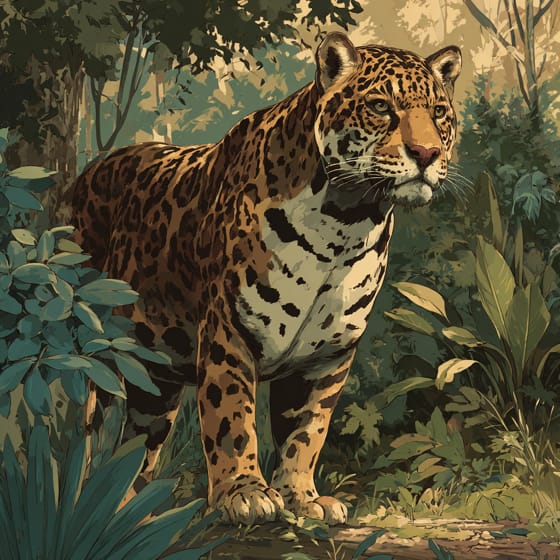
Panthera onca
Large cat that hunts in the rainforest.
Ficus insipida
Relishes its sweet, energy-rich fruits.
Tropidacris cristata
Hunts them as a protein-rich food source.
Pelzig beschreibt Tiere, die eine dichte Schicht aus weichen Haaren oder Fell besitzen.
Soziale Tiere leben in organisierten Gruppen und kooperieren, um ihr Überleben zu sichern, beispielsweise bei der Nahrungssuche, Verteidigung und Aufzucht der Jungen.
Dieses Merkmal kennzeichnet Organismen, deren Ernährung sowohl pflanzliche als auch tierische Bestandteile umfasst.
Baumbewohnende Tiere leben hauptsächlich in Bäumen und nutzen diese als Unterschlupf, Nahrungsquelle und zum Schutz vor Raubtieren.

Waldlebensräume sind terrestrische Lebensräume, die von dichtem Baumbestand dominiert werden und eine große Vielfalt an Pflanzen- und Tierarten beherbergen.

Dieses Merkmal kennzeichnet Lebewesen, die bei der Jagd, Flucht oder Fortbewegung eine außergewöhnliche Schnelligkeit aufweisen.

Tagaktive Tiere sind hauptsächlich bei Tageslicht aktiv und ruhen oder schlafen in der Regel nachts.

Der Status 'Stark gefährdet' bedeutet, dass eine Art in naher Zukunft einem sehr hohen Risiko ausgesetzt ist, in freier Wildbahn auszusterben.
Noch keine Alternativnamen vorhanden.
Gefahr
2/5 · Gering
Always watch from a distance and never try to touch wild animals.
25-35 cm
0.7-1.1 kg
10-15 Jahre
25 km/h
These small monkeys love to eat ripe fruits, juicy insects, and sometimes even tiny lizards!
Forests
Foraging
1
Zoome hinein, um Cluster aufzulösen und zu sehen, wo dieses Objekt fotografiert wurde.
Neueste Snaps erscheinen hier, wenn neue Beobachtungen hinzukommen.