






black cottonwood
Populus trichocarpa
The black cottonwood is a tall tree with fluffy, white seeds that float in the air like little clouds. It loves to grow near rivers and wetlands, providing shade and homes for many animals.
Lebensraum: Wetlands
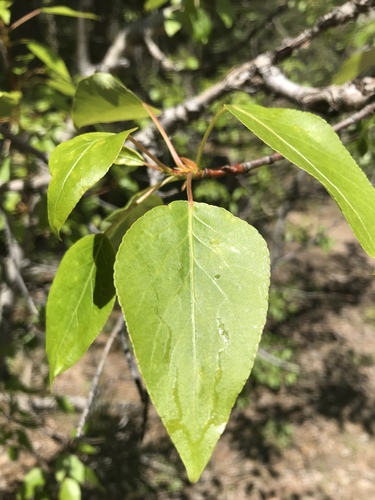
The black cottonwood is a very tall tree with a straight trunk, often covered in dark, deeply furrowed bark. Its large, glossy green leaves are heart-shaped with silvery undersides, and in spring, it produces fluffy "cotton" seeds.
Kategorie
PflanzenSeltenheit
Common
Gefahr
1/5 · Sehr gering
Snaps
Mach den ersten Snap!
Its dark, furrowed bark is a tell-tale sign of an old, wise tree!
Native American tribes used its inner bark and buds for food and medicine!
Some people call it a "pioneer tree" because it grows fast in new places!
Wow, its sticky buds smell like a spicy, sweet balsam!
Black cottonwood can grow incredibly fast, helping it reach sunlight and outcompete other plants for space.
Black cottonwood has sticky, resinous buds that protect its tender new leaves from hungry insects and disease.
Black cottonwood produces tiny, cotton-covered seeds that catch the wind, helping them spread far and wide.
Castor canadensis
Beavers cut down its trees for food and dam construction.
Odocoileus hemionus
Mule deer browse on its young twigs and tender foliage.

Pemphigus populitransversus
Aphids create galls on leaf stems, feeding on the tree's sap.
Bubo virginianus
Great Horned Owls often build nests in its tall, sturdy branches.
Blütenpflanzen sind alle Pflanzen, die als Teil ihres Fortpflanzungszyklus Blüten bilden.
Laubabwerfende Pflanzen werfen regelmäßig all ihre Blätter ab, typischerweise im Herbst oder in Trockenzeiten.
Schattenverträgliche Pflanzen sind an das Wachstum und Gedeihen in Bereichen mit wenig Licht angepasst und benötigen weniger direkte Sonneneinstrahlung.
Laubbäume sind Bedecktsamer, die sich durch flache, breite Blätter auszeichnen, welche in gemäßigten Klimazonen typischerweise jährlich abgeworfen werden.

Beschreibt Pflanzen, die für eine Vielzahl von bestäubenden Organismen besonders attraktiv und nützlich sind.

Nutzholz bezeichnet Holz, das für die Verwendung im Bauwesen und in der Zimmerei aufbereitet wurde.

Schnellwachsende Pflanzen weisen eine beschleunigte Wachstumsrate auf und nehmen innerhalb kurzer Zeit schnell an Größe und Biomasse zu.

Dieses Lebensraummerkmal kennzeichnet Arten, die in Feuchtgebieten vorkommen. Dies sind Landflächen, die dauerhaft oder saisonal mit Wasser gesättigt sind, darunter Marschland, Sümpfe und Moore.

Beschreibt eine Art, deren Anwesenheit und Rolle einen unverhältnismäßig großen Einfluss auf ihre Umwelt haben.
Noch keine Alternativnamen vorhanden.
Gefahr
1/5 · Sehr gering
Stay away from the tree's branches and watch out for falling seeds when they are blowing in the wind.
3000-6000 cm
1000-2000 cm
5-20 cm
Frühling
Ja
Keine
Mehrjährig
Wind
Zoome hinein, um Cluster aufzulösen und zu sehen, wo dieses Objekt fotografiert wurde.
Neueste Snaps erscheinen hier, wenn neue Beobachtungen hinzukommen.

British Columbia, CA
Hier kann man sehen Yellow-Bellied Marmot, Rubber Rabbitbrush und Siberian Elm.
Führer anzeigen →
British Columbia, CA
Hier kann man sehen Black Cottonwood, Oregon Grape und Showy Milkweed.
Führer anzeigen →

British Columbia, CA
Hier kann man sehen Oregon Grape, Common Snowberry und Black Locust.
Führer anzeigen →

British Columbia, CA
Hier kann man sehen Brown Elfin, Bearberry und Black Cottonwood.
Führer anzeigen →
.jpg)
British Columbia, CA
Hier kann man sehen Oregon Grape, Heartleaf Arnica und Solomon's Plume.
Führer anzeigen →















