Domestic Horse
Equus caballus
Domestic horses are gentle and strong animals that have been friends with people for a long time. They come in many colors and sizes, and they love to run and play in fields.
Lebensraum: Grasslands
The Domestic Horse is a large, hoofed mammal with a long head and muscular body. They have a flowing mane and tail, and coats come in almost every color, from black and white to shades of brown, red, and gold, often with unique markings.
Kategorie
SäugetiereSeltenheit
Common
Gefahr
3/5 · Mittel
Snaps
Mach den ersten Snap!
A horse's age can be estimated by looking at the wear and changes in their teeth!
A horse's eyes are on the sides of their head, giving them nearly 360-degree vision!
Horses cannot vomit, which means they have a very unique digestive system!
Horses only walk on one 'toe' on each foot, protected by a hard hoof!
Domestic Horse can run swiftly and powerfully because of their strong, muscled legs that help them cover long distances quickly.
Domestic Horse has large, flat molars that help them grind tough plant material like grass and hay into digestible bits.
Domestic Horse has wide-set eyes, excellent hearing, and a keen sense of smell that help them detect threats and food.
Domestic Horses are herbivores that munch on grasses, hay, and other plant matter to get their energy.
Altersunterschiede: Young horses, called foals, drink their mother's milk before transitioning to solid plant foods.
Canis lupus
Wild or feral horses can be prey for large predators.
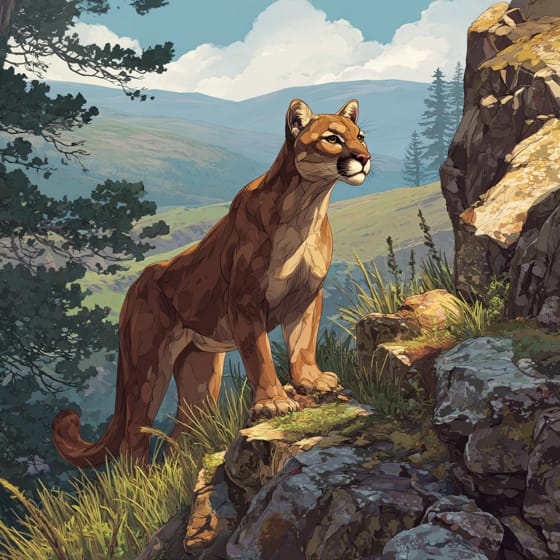
Puma concolor
In some wild or feral ranges, pumas may hunt horses.
Homo sapiens
Humans have a long history of working with and caring for horses.
Poa pratensis
A common pasture grass that forms a main part of their diet.
Pelzig beschreibt Tiere, die eine dichte Schicht aus weichen Haaren oder Fell besitzen.
Soziale Tiere leben in organisierten Gruppen und kooperieren, um ihr Überleben zu sichern, beispielsweise bei der Nahrungssuche, Verteidigung und Aufzucht der Jungen.
Grasland-Lebensräume sind terrestrische Biome, die von Gräsern und krautigen Pflanzen dominiert werden und einer Vielzahl von Weidetieren als Lebensraum dienen.
Dieses Merkmal kennzeichnet Lebewesen, deren Ernährung vollständig oder hauptsächlich aus pflanzlichem Material besteht.

Als domestiziert bezeichnet man Arten, die vom Menschen für bestimmte Zwecke gezielt gezüchtet und gezähmt wurden.

Beschreibt eine Art, deren Anwesenheit und Rolle einen unverhältnismäßig großen Einfluss auf ihre Umwelt haben.

Dieses Merkmal kennzeichnet Lebewesen, die bei der Jagd, Flucht oder Fortbewegung eine außergewöhnliche Schnelligkeit aufweisen.

Tagaktive Tiere sind hauptsächlich bei Tageslicht aktiv und ruhen oder schlafen in der Regel nachts.
Noch keine Alternativnamen vorhanden.
Gefahr
3/5 · Mittel
Always stay calm and quiet around horses, and ask an adult before getting close.
140-250 cm
350-1000 kg
25-30 Jahre
70 km/h
Domestic Horses are herbivores that munch on grasses, hay, and other plant matter to get their energy.
Grasslands
Grazing
1
Zoome hinein, um Cluster aufzulösen und zu sehen, wo dieses Objekt fotografiert wurde.
Neueste Snaps erscheinen hier, wenn neue Beobachtungen hinzukommen.

Maryland, US
Hier kann man sehen Domestic Horse, Sanderling und Atlantic Ghost Crab.
Führer anzeigen →

Montana, US
Hier kann man sehen Dickhornschaf und Curlleaf Mountain Mahogany.
Führer anzeigen →