
.jpg&width=800)





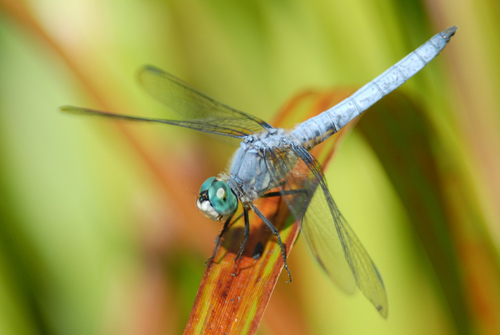
Familiar Bluet
Enallagma civile
The Familiar Bluet is a small, beautiful dragonfly with bright blue colors. They love to fly around ponds and streams, showing off their lovely wings.
Lebensraum: Wetlands
The Familiar Bluet is a slender damselfly, vibrantly blue with distinct black markings on its abdomen. It has two small, bright blue spots behind its large eyes and clear wings that it holds together over its back when at rest, differentiating it from dragonflies.
Kategorie
InsektenSeltenheit
Common
Gefahr
1/5 · Sehr gering
Snaps
Mach den ersten Snap!
Baby bluets, called nymphs, live underwater for months before transforming.
Damselflies are ancient insects, flying since before the dinosaurs roamed!
Their delicate wings sparkle in the sun, made of tiny clear veins.
They mate in a unique 'wheel' formation, sometimes called a 'heart' shape!
Familiar Bluet larvae can breathe underwater using gills that helps them hunt other tiny aquatic creatures.
Familiar Bluets can dart and hover quickly because of their two pairs of independently moving wings that helps them catch flying insects.
Familiar Bluets have huge compound eyes that helps them spot tiny prey insects from far away.
Familiar Bluets appear vibrantly blue because of special pigments that helps them attract mates and define their territory.
This tiny hunter eats small flying insects and aquatic creatures.
Altersunterschiede: Larvae are aquatic predators, adults are aerial predators.
Culex pipiens
Helps control populations of nuisance mosquitoes.
Lithobates clamitans
A common amphibian predator of adult bluets.
Gambusia affinis
Eats bluet larvae in aquatic environments.
.jpg&width=800)
Tyrannus tyrannus
Insect-eating bird that catches adult damselflies.
Nymphaea odorata
Rests on and lays eggs near aquatic plants.
Einzelgänger leben den größten Teil ihres Lebens allein und interagieren mit Artgenossen nur zur Paarung oder zur Aufzucht der Jungen.
Luftbewohnende Tiere verbringen einen erheblichen Teil ihres Lebens in der Luft und nutzen den Flug für verschiedene Aktivitäten wie Jagd, Wanderungen oder Nestbau.
Farbenfroh beschreibt Organismen oder Objekte, die eine große Vielfalt an leuchtenden und deutlich erkennbaren Farben aufweisen.
Dieses Merkmal kennzeichnet Organismen, deren Nahrung hauptsächlich aus Insekten und anderen kleinen Wirbellosen besteht.

Dieses Lebensraummerkmal kennzeichnet Arten, die in Feuchtgebieten vorkommen. Dies sind Landflächen, die dauerhaft oder saisonal mit Wasser gesättigt sind, darunter Marschland, Sümpfe und Moore.

Dieses Merkmal kennzeichnet Lebewesen, die bei der Jagd, Flucht oder Fortbewegung eine außergewöhnliche Schnelligkeit aufweisen.

Süßwasserlebensräume umfassen nicht-salzige Gewässer wie Flüsse, Seen, Teiche und Feuchtgebiete, die für zahlreiche Arten lebenswichtig sind.

Tagaktive Tiere sind hauptsächlich bei Tageslicht aktiv und ruhen oder schlafen in der Regel nachts.

Beschreibt Organismen, die Pollen übertragen und so die Befruchtung und Fortpflanzung von Pflanzen ermöglichen.
Noch keine Alternativnamen vorhanden.
Gefahr
1/5 · Sehr gering
Dragonflies are harmless but always watch them from a distance.
30-50 mm
25-40 mm
15-30 Tage
5-10 km/h
This tiny hunter eats small flying insects and aquatic creatures.
Wetlands
Pursuit
6
Zoome hinein, um Cluster aufzulösen und zu sehen, wo dieses Objekt fotografiert wurde.
Neueste Snaps erscheinen hier, wenn neue Beobachtungen hinzukommen.
New Jersey, US
Hier kann man sehen Blauer Sonnenzeiger, Eastern Pondhawk und Laughing Gull.
Führer anzeigen →

District of Columbia, US
Hier kann man sehen Ente, östliches Grauhörnchen und Kanadagans.
Führer anzeigen →

New Mexico, US
Hier kann man sehen Creosote Bush, Devilshead und Lace-Spine Nipple Cactus.
Führer anzeigen →












_Pieris_napi_napi_-_Foret_de_Bouconne%2C_France_-_female.jpg&width=800)

.jpg&width=800)