





Aphonopelma chalcodes
Aphonopelma chalcodes
Die Aphonopelma chalcodes, auch bekannt als Arizona-Blond-Vogelspinne, ist eine große, pelzige Spinne, die in der Wüste lebt. Sie ist sanft und bleibt meist in ihren Höhlen, kommt nachts heraus, um nach Nahrung zu jagen.
Lebensraum: Wüste
Die Aphonopelma chalcodes ist eine mittelgroße Vogelspinne, oft als Wüstenblondine bezeichnet, aufgrund ihres hellen, sandfarbenen Körpers und ihrer Beine. Weibchen sind typischerweise heller und zeigen einen golden-blonden Farbton, während Männchen dunkler, fast schwarz sind. Ihr ganzer Körper ist mit feinen, samtigen Haaren bedeckt.
Kategorie
InsektenSeltenheit
Common
Gefahr
2/5 · Gering
Snaps
2
Männchen sind oft fast schwarz, ein auffälliger Kontrast zu den blonden Weibchen!
Ihr Biss ist typischerweise milder als ein Stich einer gewöhnlichen Biene oder Wespe.
Diese Wüstenbewohner können viele Monate ohne eine einzige Mahlzeit auskommen!
Sie werden wegen ihrer schönen hellen Färbung oft als 'Wüstenblondinen' bezeichnet.
Aphonopelma chalcodes kann winzige, reizende Haare von ihrem Hinterleib schleudern, die ihr helfen, sich gegen Fressfeinde zu verteidigen.
Aphonopelma chalcodes hat Reißzähne, die mildes Gift injizieren, das ihr hilft, Insektenbeute schnell zu lähmen.
Aphonopelma chalcodes kann Seide produzieren, die ihr hilft, Höhlen auszukleiden und Alarm-Stolperdrähte für die Jagd auf Beute zu erstellen.
Aphonopelma chalcodes frisst hauptsächlich Insekten und andere kleine Kreaturen, denen sie aus ihrer Höhle auflauert.
Altersunterschiede: Jüngere Vogelspinnen fressen kleinere Insekten, während Erwachsene größere Beute bewältigen können.
Pepsis formosa
Diese große Wespe lähmt Vogelspinnen und legt Eier auf sie.
Geococcyx californianus
Roadrunner sind schnelle Wüstenvögel, die Spinnen jagen.
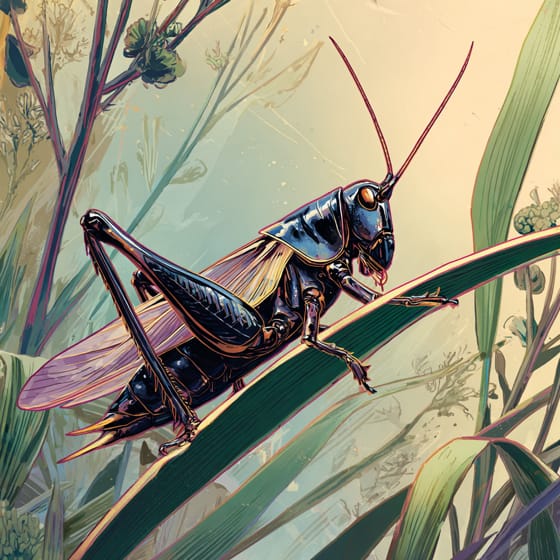
Gryllus assimilis
Eine wichtige Nahrungsquelle für die Vogelspinne in ihrem Wüstenlebensraum.
Pelzig beschreibt Tiere, die eine dichte Schicht aus weichen Haaren oder Fell besitzen.
Einzelgänger leben den größten Teil ihres Lebens allein und interagieren mit Artgenossen nur zur Paarung oder zur Aufzucht der Jungen.
Grabende Tiere heben Tunnel und Kammern im Erdboden aus und nutzen diese unterirdischen Strukturen als Unterschlupf, zur Jagd oder zur Fortpflanzung.
Dieses Merkmal kennzeichnet Organismen, deren Nahrung hauptsächlich aus Insekten und anderen kleinen Wirbellosen besteht.

Wüstenlebensräume sind trockene Regionen, die durch extrem geringen Niederschlag und oft extreme Temperaturen gekennzeichnet sind und eine spezialisierte Flora und Fauna beherbergen.

Dieses Merkmal kennzeichnet Organismen mit einer außergewöhnlich langen Lebensspanne im Vergleich zu anderen ihrer Art.

Dieses Merkmal kennzeichnet Organismen, deren Ernährung vollständig oder hauptsächlich aus tierischem Gewebe besteht.

Nachtaktive Tiere sind hauptsächlich in den Nachtstunden aktiv und ruhen oder schlafen normalerweise tagsüber.
Gefahr
2/5 · Gering
Beobachten Sie immer aus der Ferne und versuchen Sie niemals, eine Vogelspinne zu berühren oder zu fangen.
Der einfachste Weg, Aphonopelma chalcodes zu bestimmen, ist die Verwendung der Naturführer-App Snappit.
50-70 mm
9125-10950 Tage
Aphonopelma chalcodes frisst hauptsächlich Insekten und andere kleine Kreaturen, denen sie aus ihrer Höhle auflauert.
Wüste
Lauerjagd
8
Zoome hinein, um Cluster aufzulösen und zu sehen, wo dieses Objekt fotografiert wurde.
Nimm die Entdeckung mit
Fotografiere deinen Fund mit Snappit, bestimme die Art und füge die Entdeckung deiner Sammlung hinzu.










.jpg&width=800)




