_1.jpg&width=800)





Forest Bug
Pentatoma rufipes
The Forest Bug is a friendly little insect that loves to live in trees and bushes. It has a bright green body and sometimes a reddish hue, making it easy to spot in nature!
Lebensraum: Forests
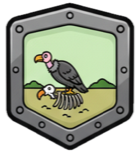
The Forest Bug has a distinctive shield-shaped body, typically reddish-brown with a metallic sheen. Its bright orange legs and antennae tips make it visually unique, contrasting sharply with its darker body. Its flattened back often has faint darker markings.
Kategorie
InsektenSeltenheit
Common
Gefahr
1/5 · Sehr gering
Snaps
Mach den ersten Snap!
Female Forest Bugs carefully guard their eggs until they hatch, a rare bug behavior!
Their name comes from their striking red-orange legs, making them easy to identify!
These bugs like to sunbathe on leaves and tree trunks to warm up their bodies!
They can sometimes "play dead" by dropping to the ground when frightened!
Forest Bug can release a foul-smelling liquid when threatened because of special glands, helping them deter predators.
Forest Bug has a camouflaged body shape and color that helps them blend seamlessly with tree bark and foliage, avoiding detection.
Forest Bug can pierce plant tissues with its specialized straw-like mouthparts, allowing them to feed on sap and fruit juices.
Forest Bugs are plant-eaters, using their straw-like mouths to drink sap and fruit juices.
Altersunterschiede: Nymphs also feed on plant sap and tender foliage.
Cyanistes caeruleus
eats Forest Bugs, especially nymphs.
Quercus robur
Forest Bug nymphs and adults feed on its sap.
Trissolcus basalis
lays its eggs inside Forest Bug eggs.
Malus domestica
Forest Bugs can feed on ripe apples in orchards.
Soziale Tiere leben in organisierten Gruppen und kooperieren, um ihr Überleben zu sichern, beispielsweise bei der Nahrungssuche, Verteidigung und Aufzucht der Jungen.
Farbenfroh beschreibt Organismen oder Objekte, die eine große Vielfalt an leuchtenden und deutlich erkennbaren Farben aufweisen.
Getarnt beschreibt Organismen, die über eine Färbung oder Musterung verfügen, durch die sie mit ihrer Umgebung verschmelzen.
Dieses Merkmal kennzeichnet Lebewesen, deren Ernährung vollständig oder hauptsächlich aus pflanzlichem Material besteht.

Waldlebensräume sind terrestrische Lebensräume, die von dichtem Baumbestand dominiert werden und eine große Vielfalt an Pflanzen- und Tierarten beherbergen.

Beschreibt eine Art, deren Anwesenheit und Rolle einen unverhältnismäßig großen Einfluss auf ihre Umwelt haben.

Tagaktive Tiere sind hauptsächlich bei Tageslicht aktiv und ruhen oder schlafen in der Regel nachts.

Beschreibt Organismen, die Pollen übertragen und so die Befruchtung und Fortpflanzung von Pflanzen ermöglichen.
Noch keine Alternativnamen vorhanden.
Gefahr
1/5 · Sehr gering
It's best to watch Forest Bugs from a distance and not touch them.
22-28 mm
11-14 mm
30-90 Tage
2-5 km/h
Forest Bugs are plant-eaters, using their straw-like mouths to drink sap and fruit juices.
Forests
Foraging
6
Zoome hinein, um Cluster aufzulösen und zu sehen, wo dieses Objekt fotografiert wurde.
Neueste Snaps erscheinen hier, wenn neue Beobachtungen hinzukommen.