






hairy manzanita
Arctostaphylos columbiana
The hairy manzanita is a special shrub with beautiful, reddish-brown bark and shiny green leaves. It grows small, pinkish flowers that turn into tasty berries, making it a favorite for birds and other animals.
Lebensraum: Mountain regions
The hairy manzanita has reddish-brown, smooth bark that peels, and distinctive hairy stems and leaves. Its clusters of tiny, bell-shaped pink or white flowers ripen into bright red berries, standing out against its leathery, evergreen foliage.
Kategorie
PflanzenSeltenheit
Common
Gefahr
1/5 · Sehr gering
Snaps
Mach den ersten Snap!
"Manzanita" means "little apple" in Spanish, referring to its small, apple-like berries!
Its bark constantly peels away in thin strips, revealing new, smoother, reddish layers underneath.
Native peoples traditionally ground the dried berries into a meal or made a refreshing cider drink.
This evergreen shrub can live for hundreds of years, becoming a grand, gnarled fixture in its habitat.
Hairy manzanita can resprout vigorously from its woody base after wildfires, helping it thrive in fire-prone landscapes.
Its fuzzy leaves and stems trap moisture and reduce water loss, allowing it to survive dry, arid conditions.
The thick, leathery leaves are angled to minimize direct sunlight, protecting the plant from intense solar radiation.
Apis mellifera
Collects nectar from its bell-shaped flowers.

Toxostoma redivivum
Feeds on its sweet, ripe berries in winter.
Odocoileus hemionus
Browses on its evergreen leaves and twigs.
.jpg&width=800)
Selasphorus rufus
Sips nectar from early blooming flowers.
Blütenpflanzen sind alle Pflanzen, die als Teil ihres Fortpflanzungszyklus Blüten bilden.
Ein Strauch ist eine verholzende Pflanze, die kleiner als ein Baum ist und typischerweise mehrere Stämme hat, die sich ab oder nahe dem Boden verzweigen.
Fruchttragende Pflanzen produzieren Früchte, also die reifen Fruchtknoten von Blütenpflanzen, die Samen enthalten.
Immergrüne Pflanzen behalten ihr Laub das ganze Jahr über und werfen nie alle Blätter auf einmal ab.

Trockenheitstolerante Pflanzen können unter Bedingungen mit begrenzter Wasserverfügbarkeit überleben und gedeihen.

Beschreibt Pflanzen, die für eine Vielzahl von bestäubenden Organismen besonders attraktiv und nützlich sind.

Essbare Pflanzen sind diejenigen Pflanzenteile, die für den menschlichen Verzehr als unbedenklich gelten.

Dieses Lebensraummerkmal kennzeichnet Arten, die in Bergregionen vorkommen, welche sich durch große Höhen, steile Hänge und unterschiedliche Klimazonen auszeichnen.

Dieses Merkmal kennzeichnet Organismen mit einer außergewöhnlich langen Lebensspanne im Vergleich zu anderen ihrer Art.

Beschreibt eine Art, deren Anwesenheit und Rolle einen unverhältnismäßig großen Einfluss auf ihre Umwelt haben.
Noch keine Alternativnamen vorhanden.
Gefahr
1/5 · Sehr gering
Always look but don't touch the plants in nature. Some can be prickly or have berries that aren't safe to eat.
100-500 cm
100-400 cm
0.5-0.7 cm
Winter-early spring
Ja
Keine
Mehrjährig
Insekten
Zoome hinein, um Cluster aufzulösen und zu sehen, wo dieses Objekt fotografiert wurde.
Neueste Snaps erscheinen hier, wenn neue Beobachtungen hinzukommen.
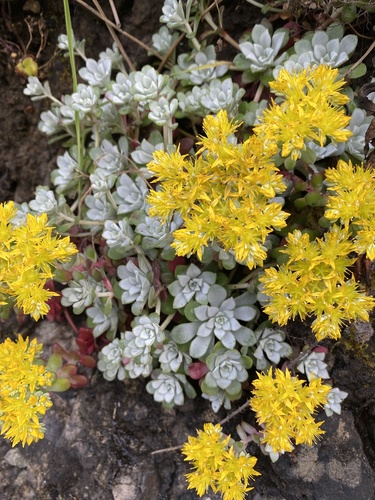
British Columbia, CA
Hier kann man sehen Broad-Leaved Stonecrop und Littleleaf Silverback.
Führer anzeigen →

British Columbia, CA
Hier kann man sehen Canada Jay, Pink Mountainheath und Yellow-Pine Chipmunk.
Führer anzeigen →

British Columbia, CA
Hier kann man sehen Western Rattlesnake Plantain und Fairy-Slipper.
Führer anzeigen →
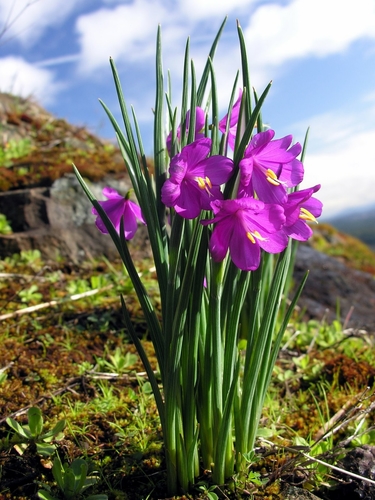
British Columbia, CA
Hier kann man sehen Grasswidow, Broad-Leaved Stonecrop und Rustyhair Saxifrage.
Führer anzeigen →
British Columbia, CA
Hier kann man sehen Broad-Leaved Stonecrop und Western Rattlesnake Plantain.
Führer anzeigen →















