
.jpg&width=800)





Pearl Crescent
Phyciodes tharos
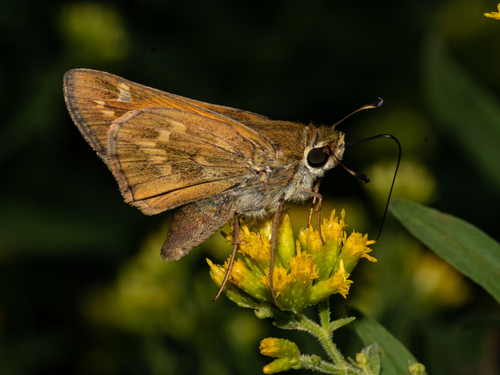
The Pearl Crescent is a beautiful butterfly with orange and black patterns on its wings. It flutters around gardens and fields, bringing joy to everyone who sees it!
Lebensraum: Grasslands
The Pearl Crescent is a small butterfly with a vibrant orange and black checkered pattern on its upper wings. Its most distinguishing feature is a small, pale crescent shape near the margin of its hindwings, particularly noticeable on the underside, giving it its name.
Kategorie
InsektenSeltenheit
Common
Gefahr
1/5 · Sehr gering
Snaps
Mach den ersten Snap!
Males often perch in the same sunny spot each day, waiting for a female.
Some Pearl Crescent butterflies undertake short migratory flights to new habitats.
The unique 'pearl' spot is easiest to see on the underside of their hindwings.
Their spiky, dark caterpillars mostly feed at night, resting hidden during the day.
Pearl Crescent can sip sweet flower nectar with its long, coiled proboscis, which helps it gain energy for flying and laying eggs.
Pearl Crescent has mottled orange and brown wings that help it blend perfectly with dried leaves or patchy flowers, hiding from hungry birds.
Pearl Crescent can fly quickly and erratically, using its agility to dodge predators and make swift getaways through dense vegetation.
Male Pearl Crescents can fiercely guard small sunny spots, chasing away rival butterflies to attract mates.
Caterpillars munch on aster leaves, while adult butterflies enjoy sipping sweet flower nectar.
Altersunterschiede: Caterpillars primarily eat plant leaves, while adults only consume liquid nectar.
.jpg&width=800)
Symphyotrichum novae-angliae
Adults visit for nectar, helping the plant reproduce.
Symphyotrichum pilosum
Caterpillars munch its leaves as their primary food source.
Cyanocitta cristata
A common bird that preys on adult butterflies.
Misumena vatia
Often ambushes adult butterflies visiting flowers for nectar.
Einzelgänger leben den größten Teil ihres Lebens allein und interagieren mit Artgenossen nur zur Paarung oder zur Aufzucht der Jungen.
Beschreibt Pflanzen, die für eine Vielzahl von bestäubenden Organismen besonders attraktiv und nützlich sind.
Farbenfroh beschreibt Organismen oder Objekte, die eine große Vielfalt an leuchtenden und deutlich erkennbaren Farben aufweisen.
Getarnt beschreibt Organismen, die über eine Färbung oder Musterung verfügen, durch die sie mit ihrer Umgebung verschmelzen.

Grasland-Lebensräume sind terrestrische Biome, die von Gräsern und krautigen Pflanzen dominiert werden und einer Vielzahl von Weidetieren als Lebensraum dienen.

Dieses Merkmal kennzeichnet Lebewesen, deren Ernährung vollständig oder hauptsächlich aus pflanzlichem Material besteht.

Tagaktive Tiere sind hauptsächlich bei Tageslicht aktiv und ruhen oder schlafen in der Regel nachts.

Beschreibt Organismen, die Pollen übertragen und so die Befruchtung und Fortpflanzung von Pflanzen ermöglichen.
Noch keine Alternativnamen vorhanden.
Gefahr
1/5 · Sehr gering
Butterflies are gentle creatures, but it's best to watch them from a distance and not touch them.
25-40 mm
12-20 mm
5-10 Tage
12 km/h
Caterpillars munch on aster leaves, while adult butterflies enjoy sipping sweet flower nectar.
Grasslands
Foraging
6
Zoome hinein, um Cluster aufzulösen und zu sehen, wo dieses Objekt fotografiert wurde.
Neueste Snaps erscheinen hier, wenn neue Beobachtungen hinzukommen.
.JPG)
Massachusetts, US
Hier kann man sehen Virginia Bluebells und Great Golden Digger Wasp.
Führer anzeigen →

Virginia, US
Hier kann man sehen Ente, Brautente und Chlorosplenium Chlora.
Führer anzeigen →

Ohio, US
Hier kann man sehen Wanderdrossel, Weißwedelhirsch und Wanderfalke.
Führer anzeigen →
.jpg)
Virginia, US
Hier kann man sehen Kanadareiher, Fan Clubmoss und Kanadagans.
Führer anzeigen →

Pennsylvania, US
Hier kann man sehen Weißwedelhirsch und Mile-A-Minute Weed.
Führer anzeigen →
Virginia, US
Hier kann man sehen Huron Skipper, Japankäfer und Peck's Skipper.
Führer anzeigen →




_Female_Dos.jpg&width=800)



_(7558922774).jpg&width=800)



