






Polydamas Swallowtail
Battus polydamas
The Polydamas Swallowtail is a beautiful butterfly with striking black and yellow patterns. It flutters gracefully in gardens and forests, bringing joy to everyone who sees it.
Lebensraum: Forests
The Polydamas Swallowtail has deep black wings with no 'tails', a unique feature for a swallowtail. Each wing is edged with a bright, iridescent yellow-green band of spots that glow in the sunlight.
Kategorie
InsektenSeltenheit
Common
Gefahr
1/5 · Sehr gering
Snaps
Mach den ersten Snap!
Its caterpillars are spiky and colorful, not shy about showing off!
The pupa, or chrysalis, looks like a dead leaf, a master of disguise!
They lay tiny, round, yellow eggs, often in neat clusters.
This butterfly helps flowers make seeds by carrying pollen.
Polydamas Swallowtail has bright warning colors that help them tell predators 'Don't eat me, I taste bad!'
Polydamas Swallowtail can store toxins from the plants they eat as caterpillars, making them poisonous to predators.
Polydamas Swallowtail can taste flowers and leaves with special sensors on their feet to find the perfect meal.
Caterpillars eat toxic leaves, while adult butterflies sip sweet flower nectar.
Altersunterschiede: Larvae eat the leaves of specific toxic plants, while adults drink nectar from various flowers.
Aristolochia elegans
Caterpillars exclusively eat the leaves of this plant.
.jpg&width=800)
Sitta carolinensis
Birds may try to eat the adult butterflies.
.jpg&width=800)
Lantana camara
Adults visit Lantana flowers, helping them reproduce.
Misumena vatia
Flower crab spiders ambush adult butterflies on flowers.
Gekennzeichnet durch parallele Farbstreifen oder -linien.
Beschreibt Pflanzen, die für eine Vielzahl von bestäubenden Organismen besonders attraktiv und nützlich sind.
Farbenfroh beschreibt Organismen oder Objekte, die eine große Vielfalt an leuchtenden und deutlich erkennbaren Farben aufweisen.
Dieses Merkmal kennzeichnet Lebewesen, deren Ernährung vollständig oder hauptsächlich aus pflanzlichem Material besteht.

Dieses Merkmal kennzeichnet Organismen mit einer außergewöhnlich langen Lebensspanne im Vergleich zu anderen ihrer Art.

Waldlebensräume sind terrestrische Lebensräume, die von dichtem Baumbestand dominiert werden und eine große Vielfalt an Pflanzen- und Tierarten beherbergen.

Tagaktive Tiere sind hauptsächlich bei Tageslicht aktiv und ruhen oder schlafen in der Regel nachts.

Beschreibt Organismen, die Pollen übertragen und so die Befruchtung und Fortpflanzung von Pflanzen ermöglichen.
Noch keine Alternativnamen vorhanden.
Gefahr
1/5 · Sehr gering
Always watch butterflies from a distance and don't try to catch them.
80-110 mm
30-40 mm
10-30 Tage
15 km/h
Caterpillars eat toxic leaves, while adult butterflies sip sweet flower nectar.
Forests
Foraging
6
Zoome hinein, um Cluster aufzulösen und zu sehen, wo dieses Objekt fotografiert wurde.
Neueste Snaps erscheinen hier, wenn neue Beobachtungen hinzukommen.
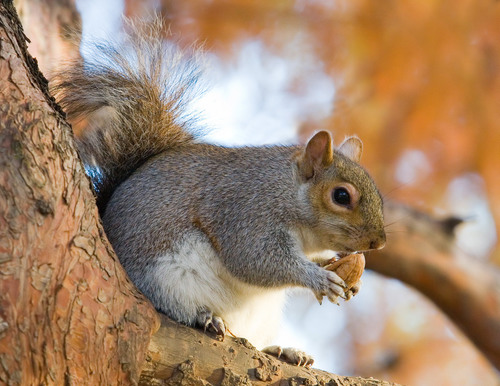
Florida, US
Hier kann man sehen östliches Grauhörnchen und Southern Live Oak.
Führer anzeigen →
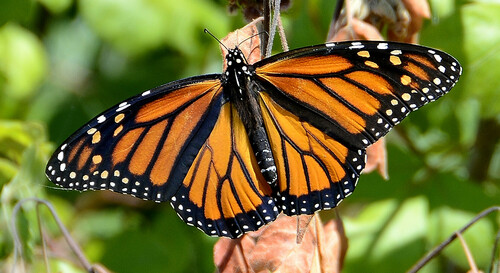
Florida, US
Hier kann man sehen Monarch, Pin-Tailed Pondhawk und Polydamas Swallowtail.
Führer anzeigen →




_-_Celithemis_elisa%2C_Piedmont_National_Wildlife_Refuge%2C_Juliette%2C_Georgia.jpg&width=800)









