Red-Flanked Duiker
cephalophus rufilatus
The Red-Flanked Duiker is a small and shy antelope found in the forests of Africa. With its beautiful reddish-brown coat and white stripes, it blends perfectly into its leafy surroundings!
Lebensraum: Tropical forests and woodland areas in Central and West Africa
The Red-Flanked Duiker has striking reddish-brown flanks with a dark bluish-grey back, creating a distinctive saddle pattern. It also features a bold black stripe down its face and a black muzzle. Both males and females grow short, spiky horns.
Kategorie
SäugetiereSeltenheit
Common
Gefahr
1/5 · Sehr gering
Snaps
Mach den ersten Snap!
Baby duikers are called 'kids' and are born with their eyes open!
Both male and female Red-Flanked Duikers grow tiny, sharp horns!
Duikers often freeze completely still when sensing danger to blend in!
They have a special black stripe that runs from their nose to their forehead!
Red-Flanked Duiker can 'dive' into thick vegetation because its small, wedge-shaped body helps it disappear instantly from predators.
Red-Flanked Duiker has a unique ability to eat fruit fallen from trees because it follows monkeys and birds for tasty snacks.
Red-Flanked Duiker can leave scent messages for other duikers using glands below its eyes, helping it communicate.
These little browsers eat fruits, leaves, and fungi found on the forest floor.
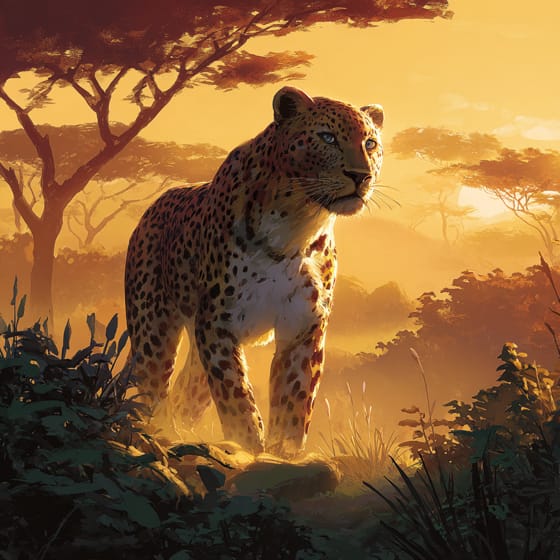
Panthera pardus
a primary predator of adult duikers.
Caracal aurata
preys on smaller or younger duikers.
Ficus exasperata
eats fallen fruits from this fig tree.
Spondias mombin
relies on fruits and leaves from this tree.
Pelzig beschreibt Tiere, die eine dichte Schicht aus weichen Haaren oder Fell besitzen.
Einzelgänger leben den größten Teil ihres Lebens allein und interagieren mit Artgenossen nur zur Paarung oder zur Aufzucht der Jungen.
Getarnt beschreibt Organismen, die über eine Färbung oder Musterung verfügen, durch die sie mit ihrer Umgebung verschmelzen.
Dieses Merkmal kennzeichnet Lebewesen, deren Ernährung vollständig oder hauptsächlich aus pflanzlichem Material besteht.

Waldlebensräume sind terrestrische Lebensräume, die von dichtem Baumbestand dominiert werden und eine große Vielfalt an Pflanzen- und Tierarten beherbergen.
Gefahr
1/5 · Sehr gering
Noch keine besonderen Sicherheitshinweise.
55-75 cm
9-12 kg
10-12 Jahre
45 km/h
These little browsers eat fruits, leaves, and fungi found on the forest floor.
Tropical forests and woodland areas in Central and West Africa
Foraging
1
Zoome hinein, um Cluster aufzulösen und zu sehen, wo dieses Objekt fotografiert wurde.
Neueste Snaps erscheinen hier, wenn neue Beobachtungen hinzukommen.