






South American Coati
Nasua nasua
South American Coatis are playful animals that love to explore! They have long tails and a curious nature, often seen climbing trees and searching for food.
Lebensraum: Forests
The South American Coati has a slender body covered in reddish-brown to dark brown fur, often with lighter undersides. Its most distinctive features are a long, flexible, upturned snout and a bushy tail banded with light and dark rings. Small, rounded ears peek out from its head.
Kategorie
SäugetiereSeltenheit
Common
Gefahr
2/5 · Gering
Snaps
Mach den ersten Snap!
A coati's bushy tail, nearly body-length, is often held high like a flag!
Coatis use their extra-long, flexible snout to poke into crevices for yummy bugs!
Female coatis live in large 'bands', while males live alone!
They are fantastic sunbathers, sometimes sprawling out on tree branches to catch rays!
South American Coati can swivel its long, flexible snout to sniff out and dig up hidden prey underground, helping them find food.
South American Coati can use their strong, semi-retractile claws and flexible front paws to manipulate objects, helping them forage.
South American Coati has ankles that rotate 180 degrees, letting them climb down trees head-first with incredible agility.
Coatis eat a mix of insects, fruits, and small animals found by their amazing sense of smell.
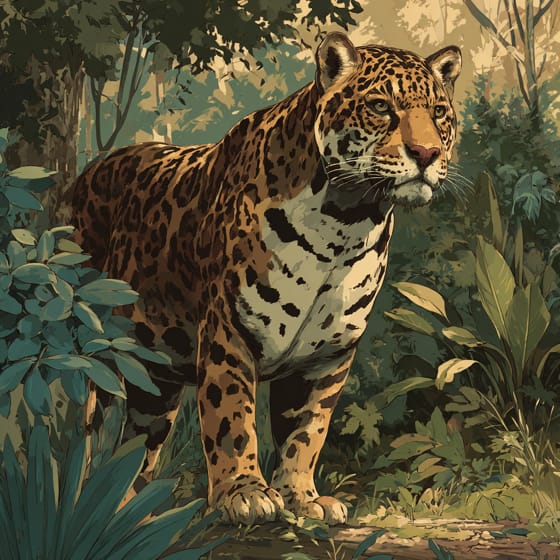
Panthera onca
A primary predator of coatis in their range.
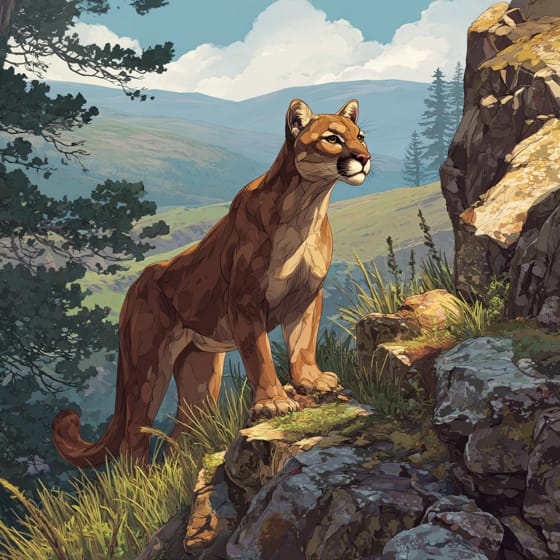
Puma concolor
Coatis are prey for pumas, especially juveniles.
Harpia harpyja
Harpy eagles are powerful avian predators that hunt coatis.
Pelzig beschreibt Tiere, die eine dichte Schicht aus weichen Haaren oder Fell besitzen.
Soziale Tiere leben in organisierten Gruppen und kooperieren, um ihr Überleben zu sichern, beispielsweise bei der Nahrungssuche, Verteidigung und Aufzucht der Jungen.
Dieses Merkmal kennzeichnet Organismen, deren Ernährung sowohl pflanzliche als auch tierische Bestandteile umfasst.
Baumbewohnende Tiere leben hauptsächlich in Bäumen und nutzen diese als Unterschlupf, Nahrungsquelle und zum Schutz vor Raubtieren.

Waldlebensräume sind terrestrische Lebensräume, die von dichtem Baumbestand dominiert werden und eine große Vielfalt an Pflanzen- und Tierarten beherbergen.
Gefahr
2/5 · Gering
Watch from a distance and don't try to touch them, as they can be wild.
80-130 cm
2-8 kg
7-8 Jahre
25 km/h
Coatis eat a mix of insects, fruits, and small animals found by their amazing sense of smell.
Forests
Foraging
2-7
Zoome hinein, um Cluster aufzulösen und zu sehen, wo dieses Objekt fotografiert wurde.
Neueste Snaps erscheinen hier, wenn neue Beobachtungen hinzukommen.

Michigan, US
Hier kann man sehen Afrikanischer Löwe, Vielfraß und Giraffen.
Führer anzeigen →

Berlin, DE
Hier kann man sehen Eisbär, Ursus Thibetanus und Sloth Bear.
Führer anzeigen →

Izmir, TR
Hier kann man sehen Afrikanischer Löwe, Camelus und Psittacidae.
Führer anzeigen →












