


tall bellflower
Campanulastrum americanum
The tall bellflower is a beautiful flower that grows tall and has lovely blue or purple petals. It often blooms in the summer and can be found in fields and along roadsides.
Lebensraum: Fields and roadsides
The tall bellflower is a striking plant with a single, unbranched stem crowned by numerous star-shaped, blue-violet flowers. Its unique flat, wheel-like blooms feature a prominent, curved white pistil extending from the center, making it visually distinct.
Kategorie
PflanzenSeltenheit
Common
Gefahr
1/5 · Sehr gering
Snaps
Mach den ersten Snap!
Early American settlers used its leaves and roots for various remedies.
It's the only species in its entire genus, making it truly unique!
Its flowers are star-shaped, not bell-shaped like other bellflowers!
The stamens release pollen before the pistil is ready, stopping self-pollination.
It can thrive in dappled light, adapting its growth to flourish where many sun-loving plants struggle.
This plant readily drops seeds around its base, creating new plants each year without needing much help.
Apis mellifera
Collects nectar and pollen, aiding reproduction.
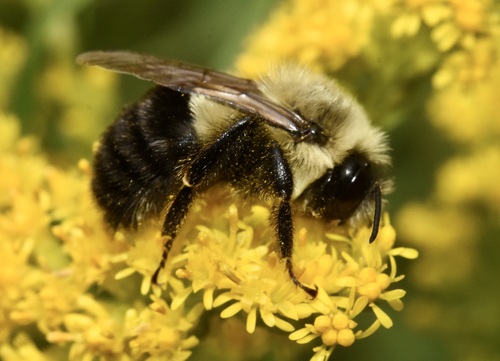
Bombus impatiens
Visits flowers for nectar, transferring pollen.
Papilio glaucus
Feeds on nectar, helping to spread pollen.
Odocoileus virginianus
May browse its leaves, especially when young.
Blütenpflanzen sind alle Pflanzen, die als Teil ihres Fortpflanzungszyklus Blüten bilden.
Glockenförmige Blüten besitzen Blütenblätter, die verwachsen oder so angeordnet sind, dass sie eine becher- oder glockenähnliche Struktur bilden.
Sommerblühende Pflanzen bringen ihre Blüten während der Sommersaison hervor und sorgen oft für leuchtende Farben, wenn viele andere Pflanzen bereits verblüht sind.
Duftende Blüten verströmen ein angenehmes Aroma, oft um Bestäuber anzulocken oder zur Abwehr.

Beschreibt Pflanzen, die für eine Vielzahl von bestäubenden Organismen besonders attraktiv und nützlich sind.

Farbenfroh beschreibt Organismen oder Objekte, die eine große Vielfalt an leuchtenden und deutlich erkennbaren Farben aufweisen.

Grasland-Lebensräume sind terrestrische Biome, die von Gräsern und krautigen Pflanzen dominiert werden und einer Vielzahl von Weidetieren als Lebensraum dienen.
Noch keine Alternativnamen vorhanden.
Gefahr
1/5 · Sehr gering
Always look but don't touch flowers without asking an adult first.
30-240 cm
30-60 cm
1-2.5 cm
Summer to early fall
Ja
Keine
Zweijährig
Insekten
Zoome hinein, um Cluster aufzulösen und zu sehen, wo dieses Objekt fotografiert wurde.
Neueste Snaps erscheinen hier, wenn neue Beobachtungen hinzukommen.