tea viburnum
Viburnum setigerum
Tea viburnum is a lovely shrub with beautiful clusters of white flowers. It grows berries that are enjoyed by birds, making it a great plant for gardens and parks.
Lebensraum: Forests
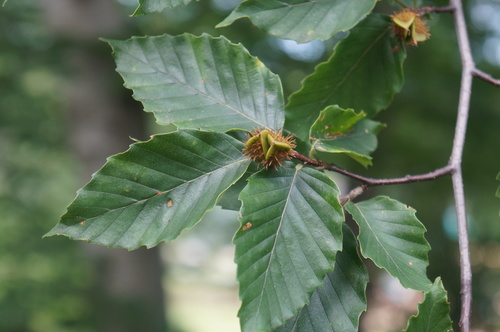
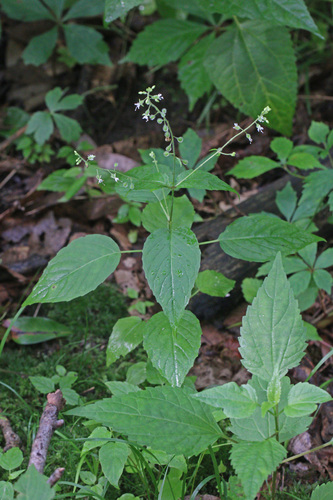
The tea viburnum is an upright, deciduous shrub featuring ovate, dark green leaves that turn reddish-purple in autumn. It produces clusters of small, creamy-white flowers in late spring, followed by striking, bright orange to red berries that persist into winter.
Kategorie
PflanzenSeltenheit
Common
Gefahr
1/5 · Sehr gering
Snaps
Mach den ersten Snap!
Despite its name, the 'tea' viburnum isn't typically used for tea, but its leaves were once explored as a tea substitute!
In fall, its green leaves transform into stunning shades of purplish-red, adding a fiery glow to the garden!
Its scientific name, setigerum, means 'bristle-bearing,' hinting at tiny hairs on its leaves and stems!
The tea viburnum's cheerful red berries can last on branches all winter, even after the leaves have fallen!
Tea viburnum's bright red berries act like a beacon, attracting birds to eat them and spread its seeds far and wide.
Its dense branches and foliage create cozy hiding spots, offering shelter and safety for small birds and insects.
The small, creamy-white flowers host a party for insects, inviting them to help the plant make new seeds.
Apis mellifera
Gathers nectar and pollen from flowers
Bombus impatiens
Visits flowers for nectar and pollen
Turdus migratorius
Consumes the bright red berries, aiding seed dispersal
Bombycilla cedrorum
Feeds on the persistent berries, especially in winter
Pyrrhalta viburni
Larvae and adults feed on the leaves
Blütenpflanzen sind alle Pflanzen, die als Teil ihres Fortpflanzungszyklus Blüten bilden.
Laubabwerfende Pflanzen werfen regelmäßig all ihre Blätter ab, typischerweise im Herbst oder in Trockenzeiten.
Zierpflanzen werden hauptsächlich wegen ihres ästhetischen Reizes angebaut und verschönern Landschaften und Gärten mit ihrem attraktiven Laub, ihren Blüten oder ihrer Form.
Frühlingsblüher bilden ihre Blüten im Frühjahr und kündigen oft das Ende des Winters und den Beginn neuen Wachstums an.

Ein Strauch ist eine verholzende Pflanze, die kleiner als ein Baum ist und typischerweise mehrere Stämme hat, die sich ab oder nahe dem Boden verzweigen.

Duftende Blüten verströmen ein angenehmes Aroma, oft um Bestäuber anzulocken oder zur Abwehr.

Fruchttragende Pflanzen produzieren Früchte, also die reifen Fruchtknoten von Blütenpflanzen, die Samen enthalten.

Beschreibt Pflanzen, die für eine Vielzahl von bestäubenden Organismen besonders attraktiv und nützlich sind.

Waldlebensräume sind terrestrische Lebensräume, die von dichtem Baumbestand dominiert werden und eine große Vielfalt an Pflanzen- und Tierarten beherbergen.
Noch keine Alternativnamen vorhanden.
Gefahr
1/5 · Sehr gering
Always look but don't touch the berries, as they might not be safe to eat.
200-400 cm
150-300 cm
0.5-1 cm
Late spring to early summer
Nein
Keine
Mehrjährig
Insekten
Zoome hinein, um Cluster aufzulösen und zu sehen, wo dieses Objekt fotografiert wurde.
Neueste Snaps erscheinen hier, wenn neue Beobachtungen hinzukommen.