thinleaf huckleberry
Vaccinium membranaceum
Thinleaf huckleberry is a small bush with tasty blue berries! These bushes grow in forests and are loved by animals and people alike for their sweet fruit.
Lebensraum: Forests
The thinleaf huckleberry has bright green, oval leaves with finely toothed edges, giving it a delicate appearance. Its small, urn-shaped flowers are typically pale pink to greenish-white, maturing into glossy, dark purple to black berries.
Kategorie
PflanzenSeltenheit
Common
Gefahr
1/5 · Sehr gering
Snaps
Mach den ersten Snap!
Despite its name, its 'berries' are technically small capsules with many tiny seeds inside!
Indigenous peoples have gathered and used these delicious berries for thousands of years as food and medicine!
Its tasty berries are a favorite snack for bears, who help spread its seeds far and wide!
This plant loves sunshine and is often one of the first to grow back vigorously after a forest fire!
Thinleaf huckleberry can resprout from its sturdy underground rhizomes after a forest fire, helping it quickly recover and colonize burned areas.
Its tough leaves and woody stems help it withstand harsh mountain winds and cold temperatures at high elevations, surviving where others can't.
This plant has robust root systems that help it thrive in nutrient-poor, acidic soils where many other plants struggle to grow.
Bombus occidentalis
visits bell-shaped flowers for nectar
Turdus migratorius
enjoys the sweet, dark berries
Odocoileus hemionus
browses on leaves and twigs
Laubabwerfende Pflanzen werfen regelmäßig all ihre Blätter ab, typischerweise im Herbst oder in Trockenzeiten.
Ein Strauch ist eine verholzende Pflanze, die kleiner als ein Baum ist und typischerweise mehrere Stämme hat, die sich ab oder nahe dem Boden verzweigen.
Fruchttragende Pflanzen produzieren Früchte, also die reifen Fruchtknoten von Blütenpflanzen, die Samen enthalten.
Heilpflanzen besitzen chemische Verbindungen, die für therapeutische Zwecke zur Behandlung von Krankheiten oder zur Erhaltung der Gesundheit eingesetzt werden können.

Beschreibt Pflanzen, die für eine Vielzahl von bestäubenden Organismen besonders attraktiv und nützlich sind.

Essbare Pflanzen sind diejenigen Pflanzenteile, die für den menschlichen Verzehr als unbedenklich gelten.

Dieses Lebensraummerkmal kennzeichnet Arten, die in Bergregionen vorkommen, welche sich durch große Höhen, steile Hänge und unterschiedliche Klimazonen auszeichnen.

Waldlebensräume sind terrestrische Lebensräume, die von dichtem Baumbestand dominiert werden und eine große Vielfalt an Pflanzen- und Tierarten beherbergen.
Noch keine Alternativnamen vorhanden.
Gefahr
1/5 · Sehr gering
Always ask an adult before picking and eating berries from bushes.
50-200 cm
50-150 cm
0.5-0.7 cm
Late spring to early summer
Ja
Keine
Mehrjährig
Insekten
Zoome hinein, um Cluster aufzulösen und zu sehen, wo dieses Objekt fotografiert wurde.
Neueste Snaps erscheinen hier, wenn neue Beobachtungen hinzukommen.

British Columbia, CA
Hier kann man sehen Canada Jay, Pink Mountainheath und Yellow-Pine Chipmunk.
Führer anzeigen →

British Columbia, CA
Hier kann man sehen White Pasqueflower und Hoary Marmot.
Führer anzeigen →
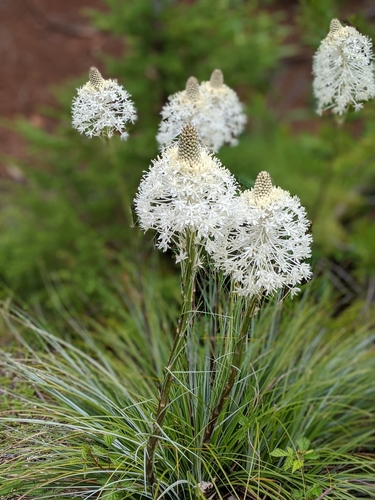
British Columbia, CA
Hier kann man sehen Common Beargrass und White-Flowered Rhododendron.
Führer anzeigen →




.jpg&width=800)