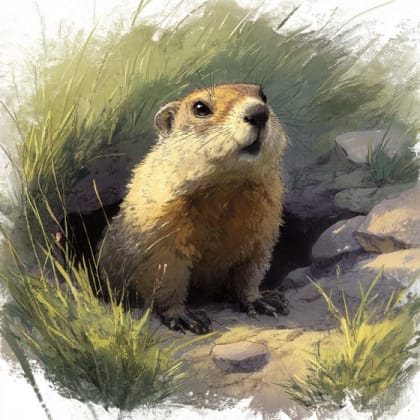
Western Gray Squirrel
Sciurus griseus
The Western Gray Squirrel is a fluffy little animal with a bushy tail. They love to climb trees and gather nuts to eat. You can often see them playing in parks and forests!
Lebensraum: Forests
The Western Gray Squirrel has a strikingly bushy, long tail and a sleek coat of silver-gray fur on its back, contrasting sharply with its pure white belly. Its large, dark eyes complete its distinctive woodland appearance, making it easily recognizable.
Kategorie
SäugetiereSeltenheit
Common
Gefahr
1/5 · Sehr gering
Snaps
Mach den ersten Snap!
Eyes on sides of head give them a wide view to spot predators.
Squirrels sometimes 'plant' new trees by forgetting where they buried nuts.
Their teeth never stop growing, so they gnaw constantly to keep them short!
They can rotate their ankles almost 180 degrees to run headfirst down trees!
Western Gray Squirrels can use their enormous bushy tail as both an umbrella and a sunshade, protecting them from the elements.
Western Gray Squirrels can remember hundreds of hidden food stashes using spatial memory, ensuring they have food even in winter.
Western Gray Squirrels can fake burying nuts to fool watching predators or other squirrels, protecting their real food stores.
Western Gray Squirrels possess incredible acrobatic skills to run along branches and jump between trees, allowing swift escapes.
These adaptable eaters enjoy a menu of nuts, seeds, fruits, and mushrooms found in their forest homes.
Buteo jamaicensis
A common aerial predator of squirrels.
Lynx rufus
These wild cats hunt squirrels on the forest floor.

Quercus agrifolia
Squirrels rely heavily on its acorns for food.
Pinus ponderosa
Its seeds are a crucial part of the squirrel's diet.
Pelzig beschreibt Tiere, die eine dichte Schicht aus weichen Haaren oder Fell besitzen.
Soziale Tiere leben in organisierten Gruppen und kooperieren, um ihr Überleben zu sichern, beispielsweise bei der Nahrungssuche, Verteidigung und Aufzucht der Jungen.
Baumbewohnende Tiere leben hauptsächlich in Bäumen und nutzen diese als Unterschlupf, Nahrungsquelle und zum Schutz vor Raubtieren.
Dieses Merkmal kennzeichnet Lebewesen, deren Ernährung vollständig oder hauptsächlich aus pflanzlichem Material besteht.

Waldlebensräume sind terrestrische Lebensräume, die von dichtem Baumbestand dominiert werden und eine große Vielfalt an Pflanzen- und Tierarten beherbergen.

Dieses Merkmal kennzeichnet Lebewesen, die bei der Jagd, Flucht oder Fortbewegung eine außergewöhnliche Schnelligkeit aufweisen.

Tagaktive Tiere sind hauptsächlich bei Tageslicht aktiv und ruhen oder schlafen in der Regel nachts.
Noch keine Alternativnamen vorhanden.
Gefahr
1/5 · Sehr gering
It's best to watch squirrels from a distance so they feel safe and happy.
40-60 cm
0.5-1 kg
8-10 Jahre
20 km/h
These adaptable eaters enjoy a menu of nuts, seeds, fruits, and mushrooms found in their forest homes.
Forests
Foraging
1-5
Zoome hinein, um Cluster aufzulösen und zu sehen, wo dieses Objekt fotografiert wurde.
Neueste Snaps erscheinen hier, wenn neue Beobachtungen hinzukommen.
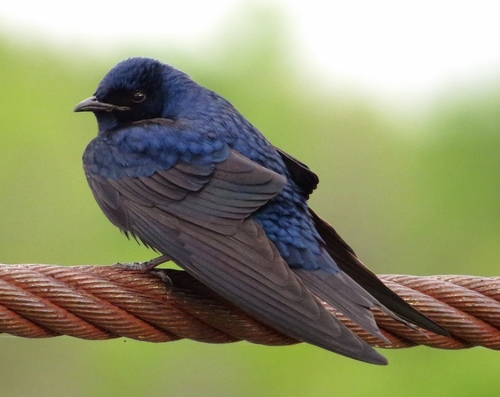
California, US
Hier kann man sehen Purple Martin, Acorn Woodpecker und Dunkelaugenjunko.
Führer anzeigen →

California, US
Hier kann man sehen California Wild Rose, California Wild Grape und Blue Elder.
Führer anzeigen →

California, US
Hier kann man sehen Valley Oak, Two-Horned Gall Wasp und Seidenbaum.
Führer anzeigen →
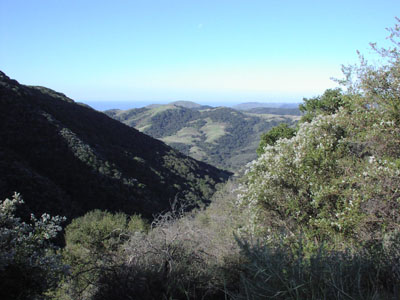
California, US
Hier kann man sehen Westlicher Zaunleguan und Canyon Sunflower.
Führer anzeigen →