
.jpg&width=800)





Western Tent Caterpillar Moth
Malacosoma californica
The Western Tent Caterpillar Moth is a fluffy, colorful moth that comes out in spring. It starts as a caterpillar that lives in tents made of silk in trees. These moths are fun to watch as they flutter around!
Lebensraum: Forests
The Western Tent Caterpillar Moth has a furry, pale brownish-yellow body and forewings mottled with shades of tan and brown. Distinctive zigzag or diagonal cream-colored bands cross each forewing, often outlined in darker brown, differentiating it from similar moths.
Kategorie
InsektenSeltenheit
Common
Gefahr
1/5 · Sehr gering
Snaps
Mach den ersten Snap!
Adult moths have no mouthparts and cannot eat, living only to mate and lay eggs!
Female moths use special scents called pheromones to attract males from far away at night.
If you touch a caterpillar, it might twitch and regurgitate a bad-tasting liquid to scare you off!
Its caterpillars are so hungry they can completely strip a tree of its leaves!
Western Tent Caterpillar Moths have mottled brown wings that help them blend seamlessly into tree bark, avoiding predators.
This species' larvae can build large silk tents that shelter them from weather and predators, keeping them safe.
Female moths lay eggs covered in a hardened foam that protects the future caterpillars from cold and hungry creatures.
Its caterpillars munch on tree leaves, while the adult moths do not eat at all!
Altersunterschiede: Larvae are voracious leaf-eaters, but adult moths do not feed, relying on energy reserves from their caterpillar stage.

Prunus virginiana
Larvae consume leaves from this shrub.
Salix scouleriana
Caterpillars feed on the foliage.

Cyanocitta stelleri
Birds like jays prey on both stages.
Myotis lucifugus
Bats hunt adult moths.
Compsilura concinnata
Parasitic flies lay eggs on caterpillars.
Pelzig beschreibt Tiere, die eine dichte Schicht aus weichen Haaren oder Fell besitzen.
Soziale Tiere leben in organisierten Gruppen und kooperieren, um ihr Überleben zu sichern, beispielsweise bei der Nahrungssuche, Verteidigung und Aufzucht der Jungen.
Farbenfroh beschreibt Organismen oder Objekte, die eine große Vielfalt an leuchtenden und deutlich erkennbaren Farben aufweisen.
Dieses Merkmal kennzeichnet Lebewesen, deren Ernährung vollständig oder hauptsächlich aus pflanzlichem Material besteht.

Waldlebensräume sind terrestrische Lebensräume, die von dichtem Baumbestand dominiert werden und eine große Vielfalt an Pflanzen- und Tierarten beherbergen.

Beschreibt Organismen, die totes organisches Material abbauen und Nährstoffe in das Ökosystem zurückführen.

Tagaktive Tiere sind hauptsächlich bei Tageslicht aktiv und ruhen oder schlafen in der Regel nachts.

Beschreibt Organismen, die Pollen übertragen und so die Befruchtung und Fortpflanzung von Pflanzen ermöglichen.
Noch keine Alternativnamen vorhanden.
Gefahr
1/5 · Sehr gering
It's best to watch these moths from a distance and not touch them.
25-45 mm
15-20 mm
5-10 Tage
8 km/h
Its caterpillars munch on tree leaves, while the adult moths do not eat at all!
Forests
Foraging
6
Zoome hinein, um Cluster aufzulösen und zu sehen, wo dieses Objekt fotografiert wurde.
Neueste Snaps erscheinen hier, wenn neue Beobachtungen hinzukommen.

British Columbia, CA
Hier kann man sehen Broad-Leaved Stonecrop, Seehund und Ochre Sea Star.
Führer anzeigen →

British Columbia, CA
Hier kann man sehen Broad-Leaved Stonecrop, Salal und Pacific Sanicle.
Führer anzeigen →
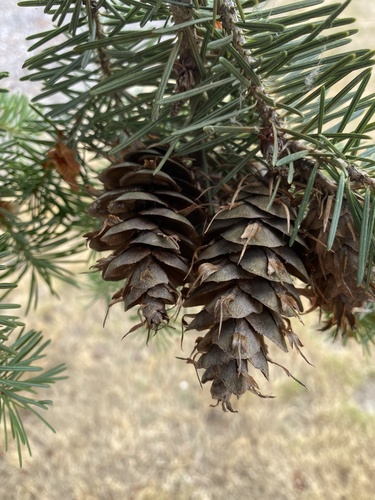
British Columbia, CA
Hier kann man sehen Douglasie, Purple Foxglove und Oregon Oak.
Führer anzeigen →

British Columbia, CA
Hier kann man sehen Herb Robert, Western Redcedar und Thimbleberry.
Führer anzeigen →

British Columbia, CA
Hier kann man sehen Rauchschwalbe, Pelagic Cormorant und Seelöwe.
Führer anzeigen →

Washington, US
Hier kann man sehen Rotfuchs, Ghost Pipe und Brombeerstrauch.
Führer anzeigen →












_-_Schwarze_Kiefernholzwespe_(7615319732).jpg&width=800)