_-_Schwarze_Kiefernholzwespe_(7615319732).jpg&width=800)





Xeris spectrum
Xeris spectrum
Die Xeris spectrum ist eine wunderschöne Holzwespe, bekannt für ihr auffälliges Aussehen. Sie fliegt in Gärten und auf Feldern umher und erfreut diejenigen, die sie sehen. Diese Holzwespen sind sanftmütig und lieben es, Nektar aus Blüten zu schlürfen.
Lebensraum: Gärten und Felder
Die Xeris spectrum ist ein robustes, wespenartiges Insekt, typischerweise metallisch blau-schwarz mit gelben oder roten Bändern am Hinterleib. Sie hat klare, häutige Flügel und einen charakteristischen, speerartigen Legebohrer, der aus ihrem hinteren Teil ragt und ein wichtiges Erkennungsmerkmal ist.
Kategorie
InsektenSeltenheit
Common
Gefahr
1/5 · Sehr gering
Snaps
Mach den ersten Snap!
Erwachsene Xeris spectrum können nichts fressen! Sie leben von der Energie, die sie im Larvenstadium gespeichert haben.
Weibliche Holzwespen legen oft Eier in Bäume, die schon sehr lange tot sind!
Manche Leute verwechseln diese harmlosen Insekten wegen ihrer ähnlichen Farben mit Wespen!
Ihre Larven tunneln so gut, dass sie bis zu drei Jahre lang im Holz versteckt bleiben können!
Die Xeris spectrum kann mit ihrem kräftigen, sägeartigen Legebohrer tief in totes Holz bohren, um Eier sicher in Baumstämmen abzulegen.
Die Xeris spectrum trägt einen speziellen Pilz, den sie in Bäume einbringt, was ihren Larven hilft, Holz als Nahrung abzubauen.
Die Larven der Xeris spectrum haben kräftige Kiefer, die es ihnen ermöglichen, durch hartes Holz zu tunneln, sich im Inneren von Bäumen zu ernähren und zu wachsen.
Erwachsene fressen nicht, aber Larven sind Pflanzenfresser, die Holz in Bäumen fressen.
Altersunterschiede: Erwachsene ernähren sich nicht; Larven graben und fressen verrottendes Holz, unterstützt durch symbiotische Pilze.
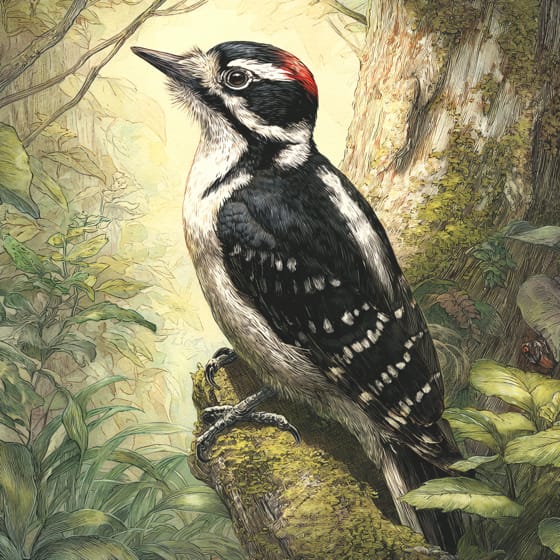
Picoides villosus
Spechte extrahieren Larven aus dem Holz.
Pinus ponderosa
Larven bohren in das tote Holz von Kiefern.
Abies grandis
Larven tunneln auch durch tote Tannenstämme.
Amylostereum areolatum
Die Holzwespe trägt diesen Pilz, um den Larven bei der Holzverdauung zu helfen.
Soziale Tiere leben in organisierten Gruppen und kooperieren, um ihr Überleben zu sichern, beispielsweise bei der Nahrungssuche, Verteidigung und Aufzucht der Jungen.
Beschreibt Pflanzen, die für eine Vielzahl von bestäubenden Organismen besonders attraktiv und nützlich sind.
Farbenfroh beschreibt Organismen oder Objekte, die eine große Vielfalt an leuchtenden und deutlich erkennbaren Farben aufweisen.
Getarnt beschreibt Organismen, die über eine Färbung oder Musterung verfügen, durch die sie mit ihrer Umgebung verschmelzen.

Dieses Merkmal kennzeichnet Lebewesen, deren Ernährung vollständig oder hauptsächlich aus pflanzlichem Material besteht.

Tagaktive Tiere sind hauptsächlich bei Tageslicht aktiv und ruhen oder schlafen in der Regel nachts.

Beschreibt Organismen, die Pollen übertragen und so die Befruchtung und Fortpflanzung von Pflanzen ermöglichen.
Noch keine Alternativnamen vorhanden.
Gefahr
1/5 · Sehr gering
Beobachtet Holzwespen immer aus der Ferne und versucht nicht, sie zu fangen.
Der einfachste Weg, Xeris spectrum zu bestimmen, ist die Verwendung der Naturführer-App Snappit.
20-50 mm
10-25 mm
10-20 Tage
Erwachsene fressen nicht, aber Larven sind Pflanzenfresser, die Holz in Bäumen fressen.
Gärten und Felder
Futtersuche
6
Zoome hinein, um Cluster aufzulösen und zu sehen, wo dieses Objekt fotografiert wurde.
Neueste Snaps erscheinen hier, wenn neue Beobachtungen hinzukommen.
Nimm die Entdeckung mit
Fotografiere deinen Fund mit Snappit, bestimme die Art und füge die Entdeckung deiner Sammlung hinzu.







.jpg&width=800)



