






White-nosed Coati
Nasua narica
The White-nosed Coati is a playful animal with a long nose and a bushy tail. They love to explore and can often be seen climbing trees or searching for food in groups.
Lebensraum: Forests
The White-nosed Coati has a long, flexible, upturned snout that is lighter in color than its dark brown or reddish-brown fur. Its slender body is accented by a long, often ringed tail, and lighter markings usually frame its eyes and face.
Kategorie
SäugetiereSeltenheit
Common
Gefahr
2/5 · Gering
Snaps
Mach den ersten Snap!
Females live in social groups called 'bands,' while adult males prefer to live alone!
Their name 'coati' might come from an indigenous word meaning 'nose ring'!
They can communicate using a variety of squeaks, grunts, and chirps!
White-nosed Coatis belong to the same animal family as raccoons!
White-nosed Coati can swivel and poke its flexible snout into crevices, helping them find hidden insects and fruits underground.
White-nosed Coati has flexible ankle joints that help them rotate their feet and descend trees headfirst with ease.
White-nosed Coati has a long, ringed tail that helps them balance perfectly while navigating narrow branches or rocky terrain.
Omnivores, they munch on tasty fruits, insects, and small creatures found on the ground and in trees.
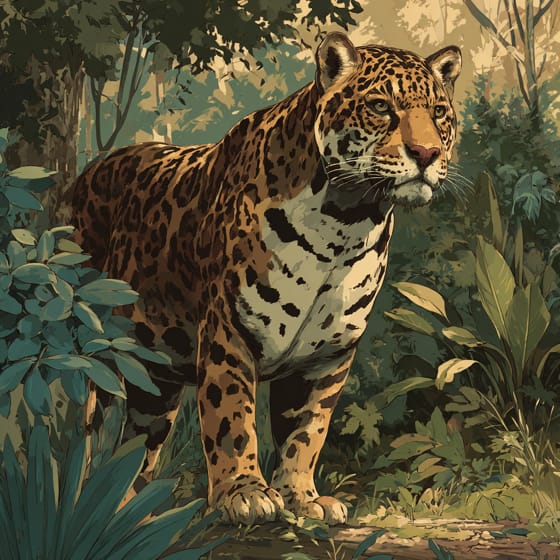
Panthera onca
A top predator in its rainforest habitat.
Leopardus pardalis
A stealthy cat that hunts smaller mammals.
Ficus insipida
Coatis regularly consume the ripe fruits of this tree.
Boa constrictor
Large snakes can ambush coatis on the ground or in trees.
Pelzig beschreibt Tiere, die eine dichte Schicht aus weichen Haaren oder Fell besitzen.
Kletter- oder Rankpflanzen zeichnen sich durch ein Wachstum aus, das es ihnen ermöglicht, durch Winden, Ranken oder Haftwurzeln nach oben zu klettern.
Soziale Tiere leben in organisierten Gruppen und kooperieren, um ihr Überleben zu sichern, beispielsweise bei der Nahrungssuche, Verteidigung und Aufzucht der Jungen.
Dieses Merkmal kennzeichnet Organismen, deren Ernährung sowohl pflanzliche als auch tierische Bestandteile umfasst.

Baumbewohnende Tiere leben hauptsächlich in Bäumen und nutzen diese als Unterschlupf, Nahrungsquelle und zum Schutz vor Raubtieren.

Waldlebensräume sind terrestrische Lebensräume, die von dichtem Baumbestand dominiert werden und eine große Vielfalt an Pflanzen- und Tierarten beherbergen.

Tagaktive Tiere sind hauptsächlich bei Tageslicht aktiv und ruhen oder schlafen in der Regel nachts.
Gefahr
2/5 · Gering
Watch from a distance and do not try to touch or feed wild animals.
41-67 cm
2-6 kg
7-15 Jahre
30 km/h
Omnivores, they munch on tasty fruits, insects, and small creatures found on the ground and in trees.
Forests
Foraging
2-7
Zoome hinein, um Cluster aufzulösen und zu sehen, wo dieses Objekt fotografiert wurde.
Neueste Snaps erscheinen hier, wenn neue Beobachtungen hinzukommen.













_female.jpg&width=800)