
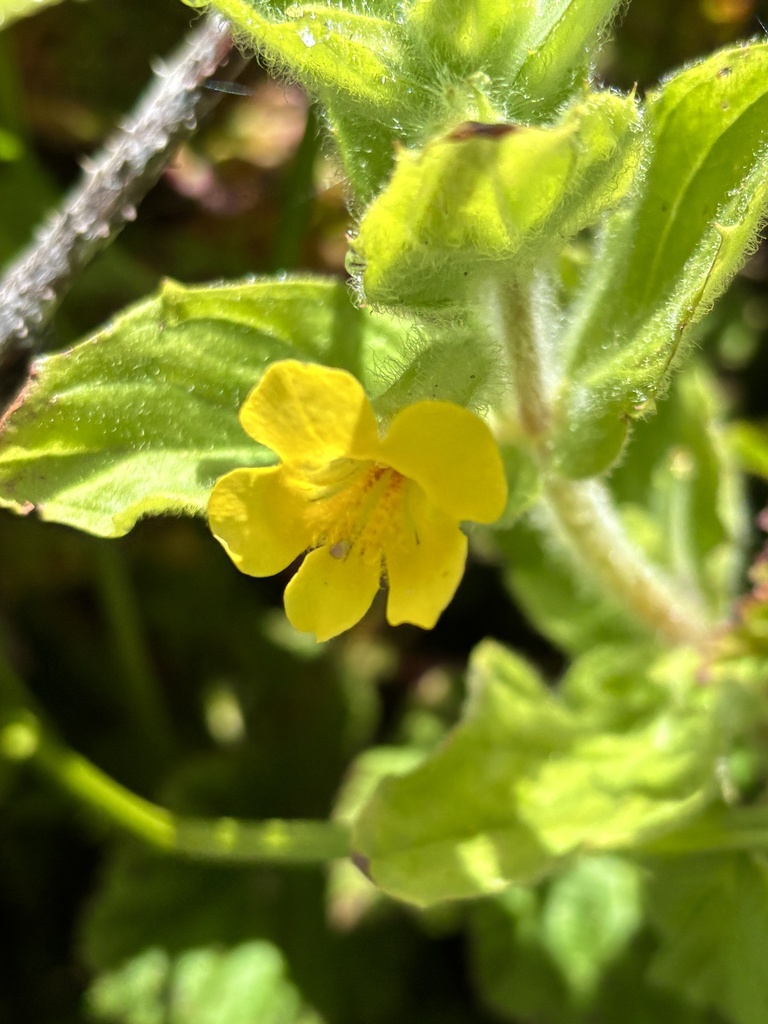





Wing-Leaf Monkeyflower
erythranthe ptilota
The Wing-Leaf Monkeyflower has beautiful, wing-like leaves that look like they are ready to take off! It blooms with bright, cheerful flowers that attract lots of friendly pollinators.
Lebensraum: Wet meadows and stream banks.
The Wing-Leaf Monkeyflower has unique square stems with prominent 'wings' or ridges, supporting vibrant yellow, snapdragon-like flowers, often with reddish spots. Its bright blooms are contrasted by its lance-shaped green leaves, creating a distinctive wetland appearance.
Kategorie
PflanzenSeltenheit
Common
Gefahr
0/5 · Keine bekannte Gefahr
Snaps
Mach den ersten Snap!
Each tiny flower can create hundreds of even tinier seeds, ready to float away and find new homes!
Its square stems have cool 'wings' that aren't just for show—they help the plant stand strong!
Look closely! Some people think the flower's shape looks exactly like a monkey's happy, smiling face!
This plant is a water-lover, often growing with its 'feet' soaking wet in shallow streams or ditches!
Wing-Leaf Monkeyflower has unique winged stems that help channel rainwater down to its roots, making the most of moisture in its wet habitats.
Wing-Leaf Monkeyflower can thrive in waterlogged soils due to specialized roots, allowing it to colonize soggy areas where other plants can't survive.
Wing-Leaf Monkeyflower's bright yellow, tubular flowers are perfectly shaped to attract specific bee pollinators, ensuring successful reproduction.
Apis mellifera
collects nectar and pollen
Bombus impatiens
an important native pollinator
Odocoileus virginianus
occasionally browses its leaves
Farbenfroh beschreibt Organismen oder Objekte, die eine große Vielfalt an leuchtenden und deutlich erkennbaren Farben aufweisen.
Dieses Merkmal kennzeichnet Lebewesen, deren Ernährung vollständig oder hauptsächlich aus pflanzlichem Material besteht.
Waldlebensräume sind terrestrische Lebensräume, die von dichtem Baumbestand dominiert werden und eine große Vielfalt an Pflanzen- und Tierarten beherbergen.
Tagaktive Tiere sind hauptsächlich bei Tageslicht aktiv und ruhen oder schlafen in der Regel nachts.

Beschreibt Organismen, die Pollen übertragen und so die Befruchtung und Fortpflanzung von Pflanzen ermöglichen.
Gefahr
0/5 · Keine bekannte Gefahr
Noch keine besonderen Sicherheitshinweise.
30-90 cm
30-60 cm
2-3 cm
Summer-fall
Nein
Keine
Mehrjährig
Insekten
Zoome hinein, um Cluster aufzulösen und zu sehen, wo dieses Objekt fotografiert wurde.
Neueste Snaps erscheinen hier, wenn neue Beobachtungen hinzukommen.










.jpg&width=800)




