
.jpg&width=800)





wingstem monkeyflower
Erythranthe alsinoides
The wingstem monkeyflower is a bright and cheerful flower that loves to grow near water. Its fun shape and color make it a favorite among butterflies and bees!
Lebensraum: Wetlands
The wingstem monkeyflower has bright yellow, tubular flowers with two distinct lips, often sporting small red-brown spots resembling a monkey's face. Its delicate green stems are slender, and it often grows in dense clumps along waterways. The unique flower shape helps distinguish it from other yellow wildflowers.
Kategorie
PflanzenSeltenheit
Common
Gefahr
1/5 · Sehr gering
Snaps
Mach den ersten Snap!
Despite its delicate look, this plant is a pioneer, quickly growing in newly disturbed wet areas!
Its name 'monkeyflower' comes from some people thinking the flower looks like a grinning monkey face!
The flowers often have tiny red-brown spots, like freckles, on their lower lip.
Tiny hairy parts inside the flower guide visiting bees straight to the sweet nectar.
Wingstem monkeyflower can grow with its roots in flowing water, adapting to moist, swampy, or even submerged habitats.
Its vibrant yellow petals and internal markings act as a clear roadmap, guiding thirsty bees directly to its sugary nectar.
This plant produces many tiny seeds that can be carried by water or wind, helping it colonize new wet areas.

Bombus vosnesenskii
Visits flowers for nectar and pollen
Apis mellifera
Gathers nectar and pollen from blooms

Arion ater
Graze on the leaves and tender stems
Blütenpflanzen sind alle Pflanzen, die als Teil ihres Fortpflanzungszyklus Blüten bilden.
Frühlingsblüher bilden ihre Blüten im Frühjahr und kündigen oft das Ende des Winters und den Beginn neuen Wachstums an.
Beschreibt Pflanzen, die für eine Vielzahl von bestäubenden Organismen besonders attraktiv und nützlich sind.
Farbenfroh beschreibt Organismen oder Objekte, die eine große Vielfalt an leuchtenden und deutlich erkennbaren Farben aufweisen.

Dieses Lebensraummerkmal kennzeichnet Arten, die in Feuchtgebieten vorkommen. Dies sind Landflächen, die dauerhaft oder saisonal mit Wasser gesättigt sind, darunter Marschland, Sümpfe und Moore.
Noch keine Alternativnamen vorhanden.
Gefahr
1/5 · Sehr gering
Always look but don't touch flowers unless you know they are safe!
10-40 cm
15-30 cm
1-2 cm
Spring to early Summer
Nein
Keine
Mehrjährig
Insekten
Zoome hinein, um Cluster aufzulösen und zu sehen, wo dieses Objekt fotografiert wurde.
Neueste Snaps erscheinen hier, wenn neue Beobachtungen hinzukommen.

British Columbia, CA
Hier kann man sehen Douglasie, Oregon Oak und Purple Foxglove.
Führer anzeigen →
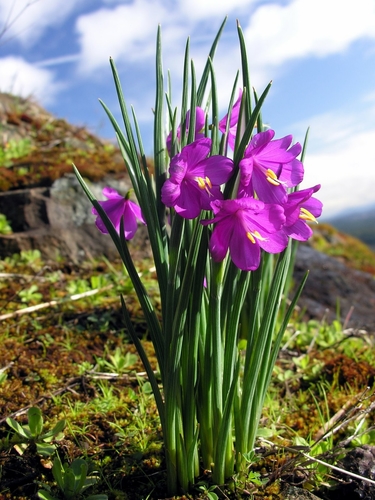
British Columbia, CA
Hier kann man sehen Grasswidow, Broad-Leaved Stonecrop und Rustyhair Saxifrage.
Führer anzeigen →













.jpg&width=800)


_(10171293746).jpg&width=800)
