_BHL43276722.jpg&width=800)





Agile Kangaroo Rat
Dipodomys agilis
The Agile Kangaroo Rat is a small, cute animal that hops like a kangaroo! It has big eyes and long back legs, helping it jump quickly to escape from danger.
Hábitat: Desert
The Agile Kangaroo Rat has soft, buffy-yellow fur on its back, contrasting sharply with a pure white belly. It features large dark eyes, small ears, and very large hind feet. Its extremely long tail, often longer than its body, ends in a distinctive dark tuft.
Categoría
MamíferosRareza
Common
Peligro
1/5 · Muy bajo
Snaps
¡Sé la primera persona en hacer un snap!
Kangaroo rats have tiny front paws but giant hind feet for powerful leaps.
Their amazing hearing can pick up even a silent owl's wingbeats!
These little architects dig complex underground homes with many tunnels.
They kick sand at rivals to defend their burrows!
Agile Kangaroo Rat can change direction mid-jump using its long, tufted tail like a rudder, helping it dodge predators.
Agile Kangaroo Rat has highly sensitive inner ears that help them detect tiny ground vibrations from approaching predators.
Agile Kangaroo Rat has sand-bathing habits that helps them keep their fur clean and free of parasites in arid environments.
Agile Kangaroo Rat can quickly gather and store seeds in large, external cheek pouches, helping them cache food for later.
This desert rodent primarily feasts on dry seeds, but also enjoys some green plants and small insects.
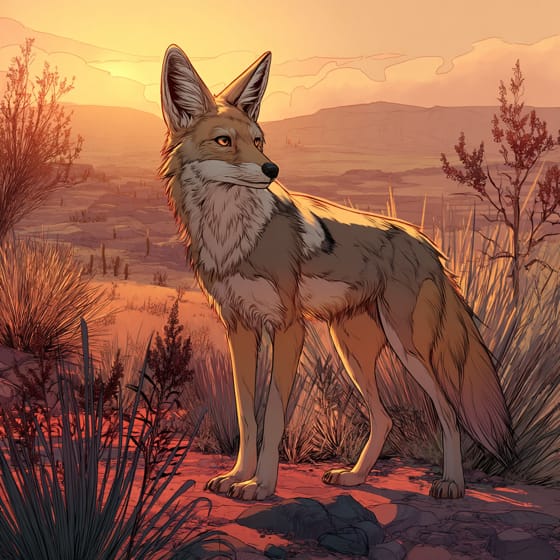
Canis latrans
A common predator in its native habitat.
Bubo virginianus
A nocturnal hunter of small rodents.
Pituophis catenifer
Snakes hunt them in their burrow systems.
Ambrosia dumosa
Relies on its seeds for a food source.
Peludo describe a los animales que poseen una cubierta densa de pelo o pelaje suave.
Los animales solitarios viven solos durante la mayor parte de su vida y solo interactúan con otros para aparearse o cuidar de sus crías.
Los animales excavadores cavan túneles y cámaras en el suelo y utilizan estas estructuras subterráneas para refugiarse, cazar o reproducirse.
Este rasgo caracteriza a los organismos cuya dieta consiste total o principalmente en material vegetal.

Los hábitats desérticos son regiones áridas caracterizadas por precipitaciones extremadamente bajas y, a menudo, temperaturas extremas, que albergan una flora y fauna especializadas.

Describe una especie cuya presencia y papel tienen un efecto desproporcionadamente grande en su entorno.

Este rasgo identifica a los organismos que exhiben una rapidez excepcional en sus movimientos para cazar, escapar o desplazarse.

Los animales nocturnos están principalmente activos durante la noche, y suelen descansar o dormir durante el día.
Todavía no hay alias listados.
Peligro
1/5 · Muy bajo
These animals are shy and prefer to be left alone. It's best to watch them from a distance.
10-14 cm
0.05-0.09 kg
2-5 años
10 km/h
This desert rodent primarily feasts on dry seeds, but also enjoys some green plants and small insects.
Desert
Foraging
1-4
Acércate para separar los grupos y explorar dónde se ha fotografiado este objeto.
Los snaps recientes aparecerán aquí a medida que se añadan nuevas observaciones.