





Panthera pardus orientalis
Panthera pardus orientalis
El leopardo de Amur es un hermoso gran felino con un pelaje grueso y manchas impresionantes. Vive en los bosques del Extremo Oriente ruso y es muy bueno trepando árboles.
Hábitat: Bosques
La Panthera pardus orientalis tiene un pelaje espeso de color amarillo cremoso adornado con rosetas oscuras ampliamente espaciadas, únicas para cada individuo. Su pelaje largo y denso está perfectamente adaptado para los duros inviernos nevados, apareciendo más pálido durante los meses más fríos.
Categoría
MamíferosRareza
Rare
Peligro
5/5 · Extremo
Snaps
¡Sé la primera persona en hacer un snap!
Los leopardos de Amur son mayormente solitarios, encontrándose solo para aparearse y criar cachorros.
¡Un leopardo de Amur puede arrastrar presas que triplican su propio peso a un árbol!
Sus patrones de rosetas son como huellas dactilares; ¡no hay dos leopardos exactamente iguales!
Se comunican utilizando gruñidos, silbidos e incluso un sonido único y áspero de 'serrucho'.
Panthera pardus orientalis tiene un pelaje extralargo y grueso que les ayuda a mantenerse calientes incluso en ambientes helados y nevados.
Panthera pardus orientalis puede mezclarse perfectamente con su entorno forestal gracias a su pelaje moteado, lo que la hace casi invisible.
Panthera pardus orientalis puede alcanzar velocidades de 60 km/h, lo que les ayuda a atrapar rápidamente presas ágiles como los ciervos.
Panthera pardus orientalis puede trepar rápidamente a los árboles, lo que les ayuda a escapar del peligro y a almacenar sus presas de forma segura.
Un carnívoro, que caza ciervos, jabalíes y otros pequeños mamíferos en su hogar en el bosque.
Capreolus pygargus
una fuente principal de alimento en su hábitat natural.

Cervus nippon
proporciona nutrición esencial para la supervivencia del leopardo.
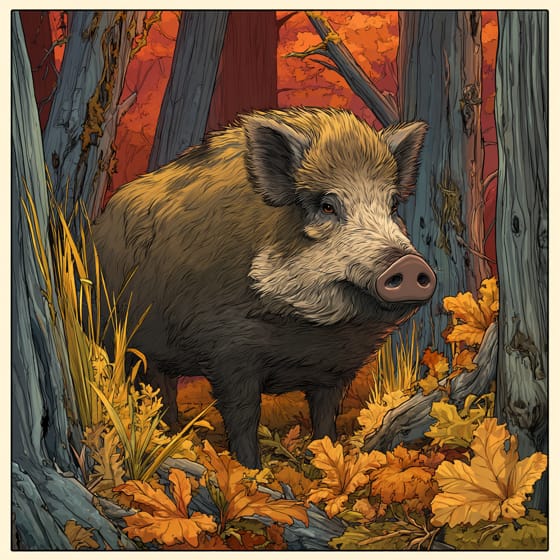
Sus scrofa
un animal de presa significativo, especialmente para leopardos más grandes.
Peludo describe a los animales que poseen una cubierta densa de pelo o pelaje suave.
Marcado con manchas o parches de un color diferente.
Los animales solitarios viven solos durante la mayor parte de su vida y solo interactúan con otros para aparearse o cuidar de sus crías.
Los animales arborícolas viven principalmente en los árboles, utilizándolos como refugio, alimento y protección contra los depredadores.

Los hábitats boscosos son entornos terrestres dominados por una densa cubierta arbórea, que sustentan una gran diversidad de vida animal y vegetal.

Un depredador de emboscada caza esperando pacientemente y ocultándose, para luego lanzar un ataque repentino cuando una presa desprevenida se pone a su alcance.

Este rasgo identifica a los organismos cuya dieta consiste total o principalmente en tejido animal.

Describe una especie cuya presencia y papel tienen un efecto desproporcionadamente grande en su entorno.

Este rasgo identifica a los organismos que exhiben una rapidez excepcional en sus movimientos para cazar, escapar o desplazarse.

El estado de peligro de extinción indica que una especie corre un riesgo muy alto de extinguirse en estado silvestre en un futuro próximo.
Peligro
5/5 · Extremo
Los leopardos de Amur son animales salvajes y deben ser admirados desde una distancia segura.
La forma más fácil de identificar a Panthera pardus orientalis es usar la aplicación de identificación de naturaleza Snappit.
107-136 cm
25-48 kg
10-15 años
60 km/h
Un carnívoro, que caza ciervos, jabalíes y otros pequeños mamíferos en su hogar en el bosque.
Bosques
Emboscada
Acércate para separar los grupos y explorar dónde se ha fotografiado este objeto.
Los snaps recientes aparecerán aquí a medida que se añadan nuevas observaciones.
England, UK
Puedes ver Elefante Africano, Orangután De Borneo y Tigre.
Ver guía →

Indiana, US
Puedes ver Panthera Pardus Orientalis, Jirafa Reticulada y Cebra De Grant.
Ver guía →
Indiana, US
Puedes ver Jirafas, León Africano y Rinoceronte Blanco Del Sur.
Ver guía →
Kansas, US
Puedes ver Panthera Pardus Orientalis y Leopardo De Las Nieves.
Ver guía →
New York, US
Puedes ver Elefante Asiático, Pingüino De Humboldt y Tigre.
Ver guía →

California, US
Puedes ver Panda Gigante, Pingüino Africano y Koala.
Ver guía →
Llévate el descubrimiento
Haz una foto con Snappit, identifica la especie y guarda el hallazgo en tu colección.




.jpg&width=800)



.JPG&width=800)



.jpg&width=800)
