



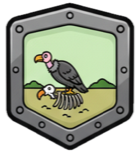


Andean Condor
Vultur gryphus
The Andean Condor is a large bird that soars high in the sky. With its impressive wingspan, it can glide for hours without flapping its wings, making it a magnificent sight in the mountains.
Hábitat: Mountain regions
The Andean Condor is a massive black bird with striking white patches on its wings, especially noticeable in flight. It has a distinctive white ruff of feathers around its neck and a bald, reddish-grey head and neck, which often changes color with its mood. Males also have a prominent dark comb on their head.
Categoría
AvesRareza
Common
Peligro
1/5 · Muy bajo
Snaps
¡Sé la primera persona en hacer un snap!
A group of condors circling in the sky is called a "kettle," looking like boiling water!
Andean Condors don't have strong talons like eagles; they have flat feet good for walking.
Male condors have a fleshy comb on their head, like a rooster, which changes color.
They use their bald heads to keep clean while eating messy meals inside carcasses.
Andean Condor can expertly ride warm air currents that helps them climb to incredible heights without flapping their wings.
Andean Condor has incredible eyesight that helps them spot tiny carcasses from thousands of feet up in the vast mountains.
Andean Condor has a powerful, hooked beak and strong neck that helps them tear tough hide and clean the environment.
Andean Condor can soar for hours without flapping their wings, saving lots of energy to search for food.
These giant birds are nature's clean-up crew, eating dead animals to keep mountains tidy!
Describe a los animales, principalmente aves, que poseen una cubierta de plumas.
Las criaturas aéreas pasan una parte importante de su vida en el aire, utilizando el vuelo para diversas actividades como la caza, la migración o la anidación.
Los carroñeros consumen materia orgánica muerta, ayudando a descomponer los cadáveres y otros desechos en el ecosistema.
Los animales planeadores se mueven por el aire lanzándose y manteniendo el vuelo con estructuras corporales especializadas, sin batir las alas.

Este rasgo de hábitat identifica a las especies que se encuentran en regiones montañosas, caracterizadas por su gran altitud, pendientes pronunciadas y zonas climáticas variables.

Este rasgo caracteriza a los organismos con una esperanza de vida excepcionalmente larga en comparación con otros de su especie.

Este rasgo identifica a los organismos cuya dieta consiste total o principalmente en tejido animal.

Los animales diurnos están activos principalmente durante el día y suelen descansar o dormir por la noche.

Describe una especie cuya presencia y papel tienen un efecto desproporcionadamente grande en su entorno.

El estado de peligro de extinción indica que una especie corre un riesgo muy alto de extinguirse en estado silvestre en un futuro próximo.
Peligro
1/5 · Muy bajo
Always watch birds from a distance and do not try to touch them.
100-135 cm
270-330 cm
8-15 kg
50-70 años
55 km/h
These giant birds are nature's clean-up crew, eating dead animals to keep mountains tidy!
Mountain regions
Scavenging
Acércate para separar los grupos y explorar dónde se ha fotografiado este objeto.
Los snaps recientes aparecerán aquí a medida que se añadan nuevas observaciones.

Delaware, US
Puedes ver Northern Raven, Abeja y Panda Rojo.
Ver guía →

Connecticut, US
Puedes ver Lobo Gris, Tigre y Ocelote.
Ver guía →

England, UK
Puedes ver León Africano, Dragón De Komodo y Common Ostrich.
Ver guía →

Texas, US
Puedes ver Jirafas, Guepardos y Macropus Rufus.
Ver guía →
Alabama, US
Puedes ver León Africano, Dragón De Komodo y Common Ostrich.
Ver guía →

Spain, ES
Puedes ver Elefante Africano, Tigre y Jirafas.
Ver guía →








_female.jpg&width=800)



.jpg&width=800)

_3109240524.jpg&width=800)