




Antillean Firebush
hamelia cuprea
The Antillean Firebush is a bright and colorful plant that attracts butterflies and hummingbirds! Its vibrant flowers can make any garden look like a tropical paradise.
Hábitat: It thrives in sunny areas, often found in coastal regions and gardens.
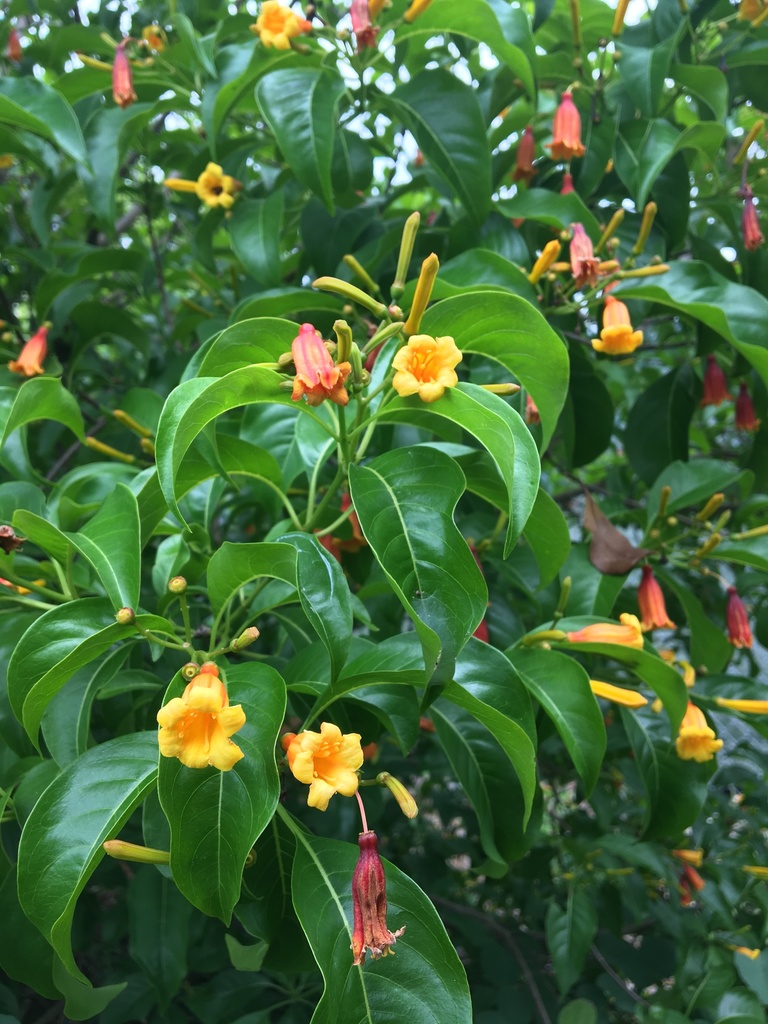
The Antillean Firebush is a vibrant shrub showcasing striking tubular, orange-red flowers that cluster at branch tips. Its glossy green leaves often have a reddish tint, especially on new growth, and stems can also be reddish, giving the plant a fiery appearance.
Categoría
PlantasRareza
Common
Peligro
0/5 · Sin peligro conocido
Snaps
¡Sé la primera persona en hacer un snap!
Despite its name, it doesn't cause fires, it just looks wonderfully fiery!
Its flowers are like tiny trumpets, perfectly shaped for hummingbird beaks!
People in some regions use its leaves to make traditional herbal remedies.
The leaves can turn brilliant red in bright sunlight, making the bush extra fiery!
Antillean Firebush can signal hummingbirds with its bright red, tubular flowers, helping it reproduce by attracting skilled pollinators.
Antillean Firebush has adaptations to withstand dry periods, helping it survive in less consistent tropical environments.
Antillean Firebush can grow quickly, allowing it to establish itself and outcompete other plants for resources.

Archilochus colubris
Its nectar feeds this busy pollinator.
Danaus plexippus
Provides nectar for migrating butterflies.
Atta cephalotes
Ants sometimes harvest its leaves.
Anolis sagrei
Offers hiding spots for small lizards.
Colorido describe a organismos u objetos que exhiben una amplia variedad de colores brillantes y distintivos.
Este rasgo caracteriza a los organismos cuya dieta consiste total o principalmente en material vegetal.
Los hábitats costeros son entornos dinámicos situados a lo largo de la interfaz entre la tierra y el mar, influenciados por las mareas, las olas y el agua salada.
Los animales diurnos están activos principalmente durante el día y suelen descansar o dormir por la noche.

Describe organismos que transfieren polen, permitiendo la fertilización y reproducción de las plantas.
Peligro
0/5 · Sin peligro conocido
Todavía no hay notas especiales de seguridad.
100-300 cm
80-250 cm
1-2 cm
Todo el año
No
Ninguna
Perenne
Aves
Acércate para separar los grupos y explorar dónde se ha fotografiado este objeto.
Los snaps recientes aparecerán aquí a medida que se añadan nuevas observaciones.