

Babirusas
babyrousa
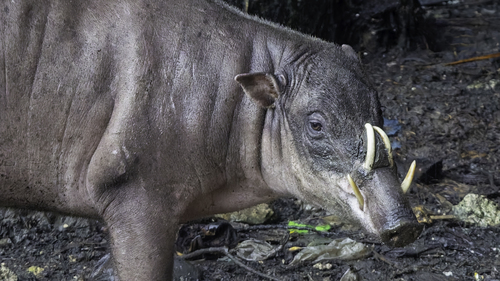
Las babirusas, a menudo llamadas "cerdos-ciervo", son miembros extraños y cautivadores de la familia de los cerdos nativos de las islas tropicales de Indonesia. Son famosas por los extraordinarios y curvos colmillos de los machos, que perforan la parte superior del hocico y se arquean hacia atrás, en dirección a los ojos. A diferencia de los cerdos salvajes típicos, las babirusas tienen patas largas y esbeltas, piel relativamente sin pelo y un estómago multicamerular que les permite procesar fibra como un rumiante. Son animales dóciles y sociales que desempeñan un papel ecológico clave en sus selvas tropicales nativas.
Hábitat: Se encuentran en selvas tropicales, ambientes ribereños pantanosos y áreas cercanas a lamederos de sal ricos en minerales en las islas de Indonesia.
La babirusa presenta un cuerpo en forma de barril cubierto de piel dura, escasamente peluda, de color gris parduzco o pizarra. Carecen de las verrugas faciales prominentes que se encuentran en otros cerdos salvajes, pero los machos poseen unos colmillos caninos dramáticos, parecidos al marfil; los caninos inferiores crecen hacia arriba, mientras que los caninos superiores emergen verticalmente a través de la piel del hocico, curvándose hacia atrás, hacia la frente. Se apoyan sobre patas largas y delicadas y pueden crecer hasta unos 85 a 110 centímetros de longitud y 60 a 100 kilogramos de peso.
Categoría
MamíferosRareza
Común
Peligro
1/5 · Muy bajo
Snaps
¡Sé la primera persona en hacer un snap!
Si un babirusa macho no desgasta o rompe sus colmillos superiores mediante el frotamiento activo, estos pueden ocasionalmente crecer lo suficiente como para curvarse y perforar su propio cráneo.
El nombre 'Babirusa' se traduce literalmente como 'cerdo-ciervo' en indonesio, inspirado por sus patas largas y esbeltas y su postura similar a la de un ciervo.
A diferencia de la mayoría de los demás cerdos salvajes, la babirusa carece de un hueso rostral en su hocico, lo que significa que no usa su nariz para hozar agresivamente en el suelo, prefiriendo buscar alimento sobre la superficie.
Una dieta omnívora que consiste principalmente en frutos caídos, nueces, hojas y hongos, complementada con pequeños invertebrados y arcilla mineral.
Aún no hay insignias de rasgos asignadas a este objeto.
Todavía no hay alias listados.
Las colecciones para este objeto aparecerán aquí a medida que se añadan más temas.
Peligro
1/5 · Muy bajo
Todavía no hay notas especiales de seguridad.
Compara orejas, hocico, cola, patas y marcas del pelaje. El tamaño es difícil de calcular sin algo cerca que sirva de referencia, y las crías pueden no tener aún el color de los adultos. Identificador de mamíferos: sube una foto y compara los detalles visibles.
Una dieta omnívora que consiste principalmente en frutos caídos, nueces, hojas y hongos, complementada con pequeños invertebrados y arcilla mineral.
Se encuentran en selvas tropicales, ambientes ribereños pantanosos y áreas cercanas a lamederos de sal ricos en minerales en las islas de Indonesia.
Forrajeo
Acércate para separar los grupos y explorar dónde se ha fotografiado este objeto.
Los snaps recientes aparecerán aquí a medida que se añadan nuevas observaciones.
Llévate el descubrimiento
Haz una foto con Snappit, identifica la especie y guarda el hallazgo en tu colección.