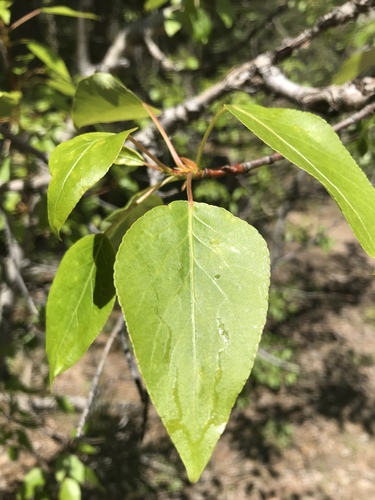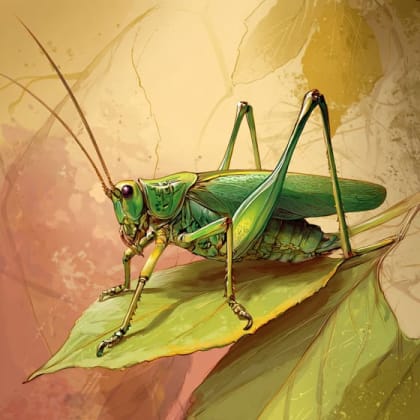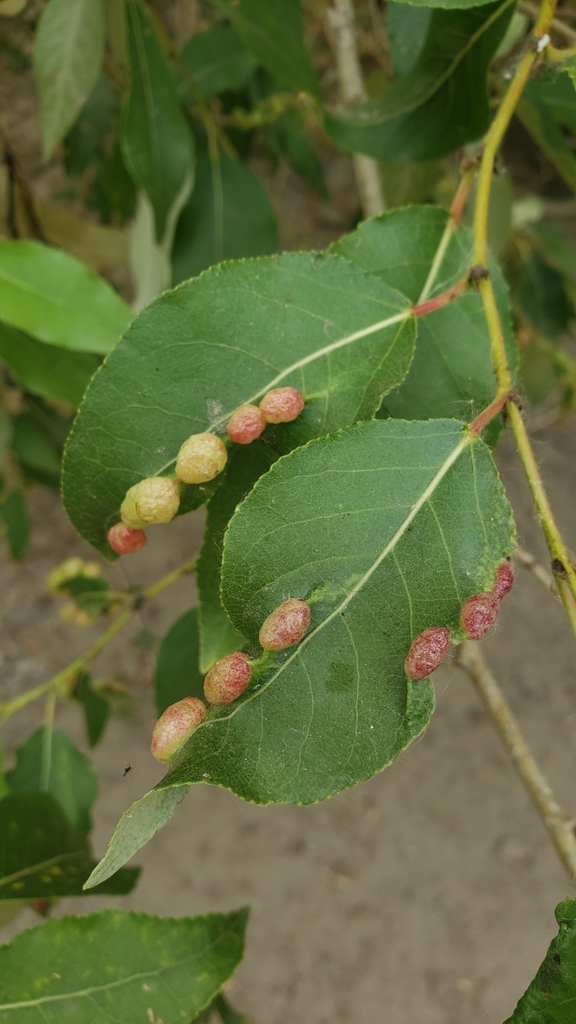





Bead-like Cottonwood Gall aphid
Thecabius populimonilis
The Bead-like Cottonwood Gall aphid is a tiny insect that makes round, bead-like galls on cottonwood trees. These galls are like little homes for the aphids, where they can stay safe and feed on the tree's juices.
Hábitat: Forests
The Bead-like Cottonwood Gall aphid is a tiny, soft-bodied insect, typically yellowish-green in color. Its pear-shaped body is often hidden inside distinctive, bead-like growths on cottonwood leaves. These aphids lack prominent wings in their gall-dwelling stage.
Categoría
InsectosRareza
Common
Peligro
1/5 · Muy bajo
Snaps
¡Sé la primera persona en hacer un snap!
Some aphid babies are born already pregnant!
These aphids create their own living 'house' inside a leaf!
They change forms throughout their life, like a secret identity!
They drink sugary sap like tiny juice boxes!
Bead-like Cottonwood Gall aphid can create protective galls because of special chemicals injected into leaves that force the tree to grow a shelter.
Bead-like Cottonwood Gall aphid can multiply quickly because females can reproduce without a mate, filling galls with many offspring.
Bead-like Cottonwood Gall aphid has the ability to manipulate cottonwood plants by forcing them to grow a home for its colony.
These tiny insects drink the sugary sap directly from cottonwood leaves, their leafy homes.

Populus deltoides
relies on for food and to create its protective gall.
Hippodamia convergens
preys on aphids, helping control their populations.
Chrysoperla carnea
larvae are voracious predators of aphids.
Aphidius colemani
lays eggs inside the aphid, leading to its demise.
Los animales solitarios viven solos durante la mayor parte de su vida y solo interactúan con otros para aparearse o cuidar de sus crías.
Este rasgo caracteriza a los organismos cuya dieta consiste total o principalmente en material vegetal.
Los hábitats boscosos son entornos terrestres dominados por una densa cubierta arbórea, que sustentan una gran diversidad de vida animal y vegetal.
Relativo a especies que son significativamente más pequeñas que lo típico o promedio de su tipo.

Describe organismos que transfieren polen, permitiendo la fertilización y reproducción de las plantas.
Todavía no hay alias listados.
Peligro
1/5 · Muy bajo
It's best to look at insects from a distance and not touch them, as some can be delicate.
1-3 mm
20-30 días
These tiny insects drink the sugary sap directly from cottonwood leaves, their leafy homes.
Forests
6
1000
Acércate para separar los grupos y explorar dónde se ha fotografiado este objeto.
Los snaps recientes aparecerán aquí a medida que se añadan nuevas observaciones.