






Bitterroot
Lewisia rediviva
Bitterroot is a pretty flower that grows in the mountains. It has pink or white petals and is known for its special roots that can be eaten. It blooms in spring and loves sunny places!
Hábitat: Mountain regions
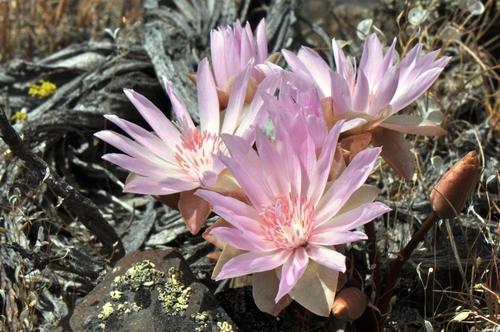
The Bitterroot has striking rose-pink to white flowers, often with darker stripes, that emerge directly from a low rosette of narrow, fleshy leaves. Its bright petals stand out vividly against dry, rocky ground, making it easily spotted.
Categoría
PlantasRareza
Common
Peligro
1/5 · Muy bajo
Snaps
¡Sé la primera persona en hacer un snap!
It's the state flower of Montana, a symbol of its rugged mountain beauty!
Its name comes from roots that taste bitter unless prepared correctly!
Its nutritious roots were a vital food source, even traded like currency!
This tough plant can bloom again even after its leaves have completely withered!
Bitterroot can survive long droughts because its fleshy taproot stores vital water and nutrients deep underground.
Bitterroot has an amazing ability to "play dead," shriveling up and appearing lifeless, only to burst into bloom again later!
Bitterroot can go dormant during dry periods, shedding its leaves to conserve moisture until conditions improve.
Bombus bifarius
Collects pollen and nectar from its vibrant flowers.
Apis mellifera
Visits flowers, aiding in its reproduction.
Peromyscus maniculatus
May nibble on its leaves or flower parts.

Thomomys talpoides
Digs for and consumes its fleshy roots.
Las plantas con flores son cualquier planta que produce flores como parte de su ciclo reproductivo.
Las plantas de floración primaveral producen sus flores durante la temporada de primavera, lo que a menudo significa el final del invierno y el comienzo de un nuevo crecimiento.
Las flores fragantes emiten un aroma agradable, a menudo para atraer polinizadores o como defensa.
Las plantas medicinales poseen compuestos químicos que pueden utilizarse con fines terapéuticos para tratar enfermedades o mantener la salud.

Colorido describe a organismos u objetos que exhiben una amplia variedad de colores brillantes y distintivos.

Las plantas comestibles son aquellas partes de una planta que se consideran seguras para el consumo humano.

Este rasgo de hábitat identifica a las especies que se encuentran en regiones montañosas, caracterizadas por su gran altitud, pendientes pronunciadas y zonas climáticas variables.
Todavía no hay alias listados.
Peligro
1/5 · Muy bajo
Always look but don't touch wild plants unless a grown-up says it's okay.
1-5 cm
2-10 cm
2-5 cm
Spring_to_early_summer
Sí
Ninguna
Perenne
Insectos
Acércate para separar los grupos y explorar dónde se ha fotografiado este objeto.
Los snaps recientes aparecerán aquí a medida que se añadan nuevas observaciones.




.jpg&width=800)













