Black-bellied Slender Salamander
Batrachoseps nigriventris
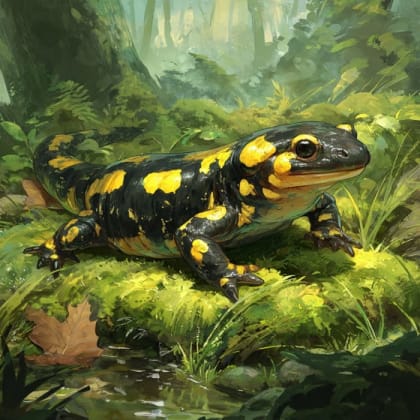
The Black-bellied Slender Salamander is a small, slender creature with a shiny black belly. It loves to hide under rocks and logs in moist places, making it a secretive little friend in nature.
Hábitat: Forests
The Black-bellied Slender Salamander is a tiny, worm-like amphibian with extremely slender limbs and a smooth, dark brown to black body. It typically has a distinct, solid dark (often black) underside. Sometimes, a subtle reddish or lighter stripe may run down its back.
Categoría
AnfibiosRareza
Common
Peligro
1/5 · Muy bajo
Snaps
¡Sé la primera persona en hacer un snap!
Black-bellied Slender Salamanders are so tiny, they can fit inside a bottle cap when fully grown!
These amazing salamanders can live up to ten years in the wild, quite long for their size!
They belong to a special group of amphibians called 'lungless salamanders' – they breathe through skin!
Unlike many amphibians, these tiny salamanders lay their eggs on land, not in water!
The Black-bellied Slender Salamander has a super slender body that helps them squeeze into tiny cracks and hide from predators.
Black-bellied Slender Salamander can shoot out a sticky tongue to snatch up tiny insects and other tasty morsels.
Black-bellied Slender Salamander can detach its tail to distract a predator, letting them wriggle away to safety.
This salamander breathes directly through its moist skin, absorbing oxygen from the air and water around it.
These tiny hunters use their sticky tongues to gobble up small insects and other invertebrates.
Thamnophis atratus
A common snake predator in its habitat.
Sorex ornatus
Shrews might prey on small salamanders.
Hypogastrura nivicola
Feeds on tiny springtails in leaf litter.
Lasius niger
Consumes various small ants.
Los animales solitarios viven solos durante la mayor parte de su vida y solo interactúan con otros para aparearse o cuidar de sus crías.
Este rasgo identifica a los organismos cuya dieta consiste principalmente en insectos y otros pequeños invertebrados.
Los hábitats boscosos son entornos terrestres dominados por una densa cubierta arbórea, que sustentan una gran diversidad de vida animal y vegetal.
Relativo a especies que son significativamente más pequeñas que lo típico o promedio de su tipo.

Los animales nocturnos están principalmente activos durante la noche, y suelen descansar o dormir durante el día.

El estado de peligro de extinción indica que una especie corre un riesgo muy alto de extinguirse en estado silvestre en un futuro próximo.
Todavía no hay alias listados.
Peligro
1/5 · Muy bajo
Always wash your hands after touching a salamander, as they can be sensitive to oils and dirt.
7-10 cm
0.001-0.005 kg
5-10 años
0.1 km/h
These tiny hunters use their sticky tongues to gobble up small insects and other invertebrates.
Forests
Foraging
3-13
Acércate para separar los grupos y explorar dónde se ha fotografiado este objeto.
Los snaps recientes aparecerán aquí a medida que se añadan nuevas observaciones.