
Black Oystercatcher
Haematopus bachmani
The Black Oystercatcher is a striking bird with a black body and bright orange beak. They love to hang out on rocky shores and eat tasty shellfish like clams and mussels.
Hábitat: Coastal areas
The Black Oystercatcher is an entirely black shorebird with striking features. It has a long, bright orange-red bill, vivid red eyes, and thick pinkish legs, making it visually distinct against its coastal habitat.
Categoría
AvesRareza
Common
Peligro
1/5 · Muy bajo
Snaps
¡Sé la primera persona en hacer un snap!
Black Oystercatchers sometimes nest right on bare rocks, hiding their eggs perfectly!
Their bright red beak is sensitive, helping them find food hidden in sand!
They defend their nesting territory fiercely, even against much bigger birds!
Young oystercatchers stay with parents for months to learn how to open shells!
Black Oystercatcher can expertly open shellfish because of its powerful, chisel-shaped beak that helps pry apart or hammer open tough shells.
Black Oystercatcher has dark plumage that helps it blend perfectly with rocky shorelines and dark sand, avoiding detection by predators.
Black Oystercatcher can issue loud, piping calls because of its specialized vocal cords that help warn others of danger or defend its territory.
Black Oystercatcher has excellent timing that helps it forage efficiently during low tide, exposing abundant intertidal shellfish for food.
These birds love to eat tasty shellfish like mussels and clams, cracking them open with their strong beaks!
Mytilus californianus
Pries open its shell for food.
Lottia gigantea
Flips the limpet over to consume it.
%2C_Point_Lobos%2C_CA%2C_US_-_May_2013.jpg&width=800)
Larus occidentalis
Preys on eggs and young chicks.
Procyon lotor
Raids nests for eggs and chicks.
Describe a los animales, principalmente aves, que poseen una cubierta de plumas.
Los animales sociales viven en grupos organizados, cooperando para obtener beneficios de supervivencia como la búsqueda de alimento, la defensa y la cría de descendencia.
El camuflaje describe a los organismos que poseen colores o patrones que les permiten mezclarse con su entorno.
Esta característica describe a los organismos que manipulan objetos externos para lograr un objetivo específico.

Los hábitats costeros son entornos dinámicos situados a lo largo de la interfaz entre la tierra y el mar, influenciados por las mareas, las olas y el agua salada.

Este rasgo identifica a los organismos cuya dieta consiste total o principalmente en tejido animal.

Los animales diurnos están activos principalmente durante el día y suelen descansar o dormir por la noche.

Describe una especie cuya presencia y papel tienen un efecto desproporcionadamente grande en su entorno.

El estado de amenazado indica que es probable que una especie pase a estar en peligro de extinción en el futuro cercano si no se toman medidas efectivas de conservación.
Todavía no hay alias listados.
Peligro
1/5 · Muy bajo
Always watch birds from a distance and do not disturb their nests.
42-49 cm
76-89 cm
0.5-0.7 kg
10-20 años
60 km/h
These birds love to eat tasty shellfish like mussels and clams, cracking them open with their strong beaks!
Coastal areas
Foraging
Acércate para separar los grupos y explorar dónde se ha fotografiado este objeto.
Los snaps recientes aparecerán aquí a medida que se añadan nuevas observaciones.

British Columbia, CA
Puedes ver Broad-Leaved Stonecrop, Foca Común y Ochre Sea Star.
Ver guía →

British Columbia, CA
Puedes ver Golondrina Común, Pelagic Cormorant y León Marino.
Ver guía →

California, US
Puedes ver Ochre Sea Star, Giant Green Anemone y Sunburst Anemone.
Ver guía →

British Columbia, CA
Puedes ver Barnacla Canadiense, Oregon Oak y Golondrina Común.
Ver guía →

British Columbia, CA
Puedes ver Pacific Sanicle, Ivy y Pacific Madrone.
Ver guía →
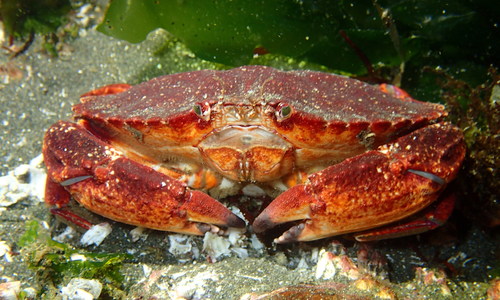
British Columbia, CA
Puedes ver Red Rock Crab, Dungeness Crab y Salal.
Ver guía →











_in_tree-2c.jpg&width=800)