
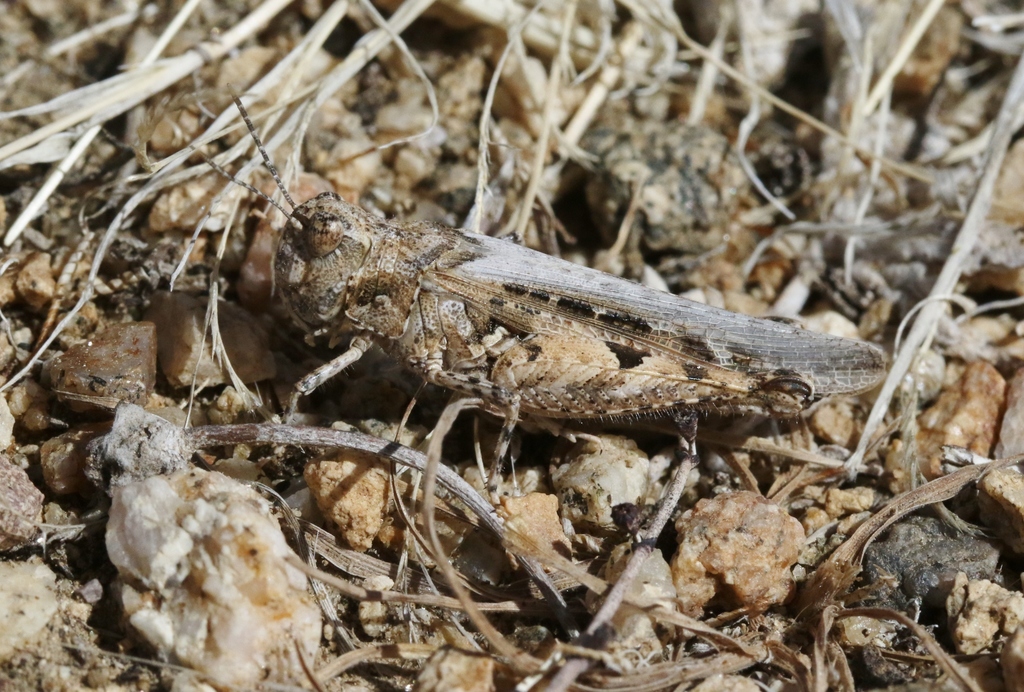





Brown-spotted Range Grasshopper
Psoloessa delicatula
The Brown-spotted Range Grasshopper is a small, hopping insect with lovely brown spots. They love to jump around in grassy areas and are fun to watch as they leap from plant to plant!
Hábitat: Grasslands
The Brown-spotted Range Grasshopper is a slender insect with excellent camouflage. It has a mottled pattern of brown, tan, and gray spots, allowing it to blend seamlessly into dry grass and soil. Its long hind legs often feature faint dark bands, providing subtle visual breaks.
Categoría
InsectosRareza
Common
Peligro
1/5 · Muy bajo
Snaps
¡Sé la primera persona en hacer un snap!
Wow! Baby grasshoppers, called nymphs, hatch looking like tiny adults!
Wow! Their 'ears' are actually on their abdomen, not their head!
Wow! They can change their color to blend perfectly with dry ground!
Wow! They help spread tiny plant seeds as they munch on grasses!
Brown-spotted Range Grasshopper has a speckled body pattern that helps them vanish into dry rangeland, avoiding watchful predators.
Brown-spotted Range Grasshopper can launch itself high and far because of its strong hind legs, quickly escaping danger.
Brown-spotted Range Grasshopper produces chirping sounds by rubbing its hind legs against its wings, which helps them communicate and attract mates.
This small insect is an herbivore, munching on grasses and other small plants in its habitat.
Falco sparverius
a common prey item for this small falcon.

Pica hudsonia
provides a high-protein meal for omnivorous birds.
Bouteloua gracilis
grazes on the abundant grasses of its prairie home.

Crotalus viridis
a crunchy snack for reptiles in its ecosystem.
Marcado con manchas o parches de un color diferente.
Los animales solitarios viven solos durante la mayor parte de su vida y solo interactúan con otros para aparearse o cuidar de sus crías.
El camuflaje describe a los organismos que poseen colores o patrones que les permiten mezclarse con su entorno.
Este rasgo caracteriza a los organismos cuya dieta consiste total o principalmente en material vegetal.

Los hábitats de pastizales son biomas terrestres dominados por pastos y plantas herbáceas, que sustentan a una variedad de animales de pastoreo.

Los animales diurnos están activos principalmente durante el día y suelen descansar o dormir por la noche.

Este rasgo identifica a los organismos que exhiben una rapidez excepcional en sus movimientos para cazar, escapar o desplazarse.

Describe organismos que transfieren polen, permitiendo la fertilización y reproducción de las plantas.
Todavía no hay alias listados.
Peligro
1/5 · Muy bajo
Be gentle if you see one and don't touch it too hard, as they can easily get scared.
20-30 mm
15-25 mm
60-120 días
5 km/h
This small insect is an herbivore, munching on grasses and other small plants in its habitat.
Grasslands
Grazing
6
Acércate para separar los grupos y explorar dónde se ha fotografiado este objeto.
Los snaps recientes aparecerán aquí a medida que se añadan nuevas observaciones.










