
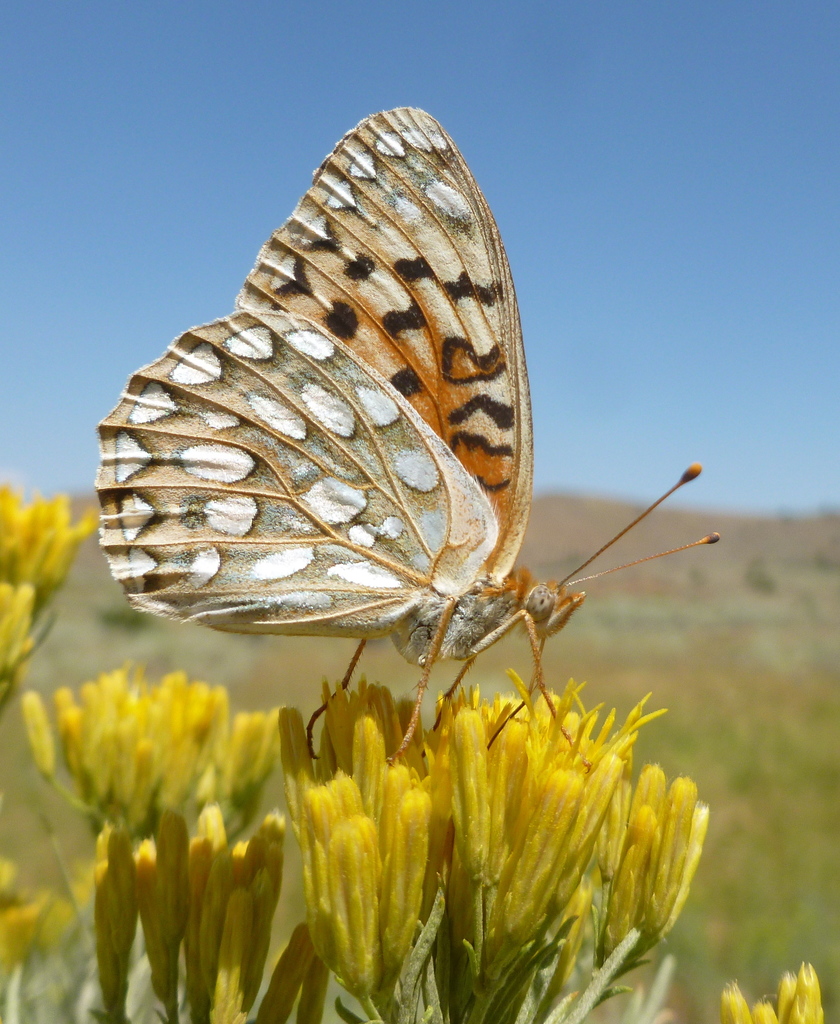





Callippe Fritillary
Argynnis callippe
The Callippe Fritillary is a beautiful butterfly with orange and black wings. It flutters around meadows and fields, bringing joy to everyone who sees it.
Hábitat: Meadows and fields
The Callippe Fritillary is a medium-sized butterfly with bright orange-brown wings adorned with distinct black spots and veins. Its underwings are particularly striking, often featuring large, shimmering silver-white spots. This makes it visually different from many other fritillaries which may have more muted underwing patterns.
Categoría
InsectosRareza
Common
Peligro
1/5 · Muy bajo
Snaps
¡Sé la primera persona en hacer un snap!
Did you know fritillary caterpillars only eat violet leaves? Wow!
Female fritillaries lay their tiny eggs one by one near host plants.
Its underwings sparkle like jewels with shiny silver spots!
This butterfly can fly many miles seeking new flower patches.
Callippe Fritillary can reach deep into flowers with its long proboscis to sip nectar, which helps them refuel their flight.
Callippe Fritillary females can find specific violet plants, which are the only food their caterpillars can eat to grow.
Callippe Fritillary has striking silver spots on its underwings that might help confuse predators or signal they are unappetizing.
Adults sip nectar from flowers, while caterpillars munch exclusively on violet leaves!
Diferencias por edad: As caterpillars, they eat only violet leaves. As adults, they feed exclusively on flower nectar.
Viola adunca
Host plant for larvae.
Cirsium vulgare
Adults visit for nectar.

Asclepias speciosa
Adults visit for nectar.

Cyanocitta stelleri
A common bird predator.
Las criaturas aéreas pasan una parte importante de su vida en el aire, utilizando el vuelo para diversas actividades como la caza, la migración o la anidación.
Colorido describe a organismos u objetos que exhiben una amplia variedad de colores brillantes y distintivos.
Este rasgo caracteriza a los organismos cuya dieta consiste total o principalmente en material vegetal.
Describe plantas que son particularmente atractivas y beneficiosas para una amplia variedad de organismos polinizadores.

Los hábitats de pastizales son biomas terrestres dominados por pastos y plantas herbáceas, que sustentan a una variedad de animales de pastoreo.

Los animales diurnos están activos principalmente durante el día y suelen descansar o dormir por la noche.

Describe organismos que transfieren polen, permitiendo la fertilización y reproducción de las plantas.
Todavía no hay alias listados.
Peligro
1/5 · Muy bajo
Always watch butterflies from a distance and don't try to catch them.
50-70 mm
25-35 mm
14-28 días
10 km/h
Adults sip nectar from flowers, while caterpillars munch exclusively on violet leaves!
Meadows and fields
Foraging
6
Acércate para separar los grupos y explorar dónde se ha fotografiado este objeto.
Los snaps recientes aparecerán aquí a medida que se añadan nuevas observaciones.












