chokecherry
Prunus virginiana
Chokecherries are small, dark red or black berries that grow on bushes. They are often found in woods and along roadsides, and they can be used to make yummy jams and jellies!
Hábitat: Forests
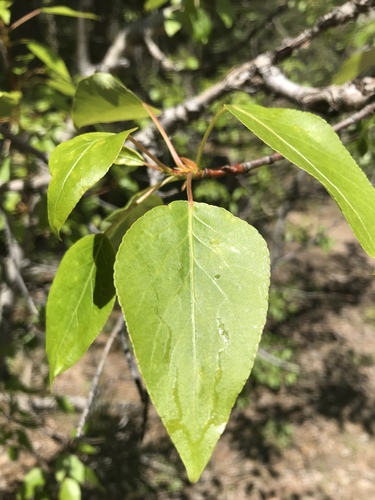
The chokecherry is a large shrub or small tree with rough, dark bark and oval leaves that turn yellow or red in fall. It produces long, drooping clusters of tiny white flowers in spring, followed by hanging bunches of small, dark red to black berries.
Categoría
PlantasRareza
Common
Peligro
2/5 · Bajo
Snaps
¡Sé la primera persona en hacer un snap!
Its seeds contain a hidden chemical defense, making them unsafe to eat!
Native Americans traditionally dried chokecherry fruit into cakes for winter food!
The fruit is so tart it can make your mouth pucker, giving it its name!
You might spot tiny glands on the leaves where they meet the stem!
Chokecherry has toxic compounds in its leaves and seeds that help it defend against hungry plant-eaters.
Chokecherry can quickly grow in disturbed areas, helping it establish new habitats after fires or clearings.
Chokecherry has juicy, tart fruits that attract birds and mammals, helping it spread its seeds far and wide.
Turdus migratorius
eats its ripe fruits, aiding in seed dispersal.
Ursus americanus
enjoys the abundant, tart chokecherries in late summer.
Odocoileus virginianus
browses on young leaves and twigs, despite mild toxicity.
Apis mellifera
visits its fragrant spring flowers for nectar and pollen.
Las plantas caducifolias pierden periódicamente todas sus hojas, por lo general durante el otoño o las estaciones secas.
Las plantas con flores son cualquier planta que produce flores como parte de su ciclo reproductivo.
Un arbusto es una planta leñosa más pequeña que un árbol, típicamente con múltiples tallos que se ramifican desde o cerca del suelo.
Las plantas de floración primaveral producen sus flores durante la temporada de primavera, lo que a menudo significa el final del invierno y el comienzo de un nuevo crecimiento.

Las flores fragantes emiten un aroma agradable, a menudo para atraer polinizadores o como defensa.

Las plantas frutales producen frutos, que son los ovarios maduros de las plantas con flores que contienen semillas.

Las plantas comestibles son aquellas partes de una planta que se consideran seguras para el consumo humano.

Describe plantas que son particularmente atractivas y beneficiosas para una amplia variedad de organismos polinizadores.

Los hábitats boscosos son entornos terrestres dominados por una densa cubierta arbórea, que sustentan una gran diversidad de vida animal y vegetal.
Peligro
2/5 · Bajo
Chokecherries can be sour and should be eaten in small amounts. Always ask an adult before trying new berries!
100-600 cm
100-400 cm
0.5-1 cm
Primavera
Sí
Moderada
Perenne
Insectos
Acércate para separar los grupos y explorar dónde se ha fotografiado este objeto.
Los snaps recientes aparecerán aquí a medida que se añadan nuevas observaciones.
.jpg)
South Dakota, US
Puedes ver Rana Leopardo, Tordo Sargento y Dame's Rocket.
Ver guía →
British Columbia, CA
Puedes ver Black Cottonwood, Oregon Grape y Showy Milkweed.
Ver guía →

British Columbia, CA
Puedes ver Oregon Grape, Common Snowberry y Black Locust.
Ver guía →
British Columbia, CA
Puedes ver Field Locoweed, Silky Lupine y Wax Currant.
Ver guía →

British Columbia, CA
Puedes ver Brown Elfin, Bearberry y Black Cottonwood.
Ver guía →

Wyoming, US
Puedes ver Perrito De Las Praderas y Bur Oak.
Ver guía →