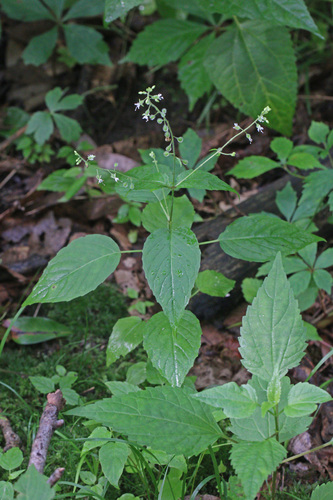
Citronella Horse Balm
collinsonia canadensis
Citronella Horse Balm is a tall plant with pretty yellow flowers that smell amazing! It’s great for attracting butterflies and can be used to make soothing balms.
Hábitat: Citronella Horse Balm typically grows in moist woodlands and along streams.
The Citronella Horse Balm has tall, sturdy stems with large, oval, toothed leaves that emit a lemony scent when crushed. Its unusual, pale yellow flowers appear in loose clusters, featuring a distinctive lower lip that makes them stand out.
Categoría
PlantasRareza
Common
Peligro
0/5 · Sin peligro conocido
Snaps
¡Sé la primera persona en hacer un snap!
Indigenous people once mashed its fragrant leaves to make soothing poultices.
It's sometimes called 'Richweed' because it thrives in moist, fertile forest floors!
Its old name, 'Stone-root,' comes from its incredibly hard, rock-like root!
The plant’s unique flower shape guides thirsty bees right to its nectar!
Citronella Horse Balm can release a strong, lemony fragrance from its leaves, helping it deter hungry herbivores from taking a bite.
Citronella Horse Balm has special compounds in its tough roots that were traditionally used by people to soothe various ailments.
Citronella Horse Balm displays unique, pale yellow flowers that produce nectar, helping it attract beneficial insect pollinators.

Bombus impatiens
Collects nectar and pollen from its flowers.
Odocoileus virginianus
Young leaves might be occasionally browsed.
Apis mellifera
Visits its flowers for nectar and pollen.
Colorido describe a organismos u objetos que exhiben una amplia variedad de colores brillantes y distintivos.
Este rasgo caracteriza a los organismos cuya dieta consiste total o principalmente en material vegetal.
Los hábitats boscosos son entornos terrestres dominados por una densa cubierta arbórea, que sustentan una gran diversidad de vida animal y vegetal.
Los animales diurnos están activos principalmente durante el día y suelen descansar o dormir por la noche.

Describe organismos que transfieren polen, permitiendo la fertilización y reproducción de las plantas.
Peligro
0/5 · Sin peligro conocido
Todavía no hay notas especiales de seguridad.
60-120 cm
30-60 cm
0.5-1 cm
Summer to fall
No
Ninguna
Perenne
Insectos
Acércate para separar los grupos y explorar dónde se ha fotografiado este objeto.
Los snaps recientes aparecerán aquí a medida que se añadan nuevas observaciones.