.jpg&width=800)





Cracked Cap Polypore
fulvifomes robiniae
The Cracked Cap Polypore is a fascinating fungus that grows on trees! Its unique cracked cap looks like it's wearing a cool hat!
Hábitat: It typically lives on decaying hardwood trees in forests.
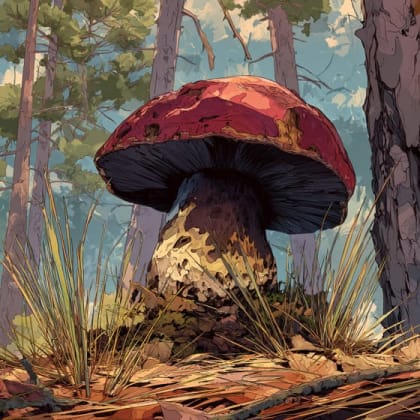
The Cracked Cap Polypore is a woody, hoof-shaped fungus with a distinctive dark brown to black cap margin and an orange-brown pore surface. Its upper surface is often deeply cracked and zoned, making it visually distinct from smoother polypores on similar trees.
Categoría
HongosRareza
Common
Peligro
1/5 · Muy bajo
Snaps
¡Sé la primera persona en hacer un snap!
It can live for many years, growing new layers each season like tree rings!
Its super tough body makes it one of the hardest fungi in the forest!
Look closely for tiny holes on its underside where millions of spores are released!
This mushroom makes its home on a special tree called the Black Locust!
Cracked Cap Polypore can break down dead hardwood because it has powerful enzymes that help them return nutrients to the soil.
Cracked Cap Polypore has a deeply cracked cap that helps them release spores and endure dry conditions over years.
Cracked Cap Polypore has a very hard, woody texture that helps them resist pests and survive long on tree trunks.

Robinia pseudoacacia
Causes heart rot in its favorite host tree.
Cis boleti
Feeds on woody fruiting bodies of polypore fungi.
Picoides pubescens
Woodpeckers find insects in the weakened, rotting wood.
Los animales solitarios viven solos durante la mayor parte de su vida y solo interactúan con otros para aparearse o cuidar de sus crías.
Los animales arborícolas viven principalmente en los árboles, utilizándolos como refugio, alimento y protección contra los depredadores.
Colorido describe a organismos u objetos que exhiben una amplia variedad de colores brillantes y distintivos.
Los hábitats boscosos son entornos terrestres dominados por una densa cubierta arbórea, que sustentan una gran diversidad de vida animal y vegetal.

Describe a los organismos que descomponen la materia orgánica muerta, reciclando los nutrientes de vuelta al ecosistema.
Peligro
1/5 · Muy bajo
Todavía no hay notas especiales de seguridad.
3-10 cm
inedible
10-30 cm
It typically lives on decaying hardwood trees in forests.
wood
Year-round, but active in summer/fall
Brown
Acércate para separar los grupos y explorar dónde se ha fotografiado este objeto.
Los snaps recientes aparecerán aquí a medida que se añadan nuevas observaciones.