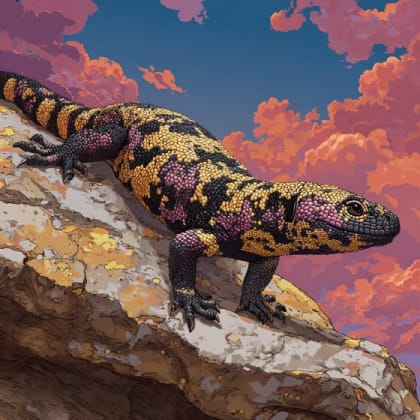
Cuban Green Anole
Anolis porcatus
The Cuban Green Anole is a small, colorful lizard that loves to bask in the sun. It can change its color from bright green to brown, helping it blend in with its surroundings.
Hábitat: Forests
The Cuban Green Anole is a slender lizard with a bright emerald green body and a pale white belly. Males often display a large, extendable pink or reddish throat fan, called a dewlap, distinguishing them from similar species.
Categoría
ReptilesRareza
Common
Peligro
1/5 · Muy bajo
Snaps
¡Sé la primera persona en hacer un snap!
Female anoles can lay a single egg every week or two during breeding season.
Males do push-ups and head-bobs to show off their strength and territory.
These tiny lizards are sometimes called 'chameleons' for their amazing color changes!
They can regrow their tails if a predator snaps one off – amazing!
Cuban Green Anole can change its skin color from bright green to brown that helps them blend into different surroundings.
Cuban Green Anole has a colorful throat fan called a dewlap that helps them attract mates and scare rivals.
Cuban Green Anole has special toe pads with tiny hooks that helps them cling effortlessly to smooth surfaces.
They are insect hunters, pouncing on small bugs and spiders with surprising speed!
Falco sparverius
A quick bird of prey.

Coluber constrictor
A fast snake that hunts lizards.
Felis catus
A common predator in urban areas.
Musca domestica
Preys on these common insects.
Los animales sociales viven en grupos organizados, cooperando para obtener beneficios de supervivencia como la búsqueda de alimento, la defensa y la cría de descendencia.
Los animales arborícolas viven principalmente en los árboles, utilizándolos como refugio, alimento y protección contra los depredadores.
El camuflaje describe a los organismos que poseen colores o patrones que les permiten mezclarse con su entorno.
Colorido describe a organismos u objetos que exhiben una amplia variedad de colores brillantes y distintivos.

Este rasgo identifica a los organismos cuya dieta consiste principalmente en insectos y otros pequeños invertebrados.

Los hábitats boscosos son entornos terrestres dominados por una densa cubierta arbórea, que sustentan una gran diversidad de vida animal y vegetal.

Los animales diurnos están activos principalmente durante el día y suelen descansar o dormir por la noche.
Todavía no hay alias listados.
Peligro
1/5 · Muy bajo
Always watch from a distance and don't try to catch lizards; they are best enjoyed in nature.
15-20 cm
0.003-0.008 kg
2-5 años
10 km/h
They are insect hunters, pouncing on small bugs and spiders with surprising speed!
Forests
Ambush
1
Acércate para separar los grupos y explorar dónde se ha fotografiado este objeto.
Los snaps recientes aparecerán aquí a medida que se añadan nuevas observaciones.